



Jack Gindi
Every neighborhood has “that house…”
You know the one – the remodel that was supposed to take six weeks… and is now entering its second season with a porta-potty in the driveway and a stack of lumber that seems to have settled in permanently.
The siding is half done. The porch is a construction zone. The family keeps saying, “We’re almost there!”
We’ve all lived some version of that story, whether in our homes or in our habits. A burst of enthusiasm gets us started. A little adversity stops us cold. And suddenly weeks, months, or even years pass while the project waits for someone to pick up a hammer again.
Most remodels don’t fail because they were too hard. They fail when the flow breaks – when weather shifts, materials delay, and life’s distractions steal the momentum.
And nothing in American history shows the difference between excitement and commitment more clearly than Valley Forge.
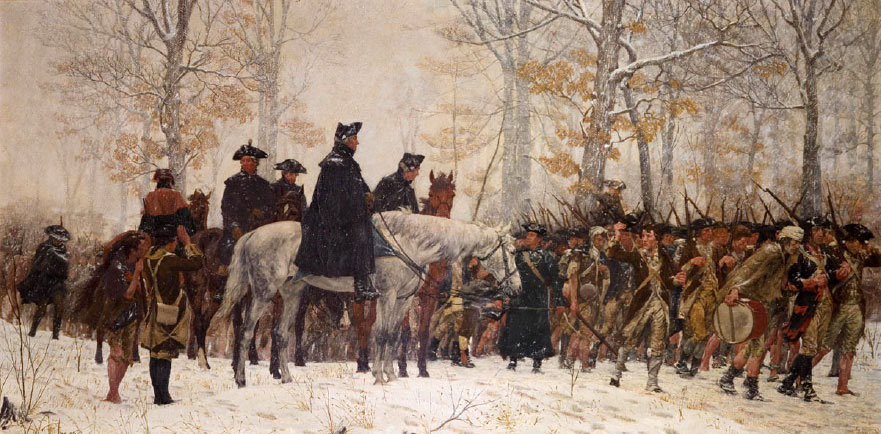
Winter at Valley Forge, 1777
Washington’s army was starving, freezing, and diseased. Blood stained the snow from men walking without boots. Two thousand soldiers were dead before spring. And still – they stayed. They trained. They endured.
What amazes me is this: those soldiers didn’t have motivation. They committed. And commitment is the ingredient modern life needs most.
As America celebrates 250 years of freedom, I’ve been thinking about what those soldiers understood that so many of us still struggle with. Great dreams don’t need perfect conditions. They need daily decisions.
Most people confuse the excitement of beginning with the discipline of continuing. We imagine a better version of ourselves, but then life’s distractions overwhelm us. The truth I’ve learned, after falling on my face more than once, is simple: motivation is a spark. Discipline is the fuel.
Washington’s soldiers didn’t wake up inspired. They woke up miserable. But they were loyal to something larger than their own discomfort.
I’ll be honest – I’ve abandoned more personal “remodels” than I care to admit. Until I learned a hard truth. The only person I let down was myself.
R.I.S.E
In my work with families and individuals, I’ve relied on a simple tool that helps bridge the gap between inspiration and follow-through. It’s called R.I.S.E., and it’s a four-second reset for the moment your resolve begins to wobble.
Recognize: What’s happening right now?
Inquire: What story am I telling myself?
Separate: What are the actual facts?
Elevate: What would my committed self-do?
You can apply it anywhere in life: the conversation you keep avoiding, the health choice you want to delay, the project you keep postponing because “next week will be easier.”
Recognize: I don’t want to do this.
Inquire: “I’m too tired. Now isn’t the right time.”
Separate: I have five minutes.
Elevate: I’ll start the task for just five minutes.
That four-step process has saved me from abandoning more “renovations of character” than I can count.
Valley Forge taught something profound about human nature: every dream, every mission, every responsibility rests on the same starting point. Your body must show up. Not perfectly. Not pain-free. Not motivated. Just present.
Real Change
So forget the fantasy of overnight transformation. Real change comes from three commitments:
Make it ridiculously small. Not “I’ll overhaul my life,” but “I’ll take one concrete step today.” Small steps compound.
Remove the motivation requirement. Assume you won’t feel like it. Build a system that works anyway. Commitment doesn’t depend on feelings.
Stack your R.I.S.E. moments. Daily micro-decisions shape us far more than grand declarations.
As America honors 250 years, I’m not asking what project you’ll “start someday.” I’m asking: What are you committed to finishing?
Valley Forge teaches us this: the people who change the world aren’t the most motivated, they’re the most committed. They show up cold, scared, uncomfortable – and they show up anyway.
Your body, your habits, your relationships, your dreams, they’re all remodels in progress. The work won’t always be convenient. But it will always be worth it.
So here’s the dream builder’s question: What will you pick back up today? Not “I’ll try.” Not “I hope.” What will you decide?
The experiment of freedom continues. And it starts, as it always has, with one courageous step at a time.