



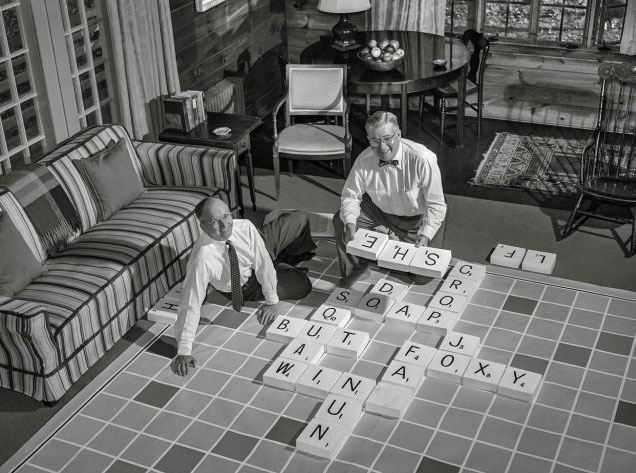
Inventions are the ingenious gadgets and machines that have made our lives a little more fun, interesting, and useful. Real inventions are the things that we did not think were possible yesterday, and yet, it would be difficult to live without today. From the tiny paperclip to the massive jet engine, every month we will explore the history behind our world’s most famous inventions and learn about the innovators who designed them.
This month we explore the history behind the game of…
SCRABBLE
Scrabble is a board game that has brought joy to millions of people around the world. More than just a game of words, Scrabble is a story of innovation, perseverance, and the enduring power of a simple but brilliant idea.
Beginnings During the Great Depression
The story of Scrabble began in the early 1930s, during the Great Depression – a time of widespread unemployment and economic hardship. Like many Americans, Alfred Mosher Butts was affected by the downturn, and the loss of his job would ultimately set the stage for one of the most successful word games in history.
Alfred Mosher Butts
The inventor of Scrabble was Alfred Mosher Butts, an architect from New York. After losing his job in 1931, Butts used his unexpected free time to design a new kind of game. He studied popular pastimes of the era and noticed that while games like chess required strategy, and games like dice relied heavily on chance, there were few games that balanced both elements equally.
Inspired by the popularity of crossword puzzles, Butts set out to create a game that combined luck and skill. He wanted players to rely partly on the random draw of letters and partly on their ability to form words strategically. His goal was to design a mentally challenging game that could be enjoyed repeatedly without becoming predictable.
Creating the Point System
One of Butts’s most important contributions was the game’s scoring system. To ensure balance, he conducted a detailed analysis of letter frequency in the English language. He counted how often each letter appeared on the front page of The New York Times.
Using this data, Butts determined both how many tiles of each letter should exist and how many points each letter should be worth. Common letters such as E, A, and I were assigned low point values, while rare letters like Q and Z were given high values. This careful planning helped ensure that the game rewarded skillful play while remaining fair and engaging.