



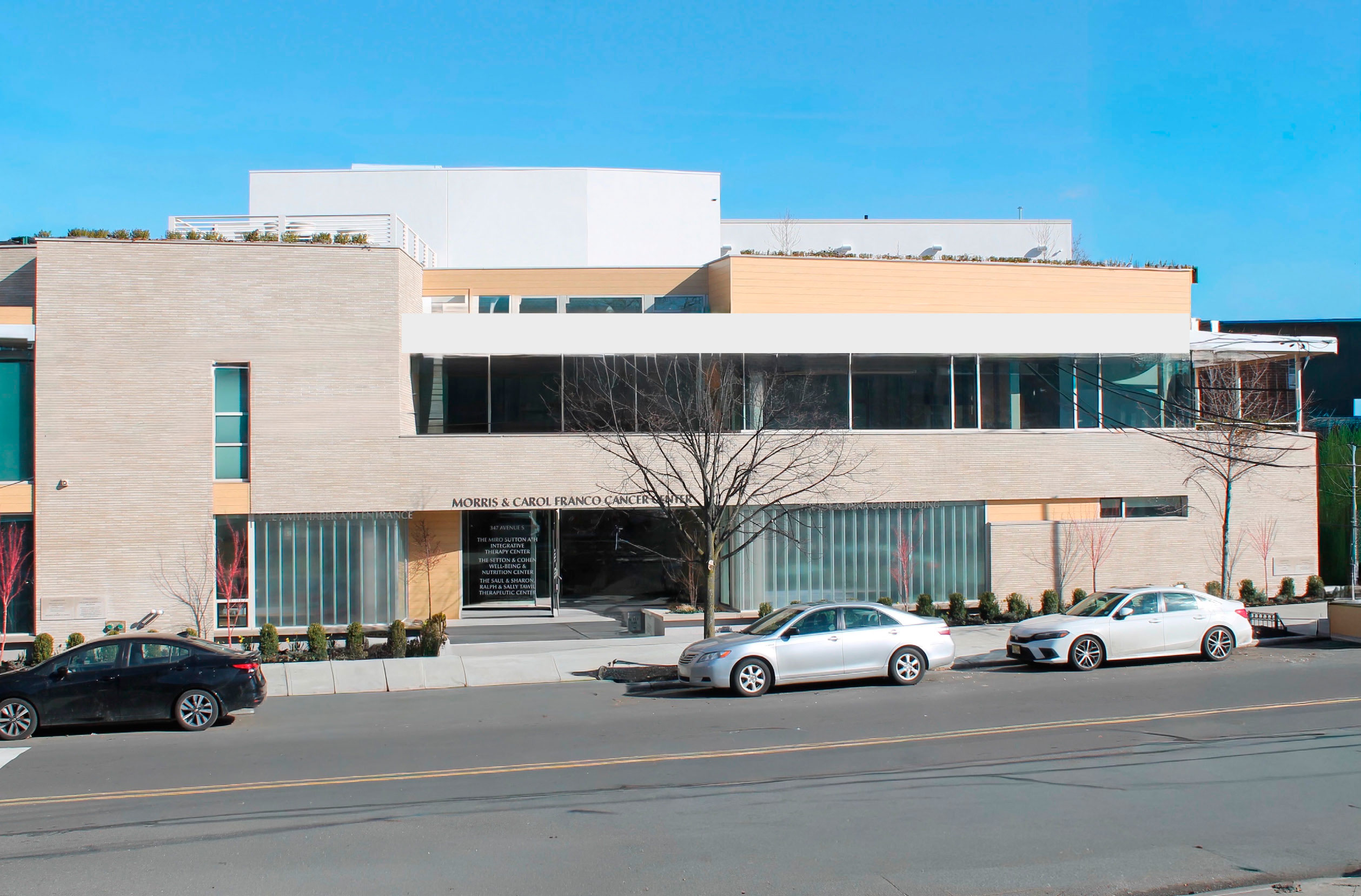
The Morris I. Franco Community Cancer Center Opens Its Doors to a New Chapter
For nearly thirty years, Nancy Sutton has made sure that no one in the community faces cancer alone. From the very first phone call, she and her team at the Cancer Center have been there – guiding patients and families through one of the most overwhelming experiences of their lives. For many clients, that first call comes during a moment of fear or uncertainty. Although it starts with needing doctors and referrals, the center understands that behind every diagnosis is a person, a family, and a story, and their mission has always been to offer compassion, guidance, hope, and support.
What began as architectural drawings and construction plans slowly transformed into a welcoming, vibrant center designed to serve thousands of people in the years ahead. After years of dreaming, planning, and building, that mission finally has a home that reflects everything it stands for.
The new building, located at the corner of McDonald Avenue and Avenue S in Brooklyn, is nearing its grand opening. For Nancy, the goal was to create an oasis.
“As soon as you walk in the door, you feel relaxed and welcomed,” she says. “Tranquil – that’s the word.”
From the first step, atmosphere sets the tone. Natural light pours through large windows, filling the space with an airy, open feeling. Gentle greenery and warm wood tones create a sense of nature indoors. Throughout the building, the soft sound of a waterfall flows quietly in the background, creating a peaceful rhythm that can be heard from many areas of the center. The effect is immediate – calmness, warmth, and a feeling of serenity.
The environment was designed intentionally to help clients breathe, slow down, and feel supported. Whether someone is coming for support services, a wellness program, or simply to attend a community event, the center welcomes them into a space that feels peaceful and alive.
For many visitors, the building itself becomes part of the healing experience.
Building Vision
The search for the right location took nearly a decade. Once the property was secured, construction – led by general contractor ABECO – spanned more than four years.
Every detail was thoughtfully considered, from the bamboo paneling and expansive atrium to the greenery cascading down the building’s facade.
The goal was not simply to build a medical support facility, but to create a place that feels uplifting and restorative.
“The more you care about every tiny detail, the happier you will be with the final product,” reflects Sam Sutton, chairman of the building committee. “This was a work of love, and the building reflects the love our community has for anyone touched by this disease.”
Architect Michael Goldblum, who worked closely with Nancy throughout the process, designed the space around a two-story, light-filled lobby that serves as the building’s heart.
“No matter where you go, you always know where you are,” he explains. “The building is part of the therapy, part of the process, part of the cure – it’s part of the healing.”
Board member Alan Tobias, who stepped in as project manager during the final stretch, watched that vision come together piece by piece.
“It was like a puzzle,” he says. “All the parts were separate, and then suddenly they came together. That felt very good.”
A Space That Heals
Step inside, and the scope of what has been created becomes clear.
At a spa lounge, with a waterfall and soothing music, acupuncture, Reiki, and reflexology are offered. The peaceful sounds and calming scents in the spa create an environment that immediately relaxes visitors.
In the salon, clients can be fitted for a wig and receive a full beauty treatment. Artisans of wig selection and styling staff the salon. The salon provides a private, uplifting space where clients can feel like themselves again. For many individuals undergoing treatment, these small moments of self-care can restore confidence and provide an emotional boost on difficult days.
There is also a creative expression room where adults and children can heal through art, music, and other creative activities. A full gym and yoga studio are located on the first floor. Yoga classes focus on breathing, calm, and gentle movement, helping participants reconnect with their bodies and find moments of peace during challenging times.
A children’s room provides younger visitors with a space where healing can occur through play and creativity. The room includes games, activities, and music that give children an opportunity to express themselves, relax, and enjoy being kids.
The building includes a café and demonstration kitchen that feels sweet, warm, and inviting. Here, healthy cooking demonstrations are offered regularly, teaching practical ways to prepare nourishing meals. These events are open not only to cancer patients but to the broader community as well, helping everyone learn how healthy choices can support long-term wellness.
Private counseling rooms provide psychological and emotional support for individuals and families, navigating difficult moments. Support groups, wellness workshops, and educational events will take place throughout the year, encouraging open conversations about emotional well-being.
The center will also host social gatherings, holiday celebrations, preventive health care, and community events designed to bring people together. These moments of connection are just as important as the wellness services themselves, helping people feel less alone on their journeys.
Another special feature of the center is its rooftop garden terrace, a peaceful retreat that offers clients a moment of calm above the activity of the building below. Designed as a quiet sanctuary, the rooftop provides a place where visitors can step outside, take a deep breath, and simply be still. Surrounded by greenery and open sky, the terrace allows clients and their families to enjoy fresh air and natural light in a setting that feels both peaceful and restorative.
Throughout the building, great care was taken to create spaces where clients feel comfortable and respected. The center is designed to offer both welcoming community areas and quieter corners like the medical library, for those who prefer a more personal setting. The center cultivates an environment that supports each person in whatever way they need during their journey.
Interior designer Joy Silvers poured herself into every room – but her connection to the center runs far deeper than design.
She is a former patient – someone who Nancy once guided through both breast cancer and lymphoma.
“I didn’t know if I was going to survive,” she says quietly. “I had a baby who was a year and a half. Now my son is 21, and I’m so blessed. “Working on the building was deeply personal. To see someone who isn’t well walk into a beautiful environment and feel happy – that’s extra special.”
Staff members often see firsthand how meaningful the space can be for clients.
Nina Tawil describes the experience of welcoming people into the building.
“I love seeing the look on the clients’ faces when they walk in the door,” she says. “Showing them this beautiful space always excites me because I know this is a haven for them to come to and enjoy and put their mind at ease while they’re going through trying times. I see the sense of calmness and ease they feel when they walk in.”
A Place for the Whole Community
Claire Cheika, Vice President, reflects, “There’s a genuine sense of warmth here that makes you want to be part of something so meaningful and give as a volunteer.”
Volunteers help assemble welcome packages and thoughtful gifts for clients beginning their journey. They assist with preparing flowers for Shabbat and preparing delicious, nourishing meals. Families facing illness can still experience a genuine sense of support in their day-to-day lives. Volunteers also play an important role in organizing fundraising events, planning community programs, and helping bring the center’s mission to life.
Holiday celebrations and special gatherings throughout the year will continue to make the center a place where people come together for joy and connection.
Educational programs, wellness demonstrations, and community events will encourage people to learn about healthy living, prevention, and emotional resilience. The center hopes to inspire individuals and families to care for their health in meaningful ways.
Built by the Community
None of this would have been possible without the community.
Fundraising was led by Sam Sutton, and support poured in from donors who believed deeply in the mission. Government funding, secured through the Sephardic Community Federation, helped bring the final touches of the building to life.
The builder who worked on the project captured the feeling perfectly:
“This wasn’t just about constructing a functional space. It was about creating somewhere people could feel supported and welcomed during one of the most difficult times in their lives.”
Nancy sums it up simply.
“When I see clients walk in and say, ‘Oh my… we get to come here?!’- that’s when we knew we got it right.”
No single person built this center. It took a team, a community, years of dedication – and Hashem’s helping hand. It is a refuge where people can find peace, strength, and support. And now, at last, it’s home.