



Ellen Geller Kamaras
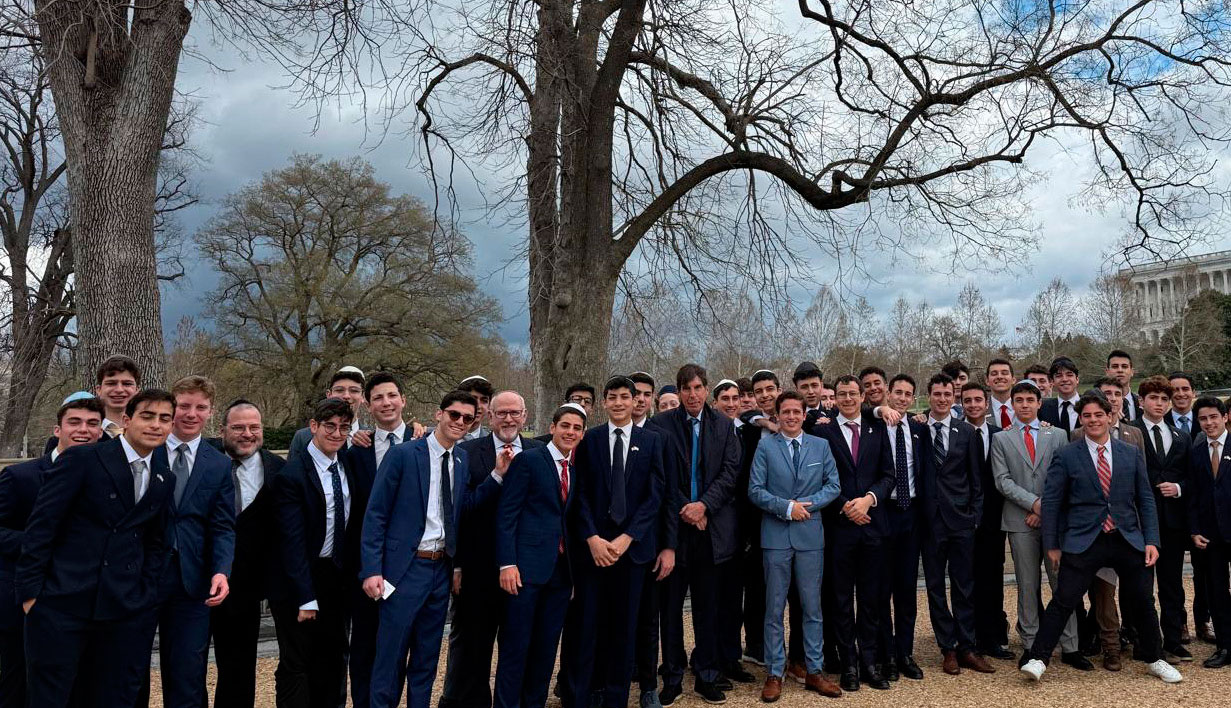
On March 24th, students from Yeshivah Flatbush High School met with U.S. elected officials and their senior staff members to advocate for Israel. Most of these young leaders belong to the Yeshivah’s Students Supporting Israel club, SSI.
Yeshivah of Flatbush (YOF) has created meaningful initiatives and has implemented them to educate and train its students, our future community leaders, in Israel advocacy and combatting anti-Semitism.
Background
SSI, a leadership-based club, works in partnership with the William S. Levine Family Shoah Institute and meets weekly. In 2022, YOF received a donation of $6 million from William S. Levine, who graduated from the YOF Elementary School in 1946. It was the largest donation ever given to the Yeshivah since its founding in 1927. The donation established the Levine Institute for Shoah Legacy (the Shoah Institute), an all-encompassing umbrella initiative for YOF Middle School and Joel Braverman High School students.
Rabbi Jeffrey Rothman, YOF Executive Director explained, “The Institute will prepare students for the moral responsibility to bear witness to the tragedies of the Holocaust and will help preserve an honest history of survivors’ voices for generations to come.” Witness Theater is one of the Institute’s signature programs that pairs high school students with Holocaust survivors to dramatize the survivors’ stories, transforming memories into live performances. The Middle School participates in the Names, Not Numbers program, as well.
After the horrific events of October 7th and in response to rising anti-Semitic and anti-Israel incidents, YOF launched a Combating Anti-Semitism and Israel Advocacy initiative for the 2025-2026 academic year.
Designed for high school students, the initiative combined an enhanced, age-appropriate curriculum on the history of anti-Semitism and its contemporary forms, Israel’s modern history and the Arab Israeli conflict, and practical advocacy skills. A key experiential component included training field trips, college campus visits, and lobbying/advocacy missions, including travel to NYC City Hall, Albany, and Washington, D.C.
My brother, Marty Geller, also a YOFHS alum, helped to establish the program and contributed funds from the Geller Family Foundation to finance the year-long advocacy program for 2024 and 2025, which culminated in Washington, D.C. for the students’ two-day lobbying trips. Marty is an American businessman, philanthropist, and Israel activist.
In its second year, the Geller gift enabled YOF to bring student Israel advocacy training to life through a mission to Washington, D.C in March 2026, and also provided key programming throughout the year. The March trip was an enormous success with 44 participants (up from last year’s 25 participants) from YOF who went to Washington, D.C. with Marty and Flatbush Yeshivah faculty members.
The March Mission
Rabbi David Hertzberg, the Director of the Shoah Institute and former YOF middle school principal, accompanied the delegation, along with other YOF faculty and Marty, who was a key player in preparing the students.
Marty met with the SSI students throughout the year, and in January 2026 he attended a dinner at the Yeshivah, kicking off the advocacy training process. He shared insights on advocacy, philanthropy, and lessons from business.
The group left New York on Sunday, March 22 and stopped in Baltimore for lunch and team building activities. Advocacy training followed at the DC hotel in the evening, enabling students to become comfortable with their talking points, which included anti-Semitism, the war with Iran, and the general U.S.-Israel alliance.
Marty participated with on-the-ground preparation related to lobbying skills at the AIPAC offices on Monday morning and he joined the students for a sightseeing tour, which included the Supreme Court.
Training and Execution
Training emphasized (1) identifying major current issues in Israel, (2) understanding how Congress works and the role of lobbying, (3) learning lobbying techniques, and (4) preparing talking points in groups for meetings with elected officials or their staff. Rabbi Hertzberg clarified that the group participated in Capitol Hill meetings as advocates for their cause and as themselves.
In the afternoon, the students conducted Capitol Hill advocacy meetings in small teams in congressional offices.
Each cohort of students was accompanied by either a faculty member or a senior SSI student with prior advocacy experience. Each group met with their own senator, congressperson, or staff person in the NY/NJ area to advocate for support of Israel and the U.S.–Israel alliance. They also raised concerns about rising anti-Semitism and the broader security challenges posed by Iran.
Marty and Rabbi Hertzberg joined these groups, too. Advocacy efforts included visits to the offices of Senators Chuck Schumer, Kristen Gillibrand, Cory Booker and others, though the students primarily met with senior staffers given the congressional schedule.
Debriefing
Rabbi Hertzberg asked: did we move the needle forward?
The debriefing that followed the visits and the feedback received definitely indicated that the advocacy mission was productive and successful. It is critical our elected offices continue to hear from constituents of all ages, especially our future leaders. Perhaps equally as important, students felt engaged and empowered that they could present their talking points to officials who are in a position to effect change.
The students utilized what they learned throughout the year and in Washington, and were able to explain why an alliance with Israel benefits the United States. They followed up by asking officials to support specific legislation. It was a wonderful opportunity for them to build on their communication, advocacy, and leadership skills, especially for future advocacy missions. Saying thank you to our government representatives for supporting Israel was a key takeaway, too!
The students appreciated the professional treatment they received from Marty and the AIPAC staff. Many expressed interest in future trips and experiences.
As part of their training, Marty and the professionals encouraged the students to share their own experiences on Capitol Hill to make their advocacy more personal. One student shared what happened when his family’s young Israeli guest asked when a motorized gadget went off (that opens a window shade) if they had to run to a shelter. This demonstrated so clearly how the missiles and sirens impact Israeli daily life.
Rabbi Hertzberg expects more students to join in future advocacy trips. Marty emphasized that the biggest pay-off from these missions is the number of students who become inspired to stand with Israel and get involved in many ways. Teenagers learn to do their part, whether by sending emails and making calls to government officials, getting involved on university campuses when they start college, and encouraging their families and friends to support Israel financially.
The students expressed their gratitude to Marty and the Geller Family Foundation for sponsoring this meaningful program and trip.
For more information on the Shoah Institute’s Israel Advocacy programs and missions, please email Rabbi Hertzberg at [email protected].
In Their Own Words
Below are reflections from four of students who participated in the trip, sharing what the experience meant to them.
Judah: “Going on the Yeshivah Flatbush Washington trip was a privilege. And knowing that I had the opportunity to do something that so few people my age get to do was truly special.”
Eli: “It was meaningful to be heard and taken seriously in the halls of power even though I’m only a teenager.”
Zach: “During our lobbying trip, our cohort had the opportunity to speak with the people who make change in the country. It made me realize that by implementing our rights, we can make a difference. It dawned on me that this country is truly a country for the people by the people.”
Sam: “I was able to present how maintaining strong support for Israel is not only vital for regional stability, but is also beneficial to the United States. I emphasized that continued American aid to Israel strengthens economic ties, supports innovation and security cooperation, and ultimately contributes to both nations’ long-term prosperity. Showing support for those officials who are helping Israel is important to keep it going. I feel I made an impact even though I am only 14.”