



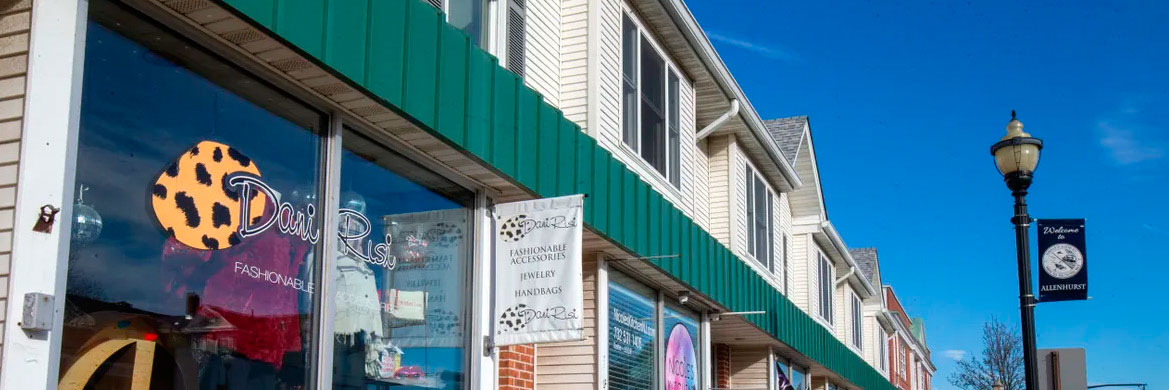
On March 17, Allenhurst held its monthly town hall meeting. What unfolded was not routine civic discussion, but something more revealing: a series of firsthand accounts from Jewish residents describing experiences of exclusion, hostility, and discrimination that, until now, had largely gone unspoken.
For years, many in the community have described carrying quieter versions of these moments – interactions that felt off, or a sense of being unwelcome without a clear cause. At the town hall, those experiences were articulated.
One of the clearest accounts came from a woman who has lived in Allenhurst for ten years. When she first moved to town, neighbors did not realize she was Jewish and, she said, she encountered no issues. Once her Jewish identity became known, her experience changed. She described being asked where her horns were, facing assumptions that large numbers of people would live in her home, and being refused business outright by residents who told her they “don’t do business with Jews.” She also noted she had not experienced anti-Semitism before moving to Allenhurst.
Political Context and Public Scrutiny
These accounts did not emerge in a vacuum.
In May 2024, Frieda Adjmi, a Syrian Jewish resident and longtime Planning Board member, became Allenhurst’s first female mayor. Her election was followed almost immediately by an investigation into alleged voter irregularities, centered on a sharp increase in registrations. Critics suggested members of the Syrian Jewish community had improperly registered at seasonal homes.
The Monmouth County Prosecutor’s Office ultimately closed the investigation without charges or findings of wrongdoing. However, the scrutiny and the tone of its coverage left a lasting impression on many residents, who saw it as part of a broader pattern where Jewish civic participation was treated with suspicion.
The Graffiti Incident
Weeks later, in June 2024, a local grocery store transitioning to a kosher establishment was vandalized. Jewish stars were painted across the property, alongside the words “go home.”
The response raised further concern. Rather than preserving the scene for investigation, the public works department removed the graffiti before evidence could be fully examined. Although Mayor Adjmi directed that the incident be referred to the bias crime unit, she said she never received confirmation that such a referral occurred. The incident was not covered in the press.
By the time of the March town hall meeting, these and other episodes had escalated into Jewish residents feeling an increasing sense of unease.
As the meeting progressed, tensions in the room rose. Speakers who shared experiences of anti-Semitism were at times interrupted or dismissed. When Mayor Adjmi rose to close the evening, she addressed not only the incidents themselves but the reaction to them. She said that dismissing or mocking someone’s account of discrimination is itself a form of harm.
She then shared her own history.
Since the 1990s, Mayor Adjimi has experienced anti-Semitism in Allenhurst. As a young woman, she found her beach club locker repeatedly filled with garbage, with the phrase “Syrian Free in ’93” written inside. She recalled being advised not to confront the behavior, but to accept that some residents were resistant to change.
Long-Term Engagement
Instead, she became more involved in the community – raising funds for local services, leading projects, and working to build shared spaces. In the early 2000s, she helped create a public playground intended to bring children of different backgrounds together. More recently, she led the development of pickleball courts, despite opposition from residents concerned about the courts attracting outsiders.
On the first day of Passover, those courts were vandalized.
No single incident defines a town. Each can be explained, disputed, or minimized on its own. But taken together – the testimonies, the graffiti, the vandalism, the patterns of opposition described by residents – a broader picture begins to emerge.
The Broader Question
The central issue is not only whether anti-Semitic acts have occurred. It is whether they are being taken seriously when they do.
When incidents are not fully investigated, when public accounts are dismissed, and when patterns are treated as isolated disputes, the result is not neutrality, it causes erosion of trust. For those experiencing it, the message is not ambiguous.
Mayor Adjmi’s Closing Message
Mayor Adjmi ended the evening not with accusation, but with intent.
“I ran because I wanted to heal the pain, heal the hate,” she said. Her closing message was simple: a hope for mutual recognition and respect in a community that is still struggling to define both.
That may be the real test facing towns like Allenhurst. Not whether conflict exists, it always will, but whether a community is willing to confront uncomfortable patterns honestly, or allow them to remain just below the surface, where they are easier to dismiss, and are harder to resolve.