



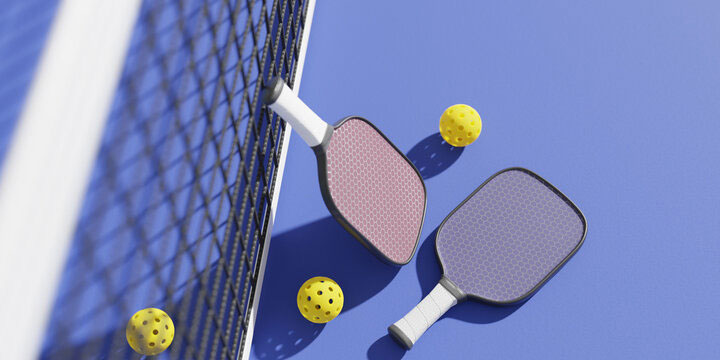
From a Backyard Pastime to One of America’s Fastest-Growing Sports
If you have visited a local park, recreation center, or community gym in recent years, you have probably heard the familiar pop of a plastic ball traveling across a court. Chances are, you were hearing a game of pickleball.
Although it was invented more than 60 years ago, pickleball has become one of the fastest-growing sports in the United States. A rapidly growing number of people now play the game for exercise, competition, and social connection. Pickleball attracts players of all ages because it is easy to learn, affordable to play, and challenging enough to keep people interested for years.
A combination of tennis, badminton, and table tennis, pickleball blends strategy, quick reactions, and teamwork. Yet its rise from a simple backyard experiment to an international sport began with three friends, a badminton court, and a desire to create something the whole family could enjoy.
A Summer Idea Becomes a New Sport
Pickleball was invented during the summer of 1965 on Bainbridge Island, Washington, near Seattle. The game was created by Joel Pritchard, Bill Bell, and Barney McCallum, three friends who were looking for a fun activity that their families could play together.
According to accounts from the founders and their families, the group started with an existing badminton court but did not have all the equipment needed for a traditional badminton game. They improvised by using table tennis paddles and a lightweight perforated plastic ball. As they played, they experimented with the rules and court setup, including adjustments to the net height, eventually creating a format that better suited the new game.
What began as a casual family activity soon developed into a structured sport. The three founders continued refining the rules, adjusting the equipment, and creating a game that could be enjoyed by beginners while still offering strategic challenges for experienced players.
Building the Foundation
Early versions of the game used table tennis paddles before larger paddles were created specifically for pickleball. These larger paddles gave players better control and helped to establish the style of equipment still used today.
The perforated plastic ball also became one of pickleball’s defining features. Unlike a tennis ball, it moves at a slower pace and encourages players to focus on placement, timing, and strategy. The combination of the ball, the smaller court, and the carefully developed rules created a sport where players compete through skill and decision-making as much as athletic ability.
One of pickleball’s most recognizable features is the non-volley zone, commonly called “the kitchen.” This seven-foot area on both sides of the net prevents players from standing directly at the net and hitting every shot out of the air. The rule encourages thoughtful play and creates the quick exchanges that make pickleball exciting to watch and play.
How the Game Spread Across the Country
As friends and neighbors on Bainbridge Island learned the game, pickleball slowly began spreading to other communities. In 1972, Pickle-Ball, Inc. was formed to help manufacture equipment and establish the sport more formally.
During the 1980s and 1990s, pickleball continued growing through schools, parks, recreation departments, community centers, and retirement communities. While it was not yet widely known across the country, dedicated players helped build a strong foundation by organizing clubs, teaching new players, and introducing the game to their communities.
The sport’s growth accelerated in the early 2000s. More communities began adding pickleball courts, and many tennis facilities added pickleball lines to meet increasing demand. Its accessibility became one of its greatest strengths: players could learn the basics quickly, but improving strategy and technique provided a lifelong challenge.
The formation of the USA Pickleball Association (now USA Pickleball) in 2005 helped further organize the sport, establish official rules, and support its continued expansion.
Enjoyed by People of All Ages
Pickleball’s popularity comes from its ability to bring together people of different ages and skill levels.
The court is 20 feet wide by 44 feet long, about one-third the size of a tennis court. This smaller playing area means players do not have to cover as much ground, while still getting an excellent workout. The game can be competitive and fast-paced without requiring the same level of endurance as some other racquet sports.
The social side of pickleball is equally important. Doubles play is especially common, and many communities offer open-play sessions where players rotate partners and welcome newcomers. For many people, pickleball is not just a sport – it is a way to build friendships and stay connected.
At the same time, competitive players appreciate the depth of the game. Learning how to place shots, create spin, anticipate opponents’ moves, and work effectively with a partner can take years to master.
How the Game Is Played
Pickleball is played on a court the same size for both singles and doubles matches. The net is slightly lower than a tennis net, measuring 36 inches high at the sidelines and 34 inches in the center.
Players use solid paddles made from wood, composite materials, or lightweight modern materials. The ball is made of durable plastic, with holes designed for consistent flight. Indoor and outdoor versions are available to suit different playing conditions.
Each point begins with an underhand serve. The ball must be struck below the player’s navel, with the paddle head below the wrist at contact. After the serve, the receiving team must allow the ball to bounce before returning it, and the serving team must also let the return bounce before playing the ball. This is known as the double-bounce rule.
After those first two bounces, players may volley the ball or allow it to bounce before returning it. The kitchen rule adds another layer of strategy, requiring players to carefully choose when to move forward and when to stay back.
From Recreation to Global Competition
Today, pickleball is played in schools, parks, gyms, clubs, and professional tournaments around the world. USA Pickleball oversees official rules, supports tournaments, and promotes the sport at all levels.
Professional pickleball has grown significantly, with elite competitions attracting skilled athletes and larger audiences. Television coverage, online streaming, and social media have helped introduce the sport to millions of new fans.
The game has also expanded internationally, with players and organizations promoting pickleball across North America, Europe, Asia, Australia, and other regions.
More than six decades after three friends created a backyard game, pickleball continues to grow because it offers something many sports struggle to provide: a welcoming experience for beginners and a rewarding challenge for experienced competitors.
Whether played casually with neighbors or at the highest levels of competition, pickleball remains true to its original spirit – a simple game designed to bring people together.
Why Is It Called Pickleball?
The name “pickleball” is one of the sport’s most interesting mysteries.
The Popular Story
Many people have heard the story that pickleball was named after Pickles, the Pritchard family dog, who supposedly chased the ball during early games.
It is an entertaining story, but most historians believe the dog was actually named after the game rather than the game being named after the dog.
The Leading Explanation
According to Joan Pritchard, Joel Pritchard’s wife, the name came from the rowing term “pickle boat.” In rowing, a pickle boat refers to a crew made up of rowers selected from different boats.
Because the new sport combined elements of several existing games – including tennis, badminton, and table tennis – she felt the name was a fitting comparison.
Although different versions of the story have been shared over the years, the pickle boat explanation is generally considered the strongest and best-supported account of how pickleball received its unusual name.