



Pharaoh was more than just a king. For us, he was – and is – a symbol.
A number of traditional sources, including the Zohar, teach that Pharaoh, the king of Egypt who enslaved our ancestors, symbolizes the yetzer hara, our evil inclination, our negative tendencies, our vices, our sinful instincts. Of course, the story of Pharaoh is true and historically accurate. But in addition, Pharaoh embodied the yetzer hara, and thus by studying his behavior, we gain a clearer understanding of the “Pharaoh” within us that we must constantly struggle to overcome.
Most obviously, the yetzer hara, like Pharaoh, “enslaves” us. I doubt anyone reading this never felt trapped or chained by a bad habit, by some lure or temptation.
Additionally, as we read this month, Pharaoh acted irrationally, without reason. He continually refused to led Beneh Yisrael leave Egypt even when this was clearly and undeniably the correct thing to do for the benefit of his kingdom, which was devastated by plague after plague due to his intransigence. Our yetzer hara, too, causes us to act insensibly, to persist in our negative behaviors even as we know how detrimental and destructive they are.
In this context, however, I would like to draw our attention to one particular aspect of Pharaoh’s story which should inform the way we approach our human weaknesses.
Moshe the “Macho Man”?
Following the eighth plague, the plague of locusts, Pharaoh relented, and he informed Moshe that he would permit all Beneh Yisrael to leave – but on the condition that their cattle remain behind in Egypt.
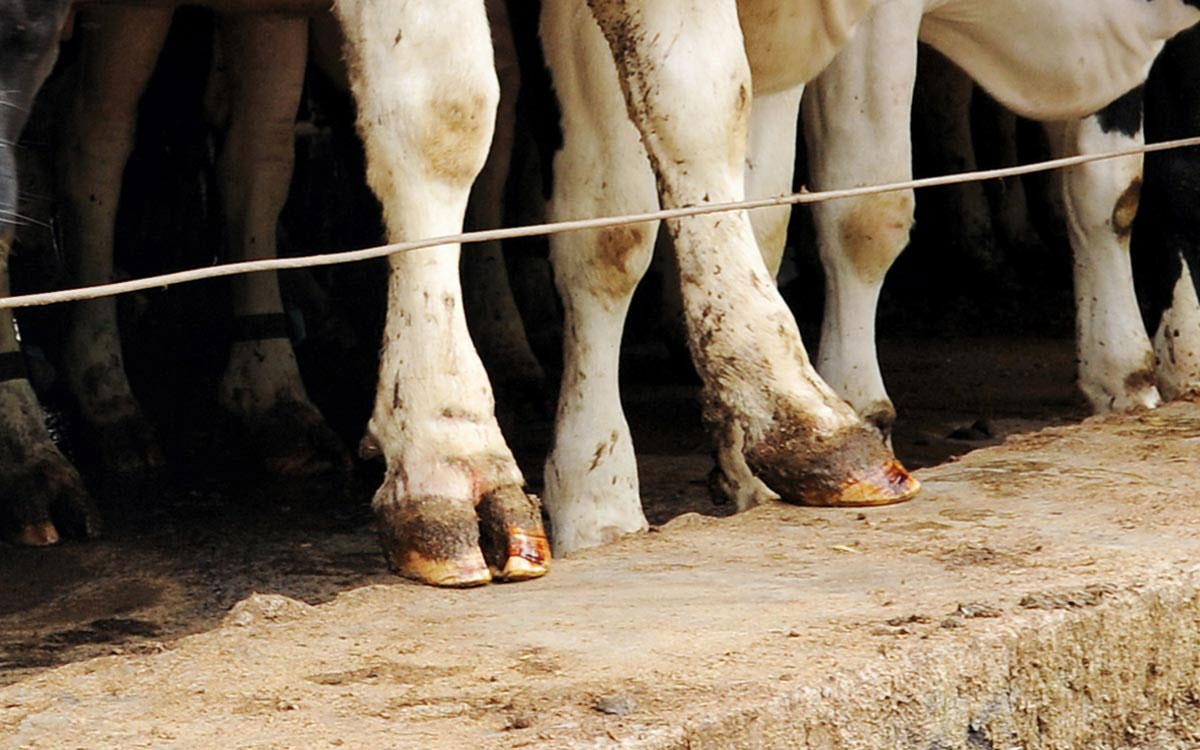
Moshe, predictably, refused – but he does so with uncharacteristic vehemence. He told Pharaoh that not only would Beneh Yisrael take their own cattle, but Pharaoh himself would give them his own animals to be offered as sacrifices to Gd. But most strikingly, perhaps, Moshe declared, “Lo tisha’er parsah – Not a hoof will remain!” (10:26). He emphasized that not one of his people’s animals – not even one leg of an animal! – would stay in Egypt.
We are not accustomed to seeing Moshe “talk tough,” not even to Pharaoh. Why was Moshe so insistent that every “hoof” needed to leave Egypt? Was this just posturing, an attempt to sound “macho”?
One explanation is indicated by the Midrash, which explains that Moshe considered the possibility that Gd would require the offering of innumerable animal sacrifices. Moshe said to Pharaoh, “…and we do not know with what we will serve Gd until we arrive there” The Midrash comments that since Beneh Yisrael had not offered any sacrifices over the course of their 210-year sojourn in Egypt, Moshe wondered if perhaps they would need to make up for all these missing years, and bring over two centuries’ worth of sacrifices. Hence, we might say that Moshe wasn’t “talking tough” with Pharaoh, but simply stating the fact that Beneh Yisrael would need as many animals as they could bring, given the possibility that they would be asked to make up for all the years during which they were unable to bring sacrifices to Gd.
However, this would not explain Moshe’s emphasis that “lo tisha’er parsah” – no “hoof” would remain in Egypt. Why did he need to be so dramatic in demanding that Pharaoh let Beneh Yisrael’s animals leave with them?
The Sneaky “Baby-Step” Scheme
The answer becomes clear once we understand that Pharaoh wasn’t just a king, but rather a model and embodiment of the yetzer hara.
The Gemara (Shabbat 105b) tells us about the devious strategy employed by the yetzer hara to lure us to sin:
For this is the evil inclination’s scheme: Today it tells him, “Do this”; the next day, it tells him, “Do this;” until it tells him, “Worship idols,” and he goes ahead and worships.
If the yetzer hara would try to entice an ordinary, Gd-fearing Jew today to pray on Sunday morning in a church, this is not likely to happen. Rarely does a person fall so far so rapidly. Instead, the yetzer hara takes baby steps, pushing a person one small stride at a time. It first convinces him to commit some relatively minor infraction which is beneath the individual’s standards. For some people, this might mean neglecting to recite birkat hamazon after eating bread. For some, it might mean sleeping late and missing minyan. For others, this might be sharing some “juicy” gossip. The point is that the yetzer hara seeks to keep a hold on the person, in whichever way it can. It will try to convince him to do something that he knows he shouldn’t do, but that is not such a grave violation that he would never countenance committing it. The yetzer hara’s goal is not this relatively minor infraction itself, but rather to maintain a foothold, to keep the person under its influence.
The reason behind this strategy is something which the yetzer hara knows very well, but which we often forget – that one thing leads to another. Once we let the yetzer hara into our lives, and into our beings, we come under its influence and can so easily fall into a downward spiral. Gd told Kayin, “Lapetah hatat rovetz – Sin crouches at the entrance” (Beresheet 4:7). The process of sin begins “at the entrance,” by letting the yetzer hara into the door to our hearts. Once we start negotiating and arguing with the yetzer hara, we are then likely to start making compromises to accommodate it, to make exceptions, however inherently slight. These compromises and exceptions then lead to others, potentially sending us far from where we ought to be.
The only response to the yetzer hara is to slam the door in its face and not let it in. If we allow ourselves to be dragged into negotiations and discussions, our fortifications are then breached, and we are at grave risk of spiritual demise.
This is the message of Moshe’s fervent, passionate proclamation, “Lo tisha’er parsah” – that not a single hoof would remain in Egypt. We cannot give Pharaoh an inch, not even a single “hoof.” If a hoof would remain in Egypt, there is no telling who else would end up getting stuck in Egypt. We cannot allow the yetzer hara any leeway. Our rejection must be firm and absolute.
The Lesson of Eliyahu’s Bull
This explanation dovetails with a fascinating insight by the Malbim (Rav Meir Leibush Wisser, 1809-1879) regarding the text of this verse.
The Malbim perceptively notes that Moshe did not tell Pharaoh that Beneh Yisrael would bring their cattle with them. Instead, he said, “Vegam miknenenu yelech imanu – And also our cattle will come with us.” The flocks wouldn’t be brought out by the people – they would leave on their own!
The Malbim explains what this means based on the story of the prophet Eliyahu’s “showdown” with the pagan prophets on Mount Carmel. As we read in the Book of Melachim I (chapter 18), Eliyahu challenged the prophets of the pagan god ba’al to a contest of sorts, whereby he and they would bring sacrifices, and the one whose sacrifice would be visibly accepted would be proven right. Eliyahu brought two bulls, and invited the prophets of ba’al to choose the bull that they would sacrifice to their deity. Needless to say, these prophets received no response from their imaginary god after sacrificing their bull. Eliyahu then proceeded to offer the second bull, and he prayed to Gd for a response. A heavenly fire descended and consumed the sacrifice, proving to all the people the truth of monotheism.
The Midrash relates that the bull chosen by the pagan prophets was reluctant to go. It refused to be used for the purpose of pagan worship. Eliyahu convinced the bull that it was actually a privilege to be sacrificed to ba’al, as this would result in a spectacular kiddush Hashem (glorification of Gd), whereby the entire nation would recognize the truth about Hashem. At that point, the bull proceeded.
In light of this story, the Malbim suggests a novel explanation of Moshe’s response to Pharaoh. Moshe was saying that Beneh Yisrael’s cattle would leave Egypt on its own, willing and eager to be sacrificed to Gd. Unlike the pagan prophets’ bull – which needed to be persuaded to be used as a sacrifice to ba’al – Beneh Yisrael’s animals left Egypt happily, enthusiastic about their role in the service of the Almighty.
The Malbim adds that this is why Moshe then told Pharaoh, “ki mimenu nikah la’avod et Hashem – for we will take from it [the cattle] to serve Gd.” He was saying that Beneh Yisrael would “take” a precious lesson in religious devotion from their cattle. When they see their herds eagerly going to be sacrificed to Gd, they will be moved and inspired, and will strive for this level of unbridled and enthusiastic commitment.
Once we “shut the door” on the yetzer hara, we eliminate all our inner reluctance and ambivalence. Once we make the resolute, unwavering decision to reject our sinful tendencies, our service of Hashem will be far more energetic, wholehearted, enthusiastic, and fulfilling. Rather than be encumbered by reluctance and inner struggle, we will – like our ancestors’ cattle – march naturally and eagerly along the path of Torah and mitzvot. The critical first step is to declare, “Lo tisha’er parsah” – that we are not letting the yetzer ha’ra through the door, that we reject it, that we are entirely free from its clutches, leaving it in control of nothing, not even a single “hoof.”
The lesson of Moshe’s pronouncement to Pharaoh, then, is that we must make the firm decision to leave “Pharaoh,” to abandon our bad habits, to reject our vices, and to commit ourselves fully and unconditionally to the Almighty’s will.