



Why Brooklyn’s Jewish Community Must Speak Up Now
Linda Argalgi Sadacka
In Brooklyn’s Jewish neighborhoods, certain scenes are so familiar that we rarely pause to notice them.
On Shabbat morning, fathers walk with their sons toward shul. Mothers guide small children down the block. Teenagers drift toward friends already waiting outside synagogue doors. Grandparents move more slowly along the same sidewalks they have walked for decades, sometimes leaning on a cane, sometimes arm in arm with a spouse or child.
In neighborhoods like Flatbush, Midwood, Gravesend, and the surrounding communities, the walk to shul is not simply routine. It is one of the quiet, defining rhythms of Jewish life.
No one used to think twice about it.
New Question of Safety
Which is why the question many Brooklyn families now quietly ask would have sounded unimaginable not long ago: will the walk to shul always feel safe?
For generations, Brooklyn represented something powerful for Jewish life. It was a place where Jewish families could practice their faith openly, build institutions, and raise children with the confidence that their synagogues were places of prayer, dignity, and community.
But since October 7, the atmosphere surrounding Jewish institutions in New York has shifted in ways that many families feel every week.
Sometimes the change is subtle. Sometimes it is unmistakable.
Security outside Jewish schools has increased. Synagogues have become more vigilant. Parents walking with their children to services find themselves paying closer attention to their surroundings.
A Pivotal Event
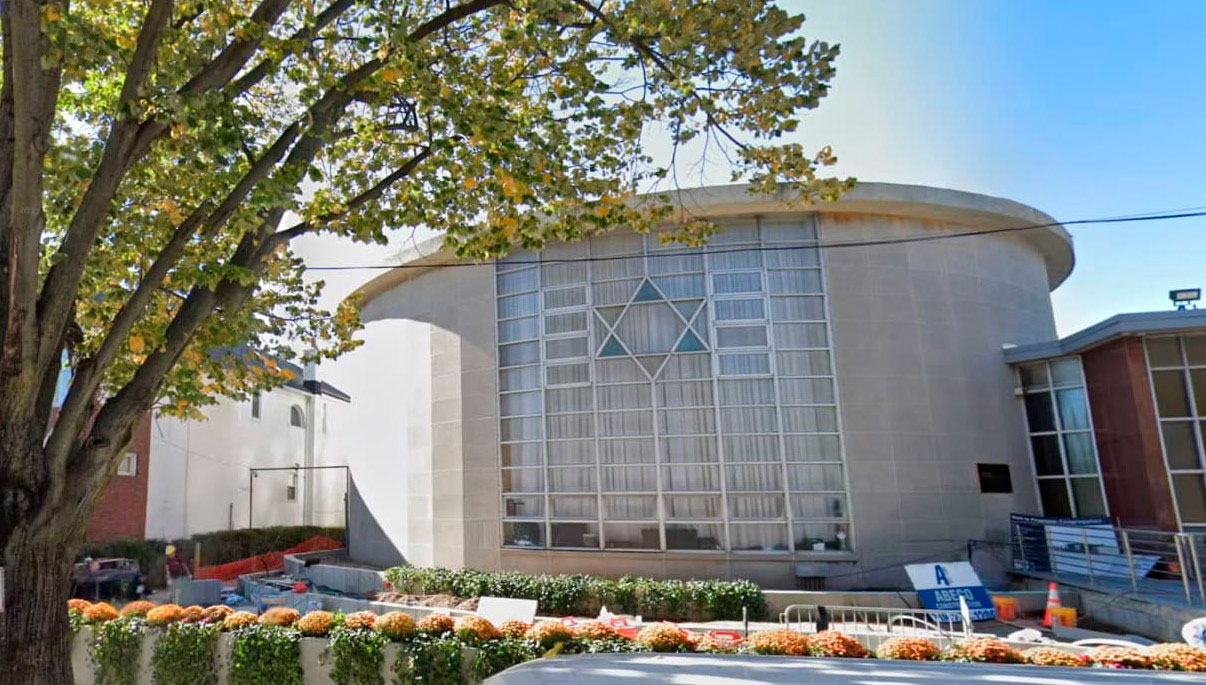
For many Brooklyn residents, the moment when that tension became impossible to ignore came during the protest outside Congregation Shaare Zion on Ocean Parkway, when demonstrators gathered outside the synagogue in response to a planned appearance by Israeli National Security Minister Itamar Ben-Gvir.
Supporters also arrived, and police were forced to separate the groups as tensions escalated. Clashes broke out, arrests were made, and the event was eventually canceled.
For those watching the scene unfold, the most unsettling aspect was not the political disagreement itself. New Yorkers are accustomed to protests. The city has always been a place where people gather to express strong views about global events.
What made this moment different was where it was happening. This was not a demonstration outside a government building or a public plaza. It was unfolding outside a synagogue where families had gathered for a community event and where worshippers regularly come to pray.
Once protests move to the doors of houses of worship, the nature of the confrontation changes.
Sanctity of the Synagogue
A synagogue is not a ministry or a parliament. The people walking through its doors are not policymakers or negotiators. They are parents bringing children to services, elderly congregants attending prayer, and families participating in the rhythms of Jewish life.
Yet the protest outside Shaare Zion was not an isolated moment. Similar scenes have taken place outside Jewish institutions across New York, including outside Park East Synagogue in Manhattan, where protesters gathered while congregants attempted to attend services.
Moments like these raise a troubling question: if houses of worship become routine protest sites, what happens to the ordinary act of entering a synagogue?
Children absorb these moments in ways adults sometimes overlook.
A child approaching synagogue should be thinking about prayer, about friends waiting inside, about the warmth of community. That child should not be processing hostility directed toward the place where their family gathers to worship.
The elderly feel this tension as well.
Anyone who has watched older congregants make their way slowly toward synagogue understands how vulnerable that walk can already be. Many move carefully. Some rely on assistance. To place them in the middle of emotionally charged demonstrations is not merely inconvenient. It is deeply unsettling.
Buffer Zones
The debate over buffer zones around houses of worship grew out of precisely these concerns.
Within a week of the October 7 attacks, as protests began spreading throughout New York City, I reached out to members of Mayor Eric Adams’s staff to raise the idea of establishing buffer zones around houses of worship. Watching demonstrations escalate so quickly, it seemed clear that the city needed to think several steps ahead.
The proposal never advanced to the level of serious policy discussion.
Fast forward to City Hall, where the New York City Council recently held a nearly ten-hour hearing debating legislation that would allow the NYPD to establish limited buffer zones around houses of worship and schools.
The proposal, part of a broader effort introduced by Council Speaker Julie Menin to combat rising anti-Semitism and hate crimes, does not prohibit protest. Demonstrators would still be able to assemble and express their views.
What the legislation seeks to do is to ensure that protests do not take place directly at the entrances of houses of worship where worshippers must pass to enter.
For many members of the Jewish community, that distinction is both reasonable and necessary.
Community Members Take a Stand
During the hearing, several voices from the community articulated that concern directly.
Community activist Abie Hamra addressed lawmakers and made a straightforward point: the First Amendment protects freedom of speech and freedom of assembly, but those rights do not extend to blocking access to houses of worship or interfering with another person’s ability to pray.
Cities impose reasonable time, place, and manner restrictions all the time. Ensuring safe access to houses of worship should not be controversial.
District leader Joey Saban also emphasized the importance of legislation introduced by Senator Sam Sutton. In addition to serving in the Assembly, Saban is also Senator Sutton’s Chief of Staff.
“The buffer zone legislation introduced by Senator Sutton is precisely why it is so important that we have a seat at the table,” Saban said. “Through his leadership we have been able to introduce a major piece of legislation that will have a direct effect on keeping our community safe at a critically fragile time for the Jewish community in New York.”
I was invited to testify during the hearing as well. Because I was available earlier in the morning and could not remain until my scheduled speaking slot later in the day, I submitted my testimony to the Council by email.
Addressing Arguments by Opponents of Buffer Zones
In my testimony I addressed an argument raised by several opponents of the legislation.
During the discussion, much of the justification for protests centered on claims that certain religious institutions host events connected to political or international disputes. People may strongly disagree with those issues, and protest is a protected and important part of democracy. But the individuals walking into a synagogue, church, or mosque are not policymakers or negotiators. They are ordinary people coming to pray.
If disagreement with an idea becomes justification for confronting people at the doorway of a house of worship, then no doorway remains neutral ground.
Parents arrive pushing strollers. Grandparents move slowly with walkers. Families come seeking prayer, comfort, and community. They should not have to pass through shouting crowds or emotionally charged demonstrations simply to enter a religious space. At that point, it ceases to be protest and becomes intimidation.
Buffer zones do not silence protest. Demonstrators remain visible and heard. What buffer zones do is create a margin of space so that worshippers are not forced into confrontation simply to practice their faith.
Devorah Halberstam and Inna Vernikov
Among those who also addressed lawmakers was Devorah Halberstam, whose son Ari was murdered in a terrorist attack on the Brooklyn Bridge in 1994. For decades she has worked to combat anti-Semitism and advocate for Jewish safety in New York.
Speaking during the hearing, she urged lawmakers to pass the legislation for Ari, a”h, and ensure that houses of worship remain places where families can gather without fear.
Council Member Inna Vernikov has also expressed support for protecting access to houses of worship, emphasizing that while protest is a protected right, intimidation that interferes with the free practice of religion should not be tolerated.
Troubling Trends
Still, beyond individual statements, many Jewish New Yorkers are concerned about a broader convergence of troubling trends.
Public sympathy for groups that openly celebrated the October 7 massacre has appeared at protests and across social media. At the same time, debates about policing and enforcement have left some communities questioning whether sufficient resources exist to respond when demonstrations escalate.
When sympathy for extremist violence, uncertainty about enforcement, and the absence of clear protections around houses of worship collide, the result can feel like a dangerous vacuum.
And that vacuum is felt most clearly at the doors of synagogues.
If the ordinary rhythms of Jewish life begin to feel uncertain, the consequences ripple outward. Parents hesitate. Children absorb the tension. The sense of security that once defined community life begins to erode.
That is why this moment cannot be met with quiet concern alone. Brooklyn’s Jewish community must make its voice heard.
Speak Up!
Residents should contact their City Council members and state representatives and tell them clearly that protecting access to houses of worship must remain a priority.
Reasonable buffer zones are not about silencing protest. They are about ensuring that families can enter synagogues without intimidation.
New Yorkers can identify their elected officials by entering their address here: https://www.mygovnyc.org.
The message should be simple. Support reasonable buffer zones around houses of worship so that worshippers can pray without fear.
Congregants should also speak with their rabbanim and community leaders and encourage them to publicly support these protections. When lawmakers hear directly from the families who fill Brooklyn’s synagogues every week, the issue becomes impossible to ignore.
The demonstration outside Shaare Zion should not become normal in Brooklyn.
The hostility seen outside Park East Synagogue should not become the expectation for Jewish families entering houses of worship anywhere in this city.
The walk to shul should remain what it has always been, a peaceful expression of faith – not an act of courage. And ensuring that it stays that way requires the community to speak up now.