



In 2005 on the heels of a parent support group, Imagine Academy was born. Jane and Sam Sutton invited Wendy and David Jemal, Susie and Marvin Dweck, Heather and Jeffrey Deutsch, and Rebecca and Joe Harary on their boat for an evening out. The couples bonded, planned, and formed our school. Hope was secured.
Rebecca recalls, “That night we decided to open our own school. I knew that these parents had everything at stake, and because of that, we could create something better than any of the mediocre or long-distance options out there. Everyone pulled their weight, and no one dropped the ball. These parents spearheaded every decision from the teachers to the desks, and even the crayons. Through blood, sweat, and lots of tears, Imagine Academy soon opened a haven for 12 students and 24 very grateful parents.”
Trailblazing in Methodologies
It’s been 21 years since then, and Imagine Academy has truly thrived. From a small house on East 7th street, to a larger and more spacious location on 14th street, the student body grew from 12, to now almost 50 students. At the time, there were two very different methodologies to educating a child with autism or other developmental disabilities. ABA, one of the most widely recognized and commonly used approaches today, is implemented. Additionally, Floortime (also known as DIR), which is a developmental and engagement-based approach, is a key component. Very few schools are trained to use this highly specialized methodology and almost no schools employ both. For the parents, who wanted every possible therapy for their kids, it was an impossible choice.
Elisa Chrem, the principal, recalls, “Imagine Academy was the first school in the country that opened using both therapies, and while it was an evolution to blend the two, it was amazing because the same child might use Floortime for certain skills, and ABA for other skills. When I have a student in front of me, I ask, ‘How can I support this child at this moment? What’s the best tool in my tool box to accomplish that?’ The answers come with time and experience, which we pride our staff on having.”
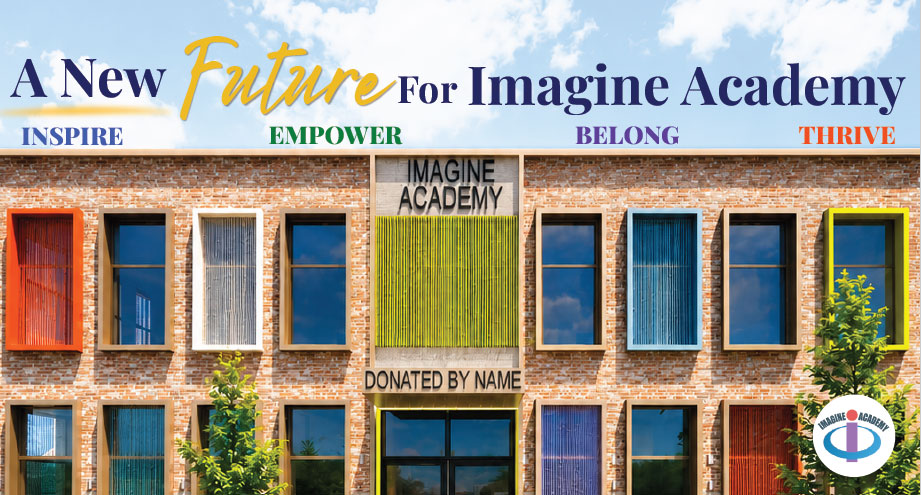
Currently, Imagine’s building is wonderful and warm but is also too small. We need more space to teach life skills, reading, science, math, art and music. The amazing staff is constantly training, growing, and self-reflecting, focusing on helping kids succeed at their highest academic potential. The current capacity of the school is 50 students, because with all the staff and specialty therapists, a class with six students is difficult to navigate with 12 people in the room.
Multi-faceted Program
Speech therapist Rebecca Mosseri Haber explains, “What makes Imagine so special is that they support the family as a whole, in addition to the individual student.” Ginette Gindi Tawil, veteran Imagine Academy staff, continues, “Every day we are teaching the kids essential skills, like how to brush their teeth, recognize and write letters and numbers, cooking, vocational skills such as shopping at the supermarket, and even swim lessons every week in the Sephardic Community Center. The teachers are deeply committed to each child, making sure that all their needs are met, including any challenges families may face at home. We also take the kids on overnight trips, which gives both the families and kids a break, and helps them build confidence and social skills in a fun and supportive environment. I even had one of my students, Aryeh, march in my wedding. It made me so happy and was the most special part of the whole night.”
Marcelle Shasho, another staff member, explains, “As teachers, we are constantly asking, ‘How can we make these kids’ lives better?’ We meet every day to work on goals for each child, and the meeting of those goals. Each student is an individual and we create programs based on their profile. Students work together to improve their relationship skills and we bring siblings in for workshops to target relationships within the families as well. Most importantly, we provide FloorTime coaching and support to our families to help our parents overcome any barriers to building a wonderful relationship with their child. We also have school partnerships with Magen David and Flatbush Yeshivah students. This encourages our kids to integrate and interact with students from these programs. When the students come they are impressed with how much fun and interaction they can have with our students. Imagine is a very warm place to be and to work.”
Raquel Savdie, the Assistant Principal stated, “We have done groundbreaking work here, raising the bar and becoming a model for other educators attempting to start neurodiverse schools! From the minute the children arrive, until the minute they leave, it’s an incredibly productive time. And yet… we are bursting at the seams. We need an adequately sized gym, so they can play basketball. We need space for parent functions, thematic events, and schoolwide happenings. Currently, we partner with the Sephardic Community Center, and they are fantastic, but it’s not like having the space on our home court. We’d like to offer more after school services, community outreach, a post 21 program, and possibly even residences for the older kids. We’d love a garden and outdoor space, but most importantly, we want to accept more kids! The environment plays a big part in education. When we moved from East 7th to East 14th, there was a giant leap in our level of care. Picture yourself trying to cook a whole Shabbat or holiday meal in a tiny kitchen with one oven. You can do it, but you would be so much more productive in a state-of-the-art kitchen, right?”
Life Changing for Students and Families
Elyssa Beroukhim has been sending her nine-year-old son to Imagine’s summer camp in Deal, New Jersey. She explains, “Imagine literally changed my life. So many families had nowhere to turn in the summer, and this program was fabulous. It mixes fun and structure, so they don’t lose any progress made during the school year. I also started sending him from the city to Brooklyn for Imagine’s Sunday program. For us, Sundays were not fun; Sundays were stressful. Imagine took him to a trampoline park, the movies, and bowling, and they showed him how to enjoy each outing. His teachers were able to acclimate him to activities that I would never have attempted on my own, all the while sending updates and pictures, keeping me in the loop. It makes me feel so good because when I’m out with my family, I know my son is out, too, and having a great day. I’m so grateful.”
Over the last twenty years, Imagine Academy’s staff has established themselves as superstars in their field. The emotional roller coaster that these families have to endure is difficult, to say the least, but Imagine wants to partner up with them, and lighten the load. Many students refer to the school as their “second home.” Abie Levi, the Director of the Motor Department explains, “The program that we are using is key to development, and a way of working things out in a gentle and supportive manner. It is unique to Brooklyn, and to all of NYC. Here, you are offered the best care for your child, close to home, and without financial insecurity. Imagine was created for the community, by the community. We want to offer it all to you and in a bigger and better way. In a new environment, we can create divisions, levels and departments, ‘schools within schools,’ if you will. We have the ability to service these kids, and we are good at it!”
Larger Facility Is Critical
David Jemal, one of the original founders, continues, “Our community’s support of Imagine Academy is crucial to its success and alleviates a very severe burden on many families affected by autism in our community. We have outgrown our current location and currently have a long waiting list of students who we’ve had to deny admission due to space constraints. It is crucial that Imagine purchase a new and much larger facility, which would improve our program ever more, and which will be a shining example of professional education and care of these special children.”
Rebecca Harary continues, “Every ounce of space is being used and every moment is productive at Imagine Academy, but there is no cure for autism. As our community grows, our needs grow. Our hope is to be there for every single child that can draw joy, knowledge, and hope from a school like ours.
To donate, please visit our website www.imagineacademy.org or call 718-376-8882.