



Dr. Jacques Doueck
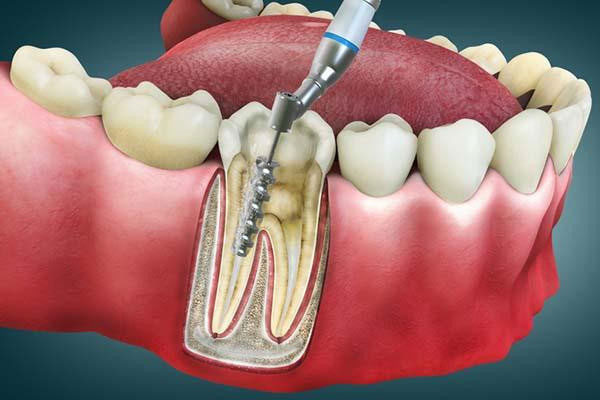
You know the old saying, “I’d rather have a root canal!” Most people are afraid of root canals. For years, comedians have poked fun at them. Today, a root canal can be a very comfortable procedure, but if you can avoid it why wouldn’t you? There is no question that when needed root canal therapy saves teeth that would have been lost. A root canal is one of the most common dental procedures performed. The American Association of Endodontists estimates that 24 million root canals are performed each year and this number is expected to double within the next few years. This simple treatment can save your teeth and prevent the need of dental implants or bridges.
Why Avoid Root Canals? Are They Risky?
Because of the complex anatomy of the root canal system, it is impossible to completely eliminate all bacteria. Root canal therapy therefore cannot be guaranteed 100 percent and carries a 10-15 percent failure rate. Statistically, the failure rate for root canals is much lower for endodontists (5 percent) than general dentists (10-15 percent). Besides failures due to unresolved infection, root treated teeth are also dead and are weaker than living teeth. They carry the additional risk of fracturing under pressure. Even those root treated teeth that are reinforced with posts to support either crowns or bridges carry this risk of fracture.
Main Causes of Root Canal Complications and Failures
Missed Root Canals: A tooth may have more root canals than normally anticipated, allowing the infected pulp in it to recontaminate the tooth. In some cases, even if the branch is noticed by the dentist, it may be in a position difficult to reach with the endodontist leaving infected tissue behind. Sooner or later, this will result in a new tooth abscess. Vertical root fracture: when the nerve (pulp) dies, teeth tend to become brittle. A serious root canal complication is the fracture of the root of the tooth during the filing procedure. This may require the tooth to be lost. Dr. Gus Livaditis, Developer of Vital Pulp Therapy states, “Vital Pulp Therapy works because we control the bleeding, control the bacteria, and place a durable filling on the tooth.”
Root Perforation: Another common problem is when an endodontic instrument accidentally perforates the root. If the opening is not sealed it will be a gateway for bacteria to re-enter the tooth.
Broken Instruments: The most common root canal complication is caused by the accidental breaking, inside the canal, of the endodontic files that are used to clean and shape it.
No Cap or Onlay: Even if the root canal was perfectly done, if you do not seal and protect the tooth with a cap or onlay – this can cause bacteria to re-enter and cause a new root canal infection.
Is There an Alternative to the Expense and Risk of Root Canal Treatment?
Today, we have an easy, comfortable procedure called vital pulp therapy. After treating the exposed nerve, we use state-of-the-art bonding material to restore your tooth – all in one visit. This is a safe, effective alternative to root canal therapy with a high success rate. Using state-of the-art technology and procedures, a safe, precise and effective result can be achieved. According to endodontist Dr. George Bogen, “Vital pulp therapy has emerged as a predictable treatment option.”
From Dr. Sam Masyr Endodontist/ Root Canal Specialist
“Why would a root canal specialist tell you how to avoid root canal?”
“Just kidding. I would encourage patients to go for regular checkups. A great percentage of root canal is caused by active decay. For dentists, every time we treat a tooth it irritates the nerve and uses up some of the healing capacity. We have no way of knowing how much it can handle. Therefore, taking care of problems early reduces the need for repeated assault to the nerve. If someone is more prone to cavities, they would benefit from prescription strength CariFree toothpaste, which strengthens and rebuilds the enamel, and prescription strength OraCare Rinse, which has been shown to effectively reduce bacteria and in addition improve periodontal gum health. We need to keep in mind, are you prone to cavities, do you clench or grind your teeth? You need to take it all into consideration.”