


Home Blog Page 24

Community Highlights – New Torah High School Opens at the Jersey Shore

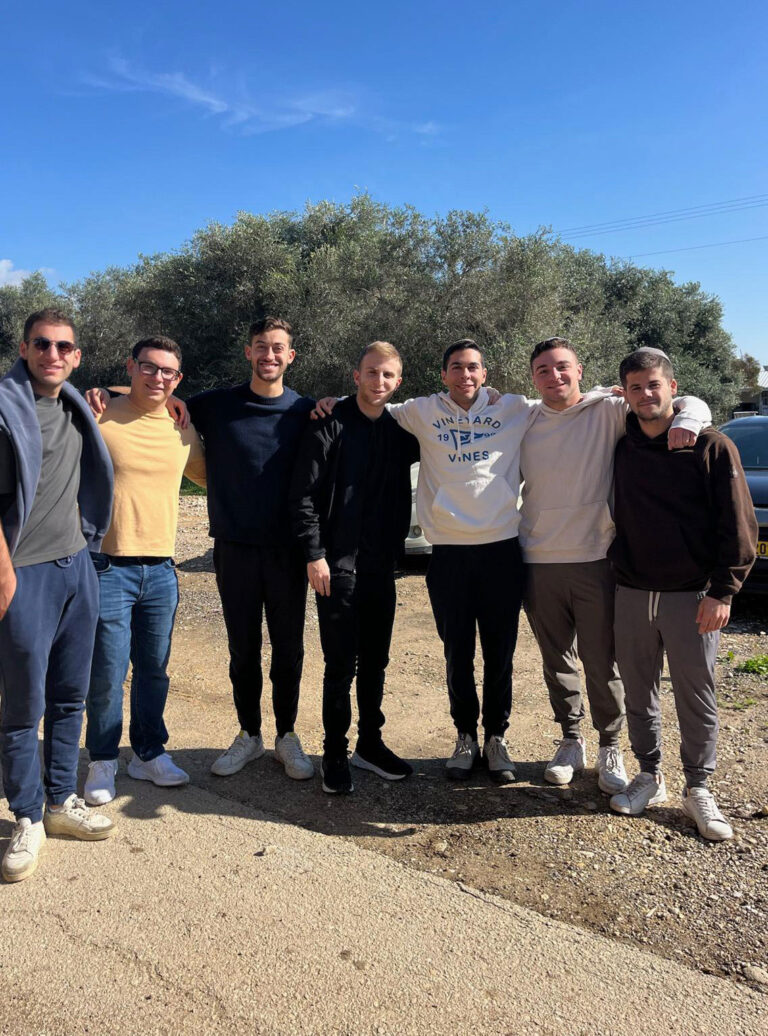
A transformative new institution is opening its doors at the Jersey Shore: Jersey Shore Yeshiva (JSY) – a premier yeshiva high school for boys dedicated to raising the next generation of Torah-driven leaders.

JSY’s mission is to inspire and cultivate Bnei Torah who are proud of their identity, grounded in Torah and mitzvot, and deeply connected to Am Yisrael and Eretz Yisrael. The school offers a warm, structured, and forward-thinking environment where each talmid is encouraged to grow – spiritually, intellectually, and emotionally.

Blending rigorous Torah learning with a dynamic general studies curriculum, JSY fosters critical thinking, effective communication, and inner confidence – skills that will serve students in the beit midrash, in their careers, and throughout their lives.

Under the guidance of leading rabbis and educators of the Jersey Shore community – Rabbi Shlomo Diamond, Rabbi Saul Kassin, Rabbi Joey Dayan, and Rabbi Joseph Dana – the Yeshiva is poised to fill a crucial gap in the community.

“An institution like JSY has long been missing,” said Rabbi Diamond. “This Yeshiva isn’t just a school – it’s an investment in the future of Klal Yisrael.”

NY Supreme Court Halts Yeshiva Closures

A New York State Supreme Court judge has ruled that six Brooklyn yeshivas are allowed to remain open while working to meet state education standards.

Last month, Judge Richard McNally issued an injunction after the New York State Education Department revoked the schools’ accreditation. The department claimed the yeshivas – located in

Borough Park and Williamsburg – failed to provide instruction in math, science, and English that was “substantially equivalent” to public schools.

A new law passed over the summer allows private schools to create alternative “pathways” to meet state requirements. However, the Education Department argued the yeshivas were ineligible because they were already deemed noncompliant when the law passed. Parents were told students would need to find new schools for the 2025–26 year.

McNally ruled the state acted “contrary to law” by asserting the yeshivas were no longer schools once found noncompliant. He said they remained schools – albeit ones needing improvement – and are therefore eligible to pursue the new compliance pathways.

The decision means the yeshivas can stay open during the review process and continue receiving public services like transportation and special education.

Agudath Israel, which supported the schools, said the ruling sets an important precedent: “If, in the future, any school is declared non-equivalent, it can still choose to avail itself of a pathway. The ‘non-school’ argument was soundly defeated.”

The Last Step Before the Siyum

The Olam HaTorah is abuzz with anticipation as multitudes of Oraysa lomdim take their final strides toward a siyum on Seder Moed. With the beginning of Masechet Chagigah, tens of thousands across the globe are embarking on the last leg of a journey that began nearly six years ago. And now, for the first time in Oraysa’s history, a global community of lomdei Torah stands on the threshold of completing an entire seder of Shas together.

Kehillot across the U.S., Eretz Yisrael, and Europe are preparing to converge for a historic ma’amad kavod haTorah to celebrate this milestone. This will be a once-in-a-generation aseifa – not only marking an ending, but celebrating a shared journey and the start of something even greater.

The journey of Seder Moed has been extraordinary, but the accomplishment that awaits is greater still. With gedolim, roshei yeshiva, and thousands united in celebration, the Siyum promises to be monumental. Each daf of Chagigah is more than learning – it is a contribution to a global accomplishment, a chance to write yourself into the history of Oraysa.

To learn more about the Siyum, please go to oraysasiyum.org.

Living Emunah – Did You Anticipate?

The pasuk in Parashat Balak (Bamidbar 24:17) says, “A star will emerge from Yaakov [and will rule the entire world].” The Targum explains that this is a prophecy regarding Mashiach. He is called a star, says the Maharal, because of his lofty level.

The belief in the coming of Mashiach is one of our Thirteen Principles of Faith. We are supposed to reaffirm every day, “I believe with a complete faith that Mashiach will come.” Not only do we have to believe, but we also must actively anticipate his arrival. Chazal (Shabbat 31a) tell us that this is one of the questions we will be asked after we leave this world: “Did you anticipate the salvation? Were you anxiously awaiting his coming?”

Our Rabbis did us a great favor by incorporating into every Amidah a berachah about anticipating Mashiach: “We have anticipated Your salvation throughout the day.” If we say these words with understanding and belief, then we will be able to answer that question affirmatively.

The days of Mashiach will be the greatest era in history. He will be a regular mortal, like everyone else. As is written (Yeshayahu 11:1), “A staff will emerge from the stump of Yishai.” He will descend from the branch of Yishai [father of David HaMelech, which is the tribe of Yehudah]. In every single generation, someone is born who could be Mashiach. He will be a master of Torah wisdom and possess sterling character traits. If the generation is worthy, Hashem will send Eliyahu HaNavi to anoint him as king.

Rav Chaim Vital (Likutei Torah) writes that he will receive an extra neshamah from Heaven that will imbue him with extraordinary siyata d’Shmaya. He will have more wisdom than Shlomo HaMelech. The Midrash Tanchuma (12) says that he will be greater than even Moshe Rabbeinu.

When people hear him speak, they will all be drawn to his wisdom. Every nation will appoint him their new leader, until he becomes the leader of the entire world. There will be unprecedented unity and peace. Not only will there be an end to war, but no one will even train to be a soldier. No country will need a military, because everyone will be united and at peace with one another.

The world will be filled with the wisdom of Hashem. We’ll be able to understand the hidden secrets of Creation and why Hashem runs the world the way He does.

The Maharal (Chapter 7) writes that the spiritual level of the world will be as it was before the sin of Adam HaRishon. The Bet HaMikdash will be rebuilt. It will be a glorious time of pure happiness. The streets will be filled with young children playing. Even the animals will cease to harm. There will be no more fear. We will be free to delve into the wisdom of Hashem.

The pasuk (Daniel 12:2) states, “Many of those who sleep in the dusty earth will awaken. Many of those who have passed on will once again come back to life. Families will be reunited. The great luminaries of all times will once again walk this earth. In the merit of our anticipation of these glorious days, may we see them, speedily in our days. Amen.

The Enduring Legacy of Sephardic Bikur Holim: A Journey Through History

In the heart of Seattle, Washington, a vibrant legacy endures with the Sephardic Bikur Holim Congregation. Established in 1914 by Levantine Jews from western Turkey, it continues to this day.

The incredible story of Sephardic Bikur Holim began in Medieval Spain. Then, during the Golden Age of Spanish Jewry, it all came to a tragic close with the Edict of Expulsion in 1492, issued by Ferdinand and Isabella. The Jews were forced to flee their homeland, and the refugees found a welcoming sanctuary in the Ottoman Empire. The Sultan, sensing an opportunity, was eager to take advantage of the Spaniard’s misjudgment. He opened his ports and cities to the refugees. They settled into their new homes and flourished there while keeping to their customs. As they settled across the Ottoman Empire, they not only survived, but thrived, while preserving a legacy that spans centuries, and through it all, they remained steadfast to their heritage.

After World War I, these Jews came to Seattle looking for a better life as well as to escape the crumbling Ottoman Empire. Our ancestors brought with them a treasure trove of culture, including their own unique language (Ladino), cherished customs, distinct minhagim, Turkish foods, and beautiful music (Romanzas), along with a deep well of religious knowledge.

Today, the Sephardic Bikur Holim community continues to honor its distinct practices rooted in ancient traditions. This connection to a shared past is not a relic but a living, vibrant force, expressed through unique liturgical practices (hazzanut), a love of family, and a profound respect for the Torah.

Our congregation is seeking a new spiritual leader to guide its next chapter. Over the past 100 years there have only been four Rabbinic leaders.

If you, or someone you know, are interested in making a big impact on a close-knit Sephardic community, this is an opportunity to make a real difference in a beautiful city.

To find out more about the community and our congregation, we invite you to visit our website at www.SBHSEATTLE.ORG. Here you can find out more details about the position, as well as the warm and friendly Seattle Sephardic community!

Medical Halacha – IV Hydration on Yom Kippur

Charlie suffers from serious heart problems. His doctor warned him that fasting on Yom Kippur could endanger his life and instructed him to drink fluids. Troubled by the idea of drinking on this sacred day, Charlie asked me if he could use intravenous (IV) hydration instead.

His son Jack, who is generally healthy, had a bout of food poisoning and became severely dehydrated. He asked if he needs to remove his IV before the fast begins in order to observe Yom Kippur properly.

Is IV Hydration Considered Eating or Drinking?

Halachically, IV hydration is not considered eating or drinking. The Torah prohibition on Yom Kippur refers specifically to consuming food or drink through the mouth. Hydration administered intravenously bypasses this and is therefore not technically a violation of the fast.

Hacham Ovadia Yosef

Despite the technical leniency, Hacham Ovadia, zt”l,  (Chazon Ovadia Yom Kippur, p. 298) opposed the use of IV hydration on Yom Kippur when not medically necessary. He explains that while IV fluids are not halachically defined as food or drink, they should not be used unless clearly required for health reasons.

He gives three key reasons: Firstly, drinking shiurim (small amounts) provides physical and psychological comfort (ituvei da’at) to a sick person. IV hydration does not offer the same level of satisfaction. The Chachamim were deeply concerned with ensuring the comfort of the ill.

Secondly,halacha already allows eating or drinking when health is in danger. There is no halachic requirement to find artificial alternatives. Insisting on IVs could mislead people into thinking they must use IV hydration rather than eat or drink – potentially putting lives in danger if IVs aren’t available.

Lastly,inserting an IV causes minor bleeding, which constitutes an unnecessary wound – another prohibition on Yom Kippur. Since eating or drinking is already permitted in such cases, this injury is avoidable and therefore unjustified.

Hacham Ben Zion Abba Shaul

In contrast, Hacham Ben Zion Abba Shaul, zt”l,(Or LeTzion 4:15:5) held that IV hydration is halachically preferable. He argued that even drinking in shiurim is still be a biblical prohibition, especially according to the Rambam (Shevitat Assor 2:3). IV hydration, by contrast, is not a normal form of drinking and is therefore permitted. As for the bleeding involved in inserting the IV, he viewed it as an unintended and destructive act (pesik reisha d’lo nicha lei), which does not carry a Torah prohibition and is therefore preferable to drinking in shiurim.

Drinking in Shiurim

When someone must drink on Yom Kippur due to pikuach nefesh, when medically possible they should drink in shiurim (melo lugmav, about 1.3 oz or 40 ml). The required pause between sips varies by opinion, from five seconds to nine minutes. Hacham Ovadia (Yabia Omer, OC 2:31) ruled that a pause of five seconds suffices, especially if longer breaks compromise the person’s health.

When Fasting Becomes Forbidden

If fasting could endanger Charlie’s life, not only is he permitted to drink – it is a halachic obligation. In Yechaveh Daat (1:61), Hacham Ovadia writes unequivocally: “If there is concern of possible danger to his life by fasting, one must listen to the doctor and eat on Yom Kippur, because pikuach nefesh overrides the mitzvah of fasting. If the sick person is stringent and fasts nonetheless, he is not acting righteously – on the contrary, he will be punished for this.”

What Should Charlie and Jack Do?

Charlie must not fast if doing so endangers his life. Ideally, he should drink in measured amounts (shiurim). If that is not possible or safe, IV hydration is permitted. Similarly, if Charlie refuses to drink IV hydration is permitted due to pikuach nefesh. Jack, who is already connected to an IV due to dehydration, does not need to remove it before Yom Kippur. In his case, continuing hydration through the IV is fully permitted.

Some people feel guilt or shame about eating or drinking on Yom Kippur, even when halachically necessary. But we must remember: the same Hashem who commands the healthy to fast commands the very sick to eat. When halacha requires eating or drinking on Yom Kippur, doing so is not only allowed – it is amitzvah. No atonement is needed. In fact, following halacha in these cases is the highest mitzvah.

Rabbi Yehuda Finchas is a worldwide expert, lecturer and author on Medical Halacha. He heads the Torat Habayit Medical Halacha Institute. His latest book is “Brain Death in Halacha and the Tower of Babel Syndrome.” To contact Rabbi Finchas, email rabbi@torathabayit.com.

The Lighter Side – September 2025

Spiritual Check Up

Marvin is at his doctor for a physical. Dr. Epstein runs some tests and says to Marvin, “Well, Marvin, for an 82-year-old man you are in top condition physically. But how about mentally and spiritually?”

“What do you mean, doc?” asks Marvin.

“Well how is your connection with Gd, for example?”

Marvin says, ”Oh me and Gd? We’re tight. We have a real bond, He’s good to me. Every night when I have to get up to go to the bathroom, he turns on the light for me, and then, when I leave, he turns it back off.”

Well, upon hearing this, Dr. Epstein was concerned.

He called Marvin’s wife and said, “’I’d like to speak to you about your husband. He claims that every night when he needs to use the restroom, Gd turns on the light for him and turns it off for him again when he leaves.”

She replies, “Oy vey. He’s been using the refrigerator again!”

Jake  D.

Hashem Knows

One day Lisa was explaining to her young son Mikey that you should never tell a lie. She told him that Hashem saw everything and heard everything.

She explained, “Even though your father and I may not know if you are telling a lie, Hashem will know.”

Little Mikey replied, “But will He tell?”

Miriam T.

Old Mrs. Scheiner

Old Mrs. Scheiner was a tough lady who liked to walk wherever she could. But one day descending the stairs of her third-floor apartment, she broke her leg. As the doctor put on her cast, he warned her not to climb any stairs. Several months later, the doctor took off the cast.

“Can I climb stairs now?” asked old Mrs. Scheiner. “Yes,” he replied.

“Thank goodness!” she said. “I’m tired of shimmying up and down that drainpipe every day!”

Nancy S.

Shoe Sale

Friday was Shira’s day for carpool, so she picked up her daughter and some other classmates to take them home. As it happened, Shira’s daughter needed new shoes and she saw that her friend Rivky had some nice ones.

“Rivky,” Shira commented, “I see you got new shoes! Where did you get them?”

“At the store,” Rivky answered.

“Which one?” Shira asked.

Rivky began looking at her new shoes and after a pause said, “Both of them!”

Alan K.

Two Left Feet

Zadie was coming over to take his grandson David to the park.

“Okay David, we’re going to the park!” said Zadie. “Go get your shoes on!”

Being only four years old, David said, “Okay, but will you tie them for me?”

“Sure,” Zadie replied with a big smile.

David bolted into the next room to put on his shoes, returning with a big smile and the shoes on the wrong feet.

Looking at his shoes, Zadie smiled and said, “David, your shoes are on the wrong feet.”

David looked down, then looked back at Zadie with a very sad face and replied, “These are the only feet I have.”

Sarah C.

In the Bag

Last year, Chaim Yankel had a large company fly him out for a meeting. It was his first time in business class.

During the return flight the stewardess gave Chaim Yankel some gourmet brownies and cookies. Not hungry, he decided to save them for later, so he placed them in an air sickness bag.

After the plane landed Chaim Yankel got up to leave and a stewardess approached him. She asked, “Sir, would you like for me to dispose of that for you?”

Chaim Yankel replied, “No thanks, I’m saving it for my kids.”

Danny S.

Riding It Out

Morty decided enough was enough – he was going to join a gym and start getting in shape. He joined an aerobics class and the instructor had everyone lie on their backs with their legs up as if pedaling a bike. After several minutes, Morty suddenly stopped.

“Why did you stop pedaling?” the instructor shouted to Morty.

“I didn’t stop,” Morty said, wheezing. “I’m going downhill!”

Joey T.

Bless You

The Applebaums were teaching their five-year-old son Moishe how to make berachot before he ate. He was having some trouble so his mother told him that if he can’t remember what to say, he can just say, “Thank you, Hashem, for this delicious food.”

One evening, however, Moishie’s mother noticed that he thanked Hashem for the birds, the trees, each of his friends, and asked Gd to watch over his family and help them all. Moishie’s mother thought it was so cute and heartfelt.

But after Moishie took a spoonful of soup, he gasped, then dropped his spoon into the bowl. “I should have said a longer prayer,” he said. “My food is still too hot.”

Elizabeth D.

Fish Cake

Josh walks into Yossi’s Kosher Fish Mart with a fish under his arm.

“Do you have any fishcakes?” Josh asks.

“Yes, of course,” says Yossi, the store owner.

“Great,” replies Josh, nodding at the fish under his arm. “Today’s his birthday!”

Morris M.

Helping Hand

Morris was having trouble in school so his father decided to start tutoring him. Unfortunately, his grades were not improving.

“Look at this paper!” Mr. Applebaum said to Morris, frustrated. “How could one person make so many mistakes!?”

“It wasn’t one person!” Morris replied defensively. “My father helped!”

Elana  G.

Map Quest

Professor Hadari was teaching advanced map reading in his earth sciences class at the Hebrew University of Jerusalem. After explaining about latitude, longitude, degrees, and minutes Professor Hadari asked, “Suppose I asked you to meet me for lunch at 23 degrees, 4 minutes north latitude, and 45 degrees, 15 minutes east longitude…?”

After a moment of silence, a student named Itzik volunteered, “I guess you’d be eating alone.”

David M.

Dreaming in Hebrew

Joey was having some trouble in Hebrew class.

To encourage him, his teacher, Mrs. Shalva, said, “You’ll know you’re really beginning to get it when you start dreaming in Hebrew.”

One day, Joey ran into class all excited, saying, “Mrs. Shalva! I had a dream last night and everyone was talking in Hebrew!”

“Great!” said Mrs. Shalva. “What were they saying?”

“I don’t know,” Joey replied. “I couldn’t understand them.”

Michael  B.

A Big Pain

“Oy!” groaned old Samuel. “I must have appendicitis,” he said as he clutched his left side.

“It can’t be appendicitis,” said his wife, Myra, confidently.

“How do you know?” asked Samuel. “You are a doctor all of a sudden?”

“I’m not a doctor but I do know that your appendix is on the right side of your body.”

“Aha!” said Samuel. “THAT’s why it hurts so much. My appendix is on the wrong side!”

Eli  A.

Riddles – September 2025

RIDDLE:  On the Right Track

Submitted by:  Kelly B.

A train 1-mile long is traveling at a speed of one mile per minute through a tunnel 1-mile long. How long will it take for the train to completely pass through the tunnel?

Last Month’s Riddle: The Underwater Challenge

A magician was bragging to a crowd, “I can hold my breath underwater for a full 6 minutes!” Impressed murmurs followed – until a kid piped up, “That’s nothing! I can stay underwater for 10 minutes – no tricks, no gear, and no air pockets!” The magician laughed. “Prove it,” he said, “and I’ll give you $10,000.” The kid did… and walked away $10,000 richer.  How did the kid pull it off?

Solution: He simply filled a glass with water and held it over his head for 10 minutes!

Solved by:  Haim Solei, Family Blum, Abie Arking, Big Mike, Shelly Mizrahi, Lisa T., The Shmulster, Carl Dweck, and The Sultan Family.

JUNIOR RIDDLE:  Twin Teaser

Submitted by: Carl  M.

Two people born on the same day, from the same mother and father, but they are not twins. How is this possible?


Last Month’s Junior Riddle: An Odd Equation

Here’s a puzzler for you: 81 × 9 = 801.
Obviously, that’s not right. But with one clever move, you can make this equation true – no math needed. What do you have to do?

Solution: Turn the equation upside down. It becomes: 108 = 6 × 18.

Solved by: Frieda Tessone, Morris Kabani, Haim Soleimani, The Blum Family, Lisa T., The Big Cheese, Family Sultan, Alice Rishty, and The Shmulster.

The Cons Close to Home: How Scammers Target New York, New Jersey, and Jewish Communities

Dave Gordon

You think you’re too savvy to be scammed. We all do. But the unsettling truth is that modern fraudsters have elevated deception to an art form, weaving themselves into our daily routines and exploiting the people, institutions, and events we trust the most. In neighborhoods from Brooklyn to Lakewood, Monsey to Passaic, scams are no longer rare cautionary tales – they’re a weekly threat, circulating through WhatsApp groups, whispered in synagogue foyers, and cropping up in local newspaper headlines.

It starts small. An email from your rabbi. A call from your grandchild. A pop‑up on your computer. Each one feels just plausible enough, just urgent enough, to push you past skepticism. And then – in minutes – your savings, your peace of mind, and your trust are gone.

Here are real stories of fraud in our communities, reported by reputable media outlets, tied to exact dates and places. Together, they create a portrait of a crime wave hiding in plain sight.

The Brooklyn Computer Con

Recently, CBS News New York ran an exclusive story by investigator Mahsa Saeidi about a 75‑year‑old woman from Brooklyn who lost $100,000 in a deception that began with a locked computer screen. A pop‑up message told her to call a number. On the line, a voice claiming to be from Microsoft warned that her bank accounts had been compromised. The man guided her step by step – first to the bank to withdraw her funds “for safe keeping,” then to an in-person rendezvous. He gave her a secret code word – “red” – before sending a fake courier to collect the envelope. By the time she realized that she had been coached into surrendering money, the cash was gone.

Police say this hybrid scam – part tech support hoax, part old‑fashioned face‑to‑face con – is targeting older residents in Brooklyn who live alone. Its sophistication lies in how it turns modern technology’s veneer of authority into a weapon.

Social Security Scams in New Jersey

Government impersonation scams might sound like a distant problem, but a high‑profile case in New Jersey made headlines on April 24, 2025, when the U.S. Attorney’s Office for the District of New Jersey announced that 68‑year‑old Deborah Bailey of Piscataway had pleaded guilty to stealing $150,903 in Social Security benefits. For eight years after her mother’s death, Bailey quietly continued to withdraw her late mother’s retirement checks. While that case involved a relative exploiting a loophole, the prosecution noted that fake “Social Security” calls are proliferating statewide – with con artists posing as federal agents who claim your Social Security number has been “frozen” and threaten arrest unless you transfer money immediately. Officials stress that legitimate agencies never ask for payment by gift card, wire transfer, or cryptocurrency, yet these methods appear in nearly every successful scam they investigate.

The Deepfaked Grandchild Emergency

The classic “grandchild in trouble” scam took on a sinister technological twist in March 2025, as NPRreported from the Upper West Side of Manhattan and Passaic, New Jersey. Senior citizens began receiving not only panicked phone calls but also what appeared to be FaceTime videos from their own grandchildren – begging for bail money after supposed car accidents or arrests. In one documented case, a retired couple wired thousands of dollars to an account provided by the caller, believing it was to secure their grandson’s release in Vermont. Only hours later did they discover he had been at home all along. Investigators believe Montreal‑based criminal groups are behind the wave, using stolen personal data and AI‑generated voice and video “deepfakes” to trick even the most cautious targets.

Fake Charity Appeals in Boro Park and Lakewood

When tragedy strikes – a fatal fire before Shabbat, a family caught in an anti-Semitic attack, or a sudden medical emergency – Jewish communities act quickly. Scammers know this. Media outlets from Hamodiato The Jewish Presshave covered how, during such crises, residents of Boro Park in Brooklyn and the yeshiva community of Lakewood, New Jersey, are bombarded with WhatsApp messages and phone calls from “fundraisers” claiming to represent respected charities. Messages often include blurred photos, real names from local news reports, and fabricated payment links redirecting donations to private accounts. In some cases, community members have emptied their savings on the assumption they were aiding neighbors, only to find that the “emergency fund” never existed. Misaskim, the respected crisis‑response group, has issued repeated public alerts warning donors to slow down and verify before giving.

The Rabbi Gift Card Scam

One of the fastest‑growing frauds doesn’t come out of a high‑tech lab, but it’s brutally effective. Last September, the Federal Trade Commission issued a consumer alert after multiple synagogues in the New York area reported emails and texts from scammers posing as rabbis or synagogue presidents. The messages used familiar greetings and urgent tones – “I’m at a meeting and need a favor” – and asked congregants to buy gift cards for “families in crisis” or “a shul project.” Recipients were told to scratch off the security strip, photograph the numbers, and send them back via text or email. Once the numbers are sent, the value is drained within minutes, leaving no recourse for the victim. The FTC emphasized that no genuine rabbi or community leader will ever make such a request.

Final Thoughts

Trust is a cornerstone of Jewish communal life. But trust without verification is exactly what scammers need to succeed. The cases from Brooklyn, Lakewood, Passaic, Monsey, and beyond – each documented by reputable news outlets or government agencies – remind us that fraud is both hyper‑local and globally connected. Whether it’s a stranger on the phone using your grandson’s voice or a longtime neighborhood business adding a “holiday surcharge,” scams today are designed to slip past your defenses.

The simplest, hardest lesson is to pause before you act. Make that extra call, search that name, confirm that email. In the war between caution and con artists, hesitation isn’t weakness – it’s strength. In our communities, a moment’s doubt can be the only thing standing between you and the next devastating loss.

Scam Tactics

These cases show common threads in modern fraud:

  • They Impersonate Trusted Figures: a rabbi, a tech support representative, even a family member.
  • They Manipulate Urgency: making you believe that hesitation will cause harm or loss.
  • They exploit community knowledge: citing real local news, synagogue events, or religious obligations.
  • They Adjust Tactics to Technology: using spoofed numbers, AI‑generated videos, or hacked email accounts.

What makes them especially dangerous in Jewish neighborhoods across NY and NJ is the deep‑rooted culture of trust and fast action in emergencies – the very qualities scammers weaponize.

Guarding Against the Next Con

FBI agents, state attorneys general, and local police departments give the same advice:

Verify Independently – Call known official numbers, not the ones provided in a message.

Slow Down – No legitimate cause will collapse for lack of a same‑day transfer.

Refuse Unusual Payment Methods – Gift cards, crypto, or wire transfers are almost always red flags.

Educate the Vulnerable – Hold scam‑awareness sessions in shuls, schools, and senior centers. Communities should also normalize healthy skepticism. In the United States, the FBI estimates that elders lose over $3 billion each year to these schemes. That’s a number that can only grow if people keep treating suspicious requests as impolite to question.

Tech That Makes the Grade: Back-to-School Gear That Delivers

Back-to-school season is the perfect time to refresh your gear and set yourself up for a successful year. Whether you’re returning to campus, heading into a new classroom, or just embracing a fresh start, having the right gadgets can streamline your routine, boost productivity, and make everyday tasks more enjoyable. Here are eight standout items that are practical, thoughtfully designed, and ready to elevate your daily routine.

OXO Sweep & Swipe Laptop Cleaner
Compact and affordable, the OXO Sweep & Swipe is the perfect tool for keeping your tech spotless. It features a retractable soft brush for sweeping dust and debris from keyboards, and a microfiber pad that effortlessly wipes smudges from screens on laptops, tablets, smartphones, and more. It’s a simple, effective way to keep your gadgets looking their best.

The Ridge Bolt Action Pen – Alpine Navy
Blending analog charm with premium materials, the Ridge Bolt Action Pen is a stylish alternative to screen time. Crafted from lightweight aluminum, this durable writing tool is satisfying to click, smooth to write with, and available in a range of finishes – from bold and modern to understated and classic. It’s a great addition to any student’s everyday carry.

Troubadour Apex Backpack 3.0
Designed for students and professionals alike, the Troubadour Apex Backpack 3.0 combines sleek aesthetics with serious utility. It boasts a spacious interior with numerous compartments, including a dedicated sleeve for a large laptop and room for a tablet and accessories. Built to carry up to 50 pounds, it’s a rugged yet refined option for those on the move.

Hatch Restore 3 Sunrise Alarm Clock
The Hatch Restore 3 is more than just an alarm clock – it’s a personal sleep coach. This smart bedside device uses a simulated sunrise to wake you gently, while offering calming sounds and a warm, sunset-like glow to help you wind down. With white noise and ambient sound options to mask distractions, it can improve your sleep quality night after night.

Pelican Marine AirTag Holder
When it comes to protecting your AirTag, the Pelican Marine Holder is unmatched. Constructed with a rugged, shock-resistant shell reinforced by ultra-strong Dupont Kevlar, it’s built to endure harsh conditions. The IP68 rating means it’s fully waterproof and dustproof, making it ideal for travel, outdoor adventures, or just everyday peace of mind.

SoundcoreAeroFit 2 Open-Ear Headphones
The SoundcoreAeroFit 2 delivers an open-ear listening experience that’s comfortable, safe, and surprisingly immersive. These wireless earphones rest outside the ear canal – no tips required – making them ideal for all-day wear. With a sleek design, customizable sound through the companion app, 10-hour battery life, and several color options, they offer exceptional value and performance.

Flashforge AD5M 3D Printer
For aspiring creators or experienced makers on a budget, the Flashforge AD5M 3D Printer is a standout choice. This compact machine can quickly print detailed, multi-material objects with ease. It features built-in auto-leveling and a user-friendly interface with touchscreen controls and app connectivity, making it a powerful tool that’s also beginner-friendly.Satechi Qi2 Trio Wireless Charging Pad
Apple users looking for an elegant, efficient charging solution will love the Satechi Qi2 Trio 3-in-1 Wireless Charging Pad. It can charge an iPhone, Apple Watch, and AirPods simultaneously at full speed, thanks to Qi2 compatibility and MagSafe support. Its flexible design allows it to transform from a sleek upright stand to a flat pad, with Apple Watch support for both flat and nightstand modes.

The Hamas Candidate for NYC Mayor

Linda Argalgi Sadacka

This September is not politics as usual. It is a referendum on the future of New York City: Will we remain a city of law, prosperity, and safety, or will we hand the keys to Zohran Kwame Mamdani, a self-declared democratic socialist, a cheerleader for Hamas, and an enemy of the Jewish community?

Mamdani doesnot just sympathize with radicals – he is one. His rise is powered by the Democratic Socialists of America, whose ideology is embraced by the likes of Vermont Senator Bernie Sanders and New York Rep. Alexandria Ocasio-Cortez. It is the same movement that has pushed to defund the police, vilify Israel, and dismantle the economy. This isnot hidden information. It is Mamdani’s platform: weaken policing, punish the wealthy, and side with Israel’s enemies under the banner of “solidarity.”

The Record That Speaks for Itself

In Albany, Mamdani was the face of the “Not On Our Dime” bill (A6101/S606), a scheme to weaponize the courts against Jewish charities that support Israel. Leaders across the Jewish spectrum warned the bill would unleash harassment against mainstream institutions. This was not sloppy drafting. It was deliberate lawfare to punish Jews for standing with their homeland.

On moral issues, Mamdani’s record is equally alarming. He pledged support for dismantling long-standing restrictions on vice industries, signaling his willingness to erode the guardrails that protect families and neighborhoods. As mayor, he would have the authority to set enforcement priorities, shape budgets, and broadcast this agenda across the city.

The Company He Keeps

His father, Mahmood Mamdani, is not simply a Columbia University scholar. He sits on the Gaza Tribunal’sAdvisory Policy Council, a body known for echoing Hamas propaganda and anti-Israel positions. This alignment is not accidental. It reflects an ideology passed down and proudly carried forward.

What New York Would Look Like Under Mamdani

  • A diminished police force, which would cause an increase in crime. A mayor wedded to de-policing means fewer officers, slower responses, and emboldened criminals.
  • Jewish life under siege. A City Hall that normalizes “Not On Our Dime” gives a message to schools, agencies, and institutions that Jewish organizations are fair game, inviting harassment and intimidation.
  • Economic punishment. Mamdani’s worldview is not about opportunity but is about envy. He seeks to abolish the wealthy, penalize hardworking New Yorkers, and drive out small businesses. Capital flight will not be a risk; it will be inevitable.

Families are already saying what once they only whispered: “If Mamdani wins, we’re leaving.” Community members are preparing to move to Deal, New Jersey, or Florida. This is not melodrama. It is rational self-preservation when Jewish life feels conditional, not guaranteed.

Why Registration Is Everything

Mamdani’s strategy is simple: count on apathy. He doesn’t need most New Yorkers to agree with him. He only needs enough people to stay home. That is how he won his primary, and that is how he plans to march into City Hall.

The answer is clear: register and vote. Every eligible voter must be on the voting rolls before the deadline. Applications must be received by a board of elections no later than October 25th to be eligible to vote in the November general election. In the general election, your party doesnot matter. Republican, Democrat, Independent – if you are registered, you can vote. Two minutes online secures your voice. Do it now, and make sure your family and friends do the same.

The Bottom Line

This election is not about left versus right. It is about survival: safe streets, a working economy, and Jewish life in New York. Mamdani has shown us exactly who he is: a radical, a Hamas sympathizer, and an adversary of everything this city was built upon.

If you want a New York that protects families, rewards hard work, and refuses to launder anti-Semitism through policy, there are only two steps: register and vote.

Stop Mamdani. Save New York.


Linda Argalgi Sadacka is a political strategist, writer, and community leader. She serves as lead strategist for World Likud.

Once Upon A Thyme – Roasted Eggplant with Ground Beef & Herbed Tahini

Adina Yaakov

Looking for ways to include more vegetables to your holiday menu? This roasted eggplant with ground beef is a delicious option with protein and packed with flavor! By scoring and roasting the eggplant with plenty of olive oil, you create a butter-soft, caramelized bed for the warmly-spiced ground beef. Optional garnishes like pomegranate seeds add color and make a great dish for your Rosh Hashanah table.

Ingredients:

4 mini eggplants

2-3 tbsp olive oil

1 lb ground beef

1 tbsp allspice

1 onion, diced

2 tbsp canola oil

3 cloves crushed garlic

8 oz tomato sauce

1 tsp salt

½ cup pine nuts

Garnishes: (optional)

Flaky salt

Parsley

Pomegranate seeds

Herbed Tahini:

2 tbsp tahini paste

½ tsp salt

1 tbsp honey

1 cup parsley or basil leaves

3 tbsp lemon juice

3 cloves garlic, minced

Black pepper to taste

  1. Wash eggplants and pat dry. Slice in half lengthwise. Using the tip of a sharp knife, make diagonal cuts about ½ inch deep into the flesh but not through the skin. Rotate the eggplant and then make cuts in the other direction to create a diamond pattern.
  2. Drizzle eggplant halves with olive oil and then season generously with salt and pepper. Roast face up at 400 degrees Fahrenheit for  35-40 minutes, or until the back of the eggplant looks collapsed and puckered.
  3. While the eggplants are roasting, make the beef. In a large sauté pan, heat canola oil and add onions. Sauté for 5-10 minutes until golden.
  4. Add ground beef, allspice, garlic, and salt and cook until browned, using a masher tool to get beef chunks as fine as possible. Add tomato sauce and cook for another five minutes. Shut off the flame and add pine nuts, mix.
  5. To make herbed tahini, place all ingredients into a blender and pulse until smooth.

Assemble right before serving: Place beef on top of eggplant halves, and drizzle with herbed tahini. Sprinkle with garnishes and serve immediately.