Home Blog Page 47

The Poisoned Ivy League

Why Harvard Alum Shabbos Kestenbaum is Suing Harvard for Anti-Semitism

An Exclusive Interview with Shabbos Kestenbaum

DAVE GORDON

Shabbos Kestenbaum has emerged as a prominent Jewish student activist, gaining significant attention for his efforts to combat anti-Semitism on college campuses, particularly at Harvard University.

Kestenbaum ‘s activism took center stage when he became the lead plaintiff in a lawsuit against Harvard University, alleging “pervasive” and systemic anti-Semitism.

Filed in January 2024, the lawsuit claims violations of Title VI of the Civil Rights Act and breach of contract.

According to the plaintiffs, the university has become a “bastion of rampant anti-Jewish hatred and harassment,” where Jewish students have faced intimidation, harassment, and even physical threats. The lawsuit highlights incidents such as pro-Hamas rallies on campus and administrative failures to discipline those responsible for anti-Semitic actions. Kestenbaum himself has recounted facing death threats after speaking out against anti-Semitic acts, including the defacement of posters depicting Israeli hostages.

He found himself on a campus hosting pro-Hamas demonstrations. Some professors reportedly referred to Hamas as “resistance fighters.” Requests for an Israeli flag display were denied by an administration that had previously flown flags for other causes like Ukraine. Kestenbaum also described incidents of

harassment so severe that he had to hire private security and reported instances where Jewish students were singled out or excluded due to their identities.

The case gained significant traction, and on August 6, 2024, U.S. District Judge Richard Stearns ruled that the lawsuit would proceed to trial, rejecting the school’s move to dismiss the case. Stearns criticized the university’s response to anti-Semitism as “indecisive, vacillating, and at times internally contradictory.” He noted that the plaintiffs had plausibly established that Harvard’s actions – or lack thereof – failed to meet Title VI’s requirements.

This first-of-its-kind legal action has positioned Kestenbaum, along with five other plaintiffs, at the forefront of the fight against anti-Semitism in higher education. He graduated from Harvard in June 2024.

The Plaintiffs’ Demands

The lawsuit seeks both monetary damages and systemic changes at Harvard. Plaintiffs demand disciplinary measures against those responsible for anti-Semitic acts, mandatory training on anti-Semitism akin to Title IX training for other forms of discrimination, and divestment from donations tied to anti-Semitic agendas. Kestenbaum has also called for a zero-tolerance policy for anti-Semitism at Harvard.

Harvard has defended its actions, stating that it is committed to combating anti-Semitism and fostering civil dialogue. However, critics argue that its responses have been insufficient. The university’s preliminary recommendations from an anti-Semitism task force earlier this year were met with disappointment from Jewish leaders, who deemed them insufficient.

The lawsuit tests how far universities must go to protect minority students while balancing free speech rights. For Kestenbaum and his co-plaintiffs, the fight is not just legal – it is about ensuring Jewish students can feel safe and respected in academic spaces.

Kestenbaum’s educational background reflects a strong connection to his Jewish heritage and community. He attended Yeshivat Noam in Teaneck, NJ, and later SAR High School in Riverdale, NY, after his family relocated.

At Harvard University, Kestenbaum enrolled in the Master’s in Theological Studies program at Harvard Divinity School. He founded and served as President of the Harvard Divinity School’s Jewish Student Association, and was active in Harvard Hillel and Chabad.

Kestenbaum Takes to the National Stage

Kestenbaum’s advocacy efforts have extended to the national stage. He testified before the Congressional House Education and Workforce Committee about anti-Semitism on campus. He has also spoken at various high-profile events, including the Republican National Convention on July 17, 2024, where he addressed the issue of antisemitism at Harvard. Despite speaking at the RNC, Kestenbaum has described himself as a Democrat who has consistently voted for the party, emphasizing his willingness to speak at both Republican and Democratic events to raise awareness about anti-Semitism.

Kestenbaum’s influence extends beyond political spheres. He has given presentations at non-political venues, including Bnai Yeshurun in Teaneck on July 29, 2024, and Shurat HaDin’s conference in New York in late October. He has been featured in numerous media outlets discussing his experiences and

activism. Recently, he won the Myron Zimmerman Award for Outstanding Student Activism from ZOA.

Community Magazine was granted an exclusive interview with Shabbos Kestenbaum, to discuss his impactful work, and his vision for a future.

CM: What are you doing now that you have graduated from Harvard?

I do lots of speaking engagements. I travel across the country, and we’re trying to build a coalition of young people who are passionate about Jewish identity, whose values are Jewish values. It’s just natural to me in the sense that I was raised to be a proud American and to be a proud Jew. It’s just kind of part of who I am. I am encouraging as many people as possible to do the exact same thing.

CM: If you weren’t doing what you do now, what would you be doing?

Yeah, if this craziness hadn’t happened, I always liked the idea of education. Maybe I would have pursued something in public policy. But primarily, I was really passionate about teaching. I actually taught before, both informal and informal education. But fortune had other plans. I have worked at Salanter Akiba Riverdale Academy in Riverdale, then I was a city director in Westchester’s National Council of Synagogue Youth.

I really enjoyed it. I primarily worked with Jewish teenagers, especially those from unaffiliated or limited backgrounds, trying to expose them to the beauty and the meaning Judaism. So again, I sort of was always doing this. I was always just passionate about it.

CM: What message would you send to major Jewish organizations?

The American Jewish community is blessed to have a plethora of Jewish nonprofits, of Jewish leaders. To me, though, one of the greatest problems that we young American Jews are experiencing is that there does not seem to be a lot of synthesis between those groups.

I’ll give you one quick example that happened this past January. A major CEO of a major Jewish nonprofit, I will not say who, came to Harvard and told us they had an ambitious plan. They’re going to create a national database where all Jewish students should report their incidents to that database, and they’re going to use that database to advocate for policy in Congress. Two weeks later, a CEO of a different major Jewish nonprofit came to Harvard and told us Jewish students, they’re going to create a national database, and all Jewish students should report things to them. And of course, they’ll use the data to advocate for policy.

So, we’re all on the same team. We all advocate more or less for the same things. But it doesn’t seem like the Jewish nonprofits are talking to each other as much as they should be, and the people who get hurt the most by that are, of course, Jewish students – because we bear the brunt of reckless leadership of an anti-Semitic, or indifferent, administration or university, and we really need our leaders to step up, and sometimes they don’t.

CM: What message would you give to Jewish students?

If I can do it, they can do it, too. Because the things that I do, I don’t think are particularly revolutionary or thought provoking. I think they’re pretty obvious. But not enough young people were saying it. Not enough young people at the time were calling out the universities, were calling out their classmates and professors.

Many of us thought the same things, but few were willing to say it out loud. Thankfully, the tide has slowly turned, and more and more North American Jewish students are taking on the mantle of leadership. They’re filing lawsuits. They’re testifying in front of Congress and parliament. They are, on their own initiative, meeting with lawmakers on both sides of the aisle. So, I’ve always been passionate about those things, and I’m incredibly grateful that I have been given a platform to continue to speak about those things.

CM: I understand that you’ve litigated Harvard. Could you expand on that, and where’s it at now?

We filed in mid-January, essentially alleging gross violation of Title VI or the Civil Rights Act. We believe Harvard has totally been flagrant with the violation of their obligations under federal law. Harvard filed a motion to dismiss with prejudice, though they didn’t acknowledge the anti-Semitic environment. They did not apologize. They did not come to the negotiating table. Instead, they asked a judge to not only toss out our lawsuit, but to make it so that no other Jewish student in the future would be able to hold the university accountable. So, we filed an amended complaint in late May, I believe, to reflect the increasing acts of anti-Semitism, and Harvard did the exact same thing. They filed a second motion to dismiss with prejudice, and we are incredibly thankful that in August, the judge, Judge Richard Stearns of the Federal District Court of Massachusetts, tossed out Harvard’s double motions to dismiss, and we’re going to trial.

This is one of the first cases in American history that pertains to the Civil Rights violations of Jews on a college campus, that will actually have gone to trial. So, we will begin a period of depositions, a period of discovery. And Harvard should be nervous, because the facts on our side and they will finally, finally, finally be held accountable for their pervasive and systemic anti-Semitism that they formalized, they accepted and that celebrated. And might I say, aided, abetted, and was an accomplice to.

I will continue to hold them accountable, both in the court of law in the court of public opinion. And I encourage donors, I encourage alumni, I encourage the American Jewish community to follow this story closely.

CM: You were invited to speak at the Republican National Convention. When you got the call, what was that call like?

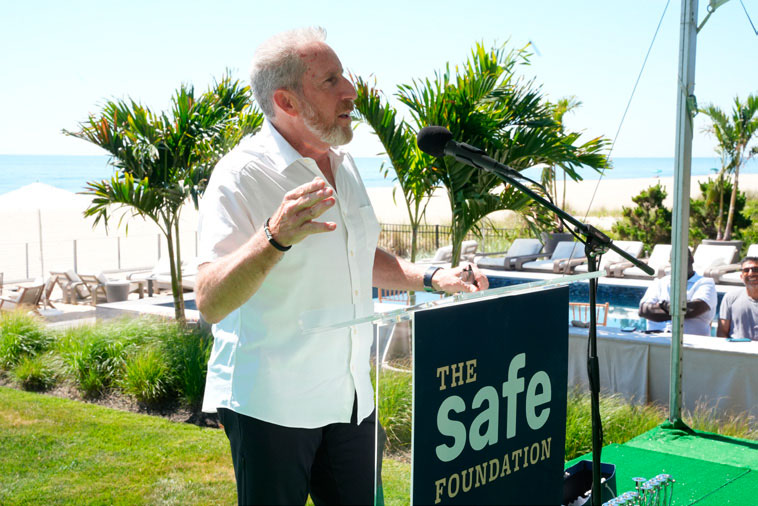
I remember the call really well, because I was actually driving to the Hamptons. I was driving on the highway, and this woman called me. Her name was Brittany, and said, “We’ve been following your story, and we’re so sorry what you’re experiencing, and we would love it if you would be willing to speak at the Republican National Convention.”

I was so caught off guard by that. I wasn’t able to process. That’s like, a pretty big deal.

I was very clear that I would speak on almost any platform, if it meant that the narratives of Jewish students on college campuses would be heard and would be elevated.

I was also clear publicly, that if the Democrats and the Democratic National Convention wanted me to speak, I would be more than happy to. I’d be happy to connect them with any Jewish student. And they refused to take me up on that offer.

The Republican National Convention, to their credit, allowed me to speak. They allowed me to share my story. I did not endorse Trump at that speech. I was very clear to shy away from the political endorsement. But I give credit to the Republicans and credit to the Republican National Convention. They amplified the voices of Jewish students.

I was doing a walkthrough of my speech with the RNC staff. They sort of told me the logistics and the technical details. It was only after the two-hour walkthrough as I’m about to leave, I turn around and actually said, “You know, I do have one question. Can you promise me that when I give this speech tonight in front of 30,000 people in the arena, and look at President Trump in front of millions of Americans watching at home, can you promise me that the camera shows my kippah?”

This would be the biggest audience I would ever receive that could actually see that in the 21st century, young American Jews not only can and should, but must, must, must be wearing their Jewish pride as loudly, publicly and confidently as ever before.

That moment in my life I will not soon forget. It was incredibly special to be able to represent some of the Jewish students who’ve entrusted me with their stories, and to showcase how I am proudly Jewish. I’m proudly American, and those two are not contradictory.

CM: If you had any advice for President-elect Donald Trump, what would it be?

Deliver on the promises, whether it’s the anti-Semitism awareness act, whether it is cutting funding from anti-Semitic universities that have violated the civil rights of students, whether it is taxing the endowments or deporting non-American students who violate the law. He should make good on the promises he has made, and I will help the administration, in any capacity, in any position, to work with the Jewish American community, to work with Jewish students, and to make sure that our community is protected, and has advocates.

CM: What is your advice to Jewish students?

Don’t stop fighting. This is an inflection point in our country’s history, and in particular in the story of American Jewry. It has never been more important to wear your Jewish pride loudly, publicly.

You have nothing to apologize for. Advance the cause of American democracy, of Western civilization, of the Jewish state and of Jewish values. Because this fight, the fight of ideology, is critical for the survival not just of the Jewish people, but of the United States.

Students are on the front lines of this battle. It’s a battle that’s being waged 24/7. It’s a battle that we didn’t ask to be part of. It’s a problem we did not create, but it’s young Jewish students who are going to fix the problem.

CM: What do you mean by “fix the problem”?

The problem is that of rampant anti-Semitism, political indoctrination, and anti-Americanism on our campuses. We are the ones who are going to showcase not just to our college campuses, but to the rest of the country, that America is good, that Jewish values are worth fighting for, that American Jews are part of the tapestry of what makes this country so great, and we are not going to shy away from our identity and from our ideology.

CM: What would you like the Jewish community to do, to help you and to help college students?

You must amplify the voices of Jewish students.

Invite them to your dinners and conferences. Have them in the boardrooms and in the meetings. Bring them to Capitol Hill because they have something that you will never have, and that is direct personal experience. They know how to fix this more than anyone in the Jewish community. Respect their voices.

Listen to the students.

DFL Super Bowl Preview

Sam Sutton

The 2024 DFL season has been nothing short of spectacular. With thrilling matchups, jaw-dropping performances, and unforgettable moments, the league’s journey has now reached its pinnacle: the Super Bowl. And what better matchup could fans have hoped for? The top two seeds, the Smooth Mobile Oil Cowboys and the Egleston Air Eagles, will clash in what promises to be an epic showdown.

Championship Round Recap: Cowboys Steamroll the Dolphins

The Cowboys, captained by Allen Mustacchi, have been the most consistent team all season, and their dominance was on full display in the championship round. Facing a red-hot Dolphins team that had gained momentum in the playoffs, the Cowboys left no room for doubt. Behind a stellar performance by their star QB Eli Siegal, they cruised to a commanding 31-6 victory. Their precision offense and stifling defense left the Dolphins with no answers, and the Cowboys firmly cemented themselves as the favorites heading into the Super Bowl.

Eagles Engineer an All-Time Comeback

While the Cowboys dominated, the Eagles had to fight tooth and nail to punch their ticket to the big game. Captained by Michael Panetz, the Eagles found themselves in an 11-point deficit with just two minutes to play against the well-rounded 49ers. What followed was nothing short of legendary.

Quarterback Shimi Cohen took over, orchestrating the greatest postseason comeback in DFL history. With everything on the line, Cohen connected repeatedly with his star wide receiver, Menachem Dubin, who seemed unstoppable in crunch time. In a stunning turn of events, the Eagles pulled off a miraculous 23-19 victory, leaving fans and the 49ers alike in disbelief. This resilient performance proved that the Eagles are not just contenders but a team with championship grit.

A Clash of Titans

The Cowboys enter the Super Bowl as the undisputed favorites. Led by QB Eli Siegal, the de facto #1 draft pick, this team has been a powerhouse all season. Siegal’s ability to deliver pinpoint passes and make smart decisions under pressure has been the backbone of their success.

But the Cowboys’ strength lies in their depth. JoJo Matut and Mordy Sultan, a rookie wide receiver duo, have been nothing short of electric. Their speed and chemistry have made them a nightmare for opposing defenses.

Veterans like Mesh Novaseller and Yossi Abramson provide reliable options, offering stability and experience to complement the explosive plays. On the line, Captain Allen “Moose” Mustacchi, along with ball hawk Rodin and Jackie Sutton, form a formidable trio, providing both protection for Siegal and disruption on defense.

This balanced, high-powered roster has made the Cowboys the team to beat. With their regular-season victory over the Eagles in hand, they’ll look to replicate that success and secure the championship.

Egleston Air Eagles

If any team can challenge the Cowboys, it’s the Eagles. While they may enter as underdogs, their postseason heroics have shown that they thrive under pressure. Quarterback Shimi Cohen has been nothing short of a marvel, leading his team with poise, precision, and an uncanny ability to deliver in clutch moments.

The Eagles have plenty of firepower. Michael Panetz and Menachem Dubin form an elite wide receiver duo that has carried the offense all season. Dubin’s performance in the championship round solidified his status as one of the league’s most dangerous playmakers.

Jake Gluck, a standout on the defensive line, is also a key contributor at tight end, bringing versatility and toughness to the team. Shmuey Lewis and Noam Katsil embody the “do-it-all” mentality, making plays on both sides of the ball and giving the Eagles a well-rounded edge.

Irwin Sutton and Charlie Mizrachi bring the intangibles—leadership, grit, and a winning mentality—that every championship team needs.

The Eagles will lean on their chemistry, resilience, and balanced roster to challenge the Cowboys in what promises to be a tightly contested battle.

The Super Bowl

The DFL Super Bowl is set and the stage couldn’t be bigger. The Cowboys, with their star-studded lineup and near flawless record, will look to cap off their dream season with a championship. Meanwhile, the Eagles, riding the wave of their historic comeback, will aim to prove that their grit and determination can overcome even the toughest opponent.

What’s Next?

Stay tuned for next month’s issue, where we’ll break down every play, highlight the game’s biggest moments, and crown the 2024 DFL champion. Will the Cowboys complete their season of dominance, or will the Eagles defy the odds one last time? One thing is certain: this Super Bowl is one for the ages.

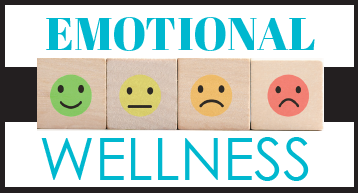
Emotional Wellness – The Dark Side

Rabbi David Sutton & Dr. David Katzenstein, LCSW-R

As a bachur, Rav Yerucham Levovitz learned in the Talmud Torah of Kelm. Prestigious kollel avreichim learned there, as well, though they lived the life of bachurim. They would leave their homes, travel to Kelm, learn there for a month at a time, and only see their wives and children for a short time at the end of every month.

Weakness or Greatness?

A fire once broke out in one of the houses next to the Talmud Torah, and many nearby houses burned down, though the bet midrash remained intact. As the fire raged on, edging ever closer to the yeshivah, an outstanding kollel avreich thought to himself, “I hope the yeshivah burns down. Then I’ll be able to go home to my wife and children.”

When we hear this, our first reaction may be, Oh my goodness, this man is a horror! But when sharing the story (Daat Torah, Bamidbar p. 82-83), Rav Yerucham has a different take. In his opinion, this is a sign of greatness. The avreich knew himself and realized that deep down inside he had a desire to return home to see his wife and kids. If he were to just show up at home in the middle of the zman (semester), his wife might say, “Why are you coming home now? You’re supposed to be learning in yeshivah. You don’t belong here.” But if he could say, “The yeshivah burned down. I had to come home,” he would have an acceptable excuse, and he would not have to be embarrassed to come back to his family.

Understanding Oneself

A person must be able to recognize his shortcomings, asserts Rav Yerucham. This is why the Torah is always looking for and finding fault in our Avot, and the Dor HaMidbar. Sefer Bamidbar is replete with stories of Klal Yisrael’s complaints and grumbles, their agitation and insurrection. This is the Torah’s way of showing what is really going on inside of a human being. The pasuk says: Though man is glorious, if he does not understand himself, he is like the silenced animals (Tehillim 49:21). Rav Yerucham tells us that a person who does not really know what is going on inside himself is not considered a human being at all.

The Pele Yoetz (on the topic of pachad, fear) shares a story that took place in the time of the Rambam. An adam gadol did not want to say Viduy on Yom Kippur, claiming that he had not

committed many of the sins enumerated in the text. Why should he lie before Gd? Don’t we say that the stamp of Gd is truth?

The Rambam countered, “If you truly understood the level of avodat Hashem demanded of each individual, you would realize that a day does not go by in which you do not commit every transgression listed in the Viduy, and then some.”

How can that be? Every single day, a great person transgressed in so many areas?

Look at the Fine Points

Take a look at David HaMelech. The Navi informs us that David HaMelech sinned with a married woman, when, in truth, she was divorced (II Shmuel, Ch. 11-12). So what does that mean? We are not to merely view the full picture of an action, but the fine points, as well. True, David did not sin with a married woman, but he erred in the subtle points of his action. Though the adam gadol in the days of the Rambam had not actually committed all the sins in the Viduy, he may have transgressed in the small nuances, which, if one is perfectly honest, are associated with more serious iniquity. We are all encouraged to look carefully through our deeds, including the fine points, and learn to know ourselves.

Rav Yisrael Salantar admitted that he would not want to be left in a room with uncounted money. Other baalei mussar went a step further. “If you left me in a room with uncounted money, I would take it.” Does that really mean they would take it? No, it means that they felt that they had some kind of taste for that sin inside of themselves – because they were always checking on themselves.

Continuing the Family Dynasty – Hacham David Yosef Inaugurated as Chief Rabbi

Victor Cohen

On September 29, 2024, Hacham David Yosef, the ninth son of Hacham Ovadia Yosef, zt”l, was elected to be the Sephardic Chief Rabbi for the next ten years. On December 11, Hacham David was officially inaugurated in an intimate morning ceremony at the Rabbi Yochanan Ben Zakkai Synagogue in Jerusalem’s Old City, with a much larger celebration following at Jerusalem’s Great Synagogue in the afternoon.. Hacham David followed his older brother, Hacham Yitzhak Yosef, the sixth son of Hacham Ovadia, in the position. Their father held the position of Sephardic Chief Rabbi himself from 1973 to 1983.

Hacham David comes in as Chief Rabbi while Israel is still in crisis, with hostile forces threatening Israel on multiple fronts and hostages still held by Hamas. The Chief Rabbi will shoulder heavy responsibilities during this time. He will not only guide our people halachically. He will also serve as the spiritual leader of Israel, the Rishon LeZion. With Hashem’s help, Hacham David will fulfill both roles with wisdom, strength, and compassion. He served as the Chief Rabbi of Har Nof in Jerusalem, ran Yechave Daat, and was involved with the Shas Party, the political party that his father helped to found.

Hacham David’s inauguration was a beautiful, monumental event for all of Israel and for Sephardic community around the world. Hacham David’s family has been one of the most influential families in Sephardic Jewry for the past few decades, and it is amazing to see Hacham Ovadia live on through his children.

Hacham David’s inauguration was attended by notable figures including President Isaac Herzog, former Chief Rabbi Shlomo Amar, the Shas Party’s Council of Torah Sages, and other religious leaders and members of the Rabbinate. Rabbis from our community attended as well, including Rabbi Shmuel Choueka, Rabbi David Ozeri, Rabbi Edmond Nahum, and Rabbi Shaul J. Kassin.

They started the day by praying in Yechave Daat. “It was very prestigious and emotional,” Rabbi Kassin recalled. He had learned at Hacham David’s Yechave Daat in his youth, and personally received help and advice from Hacham David.

From Generation to Generation

“What I was thinking about most was how much nachat it would bring his father,” Rabbi Kassin said, referring to Hacham Ovadia, “especially that two of his children continued the family legacy.” His father’s presence was felt throughout the day. In a touching moment that bridged generations of Jewish leadership, Hacham David was draped in the ceremonial robe once worn by his father. Hacham David’s own official garments closely resemble Hacham Ovadia’s, symbolically holding his father close as he ascends to his former position.

Rabbi Kassin noted that Hacham Ovadia’s tireless work to building something special for Israel continues to bear fruit, years down the line, in the form of his children taking up his legacy and continuing it.

The Yosef family has made halacha accessible through their writings and books. They “revolutionized” the study of halacha, according to Rabbi Kassin. Hacham David specifically took part in this through his Halacha Berurah, an encyclopedic masterpiece that breaks down the entirety of Jewish Law with a high level of precision.

The Chief Rabbi has a great opportunity to elevate the spirituality of the entirety of Israel. Rabbi Kassin explained that they need someone “who cares for them,” someone who will take the proper time to really work on elevating their spirituality. Especially now, when Israel is still fighting, this is a significant undertaking. Upon his election, Hacham David said that with Hashem’s help, he would work “night and day to unify Israel during this difficult time.”

Rabbi Kassin noted that there is much that a Chief Rabbi has to deal with. The position requires many years of observing or experiencing the ins and outs of the role. It is a heavy position, with many responsibilities. Hacham David, Rabbi Kassin said, “has seen that throughout his life.” He was both raised by a Chief Rabbi, and saw his brother rise to that same position, Hacham David is surrounded by greatness and is poised to continue the family legacy.

Mabrouk – January 2025

Births – Baby Boy

Martin & Rachel Cohen

Mark & Anta Shalam

Isaac & Esther Moghrabi

Richie & Joyce Ayal

Mark & Nicole Hazan

Miro & Junie Sutton

Sammy & Danielle Dayan

Marc & Cookie Dweck

Births – Baby Girl

Max & Susan Cohen

Adam & Shira Gorcey

Danny & Barbara Choai

Jack & Amanda Betesh

Joseph & Janice Mizrahi

Joey & Fortune Ades

Ralph & Sophia Shamah

Zach & Claudia Mansour

Bar Mitzvahs

Avraham, son of Rabbi Refael and Janet Netanel.

Engagements

Daniel Tracktenberg to Celia Chrem

Aron Rudy to Esther Sutton

Leo Setton to Rochelle Tawil

Teddy Chattah to Robyn Dweck

Jacob Setton to Danielle Elbaum

Eddie Ashkenazi to Emy Shamah

Weddings

Irving Bijou to Rosie Zeytouneh

Ikey Betesh to Rivka Cohen

Charlie Ades to Jacqueline Salman

Jack Bibi to Eve Shalom

Eddie Keda to Esty Ballas

Marc Abed to Sarah Assis

Once Upon A Thyme

Cookies and Cream Hot Cocoa Bombs

Adina Yaakov

This treat has maintained its popularity for good reason. It breaks open in the most captivating way, releasing its contents and instantly creating an extraordinary cup of hot cocoa. Cocoa bombs are a great activity for cold winter nights and make great hostess gifts as well. You will need two half sphere silicone mold trays with six cavities each for this recipe. If you don’t want to purchase molds, you can use paper cupcake liners and add enough melted chocolate to cover the hot chocolate and marshmallows completely.

2 ounces high-quality semi-sweet chocolate bars or chips

14 ounces high quality white chocolate bar or chips

6 tablespoons white hot chocolate mix

1 cup mini marshmallows

12 mini sandwich cookies

6 cups whole or 2% milk

If you can’t find white hot chocolate mix, make your own:

2 cups skim milk powder

½ cup Sugar

½ cup Vanilla sugar

1. Fill 2 pots half-way with water and set over medium-high heat. Place 2 heat-proof glass bowls that fit securely on top of each pot without touching the water. Chop each bar and melt separately in the double boilers. Remove the bowl from the double boiler when melted.

2. Coat the molds with the white chocolate. Drop 1 tablespoon tempered chocolate into each well of the half sphere silicone mold trays. Use a brush to spread the chocolate up the sides and over the edges of the molds by just a bit. Place in the freezer to harden quickly, about 5 minutes.

3. Fill half the spheres with white hot cocoa mix and marshmallows.

4. Wearing gloves, gently release the remaining 6 unfilled shells from their molds, but keep them resting in the well. Use a pastry brush to coat the top of the sphere with chocolate and attach to the marshmallow-filled shell.

5. Let sit at room temperature to harden and set, at least 15 minutes.

6. Drizzle with dark chocolate and add sandwich cookies. Drizzle with white chocolate. Use gloves when decorating or moving the cocoa bombs to prevent fingerprints.

To Serve the Chocolate Bombs:

1. Heat 1 cup milk for each hot chocolate bomb gently on the stovetop or in the microwave for about 2 minutes until very hot, almost to a boil.

2. Pour the hot milk into a large mug and gently add the bomb for the most dramatic explosion.

Is It Time To Turn Off Your Smartphone?

Ellen Gellar Kamaras

Shutting your smartphone for allotted time periods to be totally present for your children will reap enormous benefits.

It will increase their emotional intelligence (EQ) and give them valuable lifelong tools to navigate challenges and relationships. Being emotionally intelligent is key to how one reacts to life’s challenges. Unplugging from your phone will help your kids feel that they are important to you and will help them to develop resilience. And it’s good for you, too.

When You Turn Your Attention to Your Phone

I am blessed to live in Brooklyn Heights, right next to the Promenade, which affords a breathtaking view of the Lower Manhattan skyline and New York Harbor.

Many young families live in this section of brownstone Brooklyn. When I walk my dog, Davy, I see many parents and nannies pushing strollers with infants and toddlers.

It is rare when a parent or nanny is not looking at his/her phone while pushing the stroller. There are times that we need to check our phones. I am guilty of stopping in the middle of the block to check my phone and having pedestrians “excuse me” their way past me.

What do you think is the impact on the child whose parent or nanny is constantly looking at her phone? We have all seen kids trying to get their mom’s attention while the mom was scrolling.

Even my dog gets into trouble when I stop to check my phone for a text or to send a quick email. Inevitably, another dog walks by and Davy pounces or growls.

Might Davy be trying to remind me that this is our special time together and I need to be present? I now make a concerted effort to keep my phone in my pocket.

If we are engrossed with our phone screens, it means we are not engaging with the others we are with.

What is the impact of parental or caregiver phone use on the children? What is the cost of those missed opportunities when we could be connecting with our children? And what is happening at home regarding phone usage in the children’s presence?

First, let’s address the babies.

Why Talking to Your Baby Matters

According to the Essex Child and Family Wellbeing Service, child’s first 1,001 days (from conception to the age of two) are crucial in developing attachment, physical development, communication, and early language. Children need to be experimenting with sounds, babbling, making noises, learning vocabulary, and communicating from as early an age as possible.

This is why we need to talk to our babies while they are out in their strollers and at home. In the first 10 to 12 months, babies enjoy being talked to, move their heads and smile, and move their arms and legs in response. Babies listen when you sing songs and start to understand when you use their name. It is never too early to start reading books to encourage vocabulary building.

Raising Children in the Digital Age

According to the Center for Fathers and Children in Sacramento, California, “When it comes to raising children in the digital age, one of the worst things a parent can do is give their kid a smartphone and hope for the best. Turns out, same goes for the grownups.”

That’s right! We talk about the negative impact of screen time and too much access to social media for our kids but are we as parents being appropriate role models?

Robin Nabi, a professor of communications at UC Santa Barbara, headed up a study of parents to observe how different forms of media impacts the emotional intelligence of their kids. The results of her study indicated that the EQ of children can be negatively affected by their parents’ use of smartphones. It’s the very familiar scene that I see on the promenade of a caregiver absorbed with a smartphone screen and their little charge is seeking attention.

Let’s define emotional intelligence or EQ. It is the ability to recognize, understand, and manage both our emotions and the emotions of others. EQ’s key components are self-awareness, self-regulation, social awareness, and relationship management.

Research shows that kids with high EQ are likely to have better academic performance, stronger relationships, and enhanced mental health. EQ provides the tools for children to handle stress, solve problems, resolve differences and arguments, and make healthy choices. A solid connection also exists between EQ skills in kids and decreased depression, anxiety levels, and aggression.

Nabi concluded that children respond to their parents. It does not matter what the content is that the mom or dad is viewing on their phones. To the child having a parent looking at their phone translates to a lack of responsiveness to them.

Her research found that parental phone use is associated with “still face.” This expressionless appearance is frequently taken for depression, which can adversely affect children’s development of emotional skills.

Advice to Parents Based on Research

Nabi’s advice to parents is to be more mindful about phone use around children. “Where their eyes are sends a message to their children about what’s important.”

Dona Matthews, PhD. Is a developmental psychologist and author living in Toronto. She describes the findings of five research studies to support her views on parental phone use – parents on devices distress children and reduce their resilience.

These studies highlight the harm parents can cause when they focus on their phones. Although they may be physically present, they are distracted and less responsive to their kids.

Study #1: Moms on cellphones have children who are more negative and are less resilient.

Study #2: Children feel unimportant and feel they need to compete with smartphones for their parents’ attention.

Study #3: Distracted parental attention harms children’s social/emotional development.

Study #4: Cellphone use interferes with healthy parenting. Study #5: When parents use cellphones kids feel sad, mad, angry, and lonely.

Why Is It So Important for Children To Develop Resilience?

Think about how we as parents/caregivers coped during the pandemic. Our ability to be resilient enabled us to function and take care of ourselves and our loved ones in the new normal. The same is true of Israelis and Jews in response to the atrocities of October 7th and the ensuing war and surge in anti-Semitism. We continue to use our Jewish mindset and practice values of optimism, faith, hope, and positivity. Most importantly, we try to exercise resilience.

After October 7th, Jewish resilience meant the creation of a new normal. Resilience requires not only perseverance but also the ability to adapt to adverse events.

Developing resilience for a child means helping them to deal with life and cultivate the tools and skills they need to manage challenges as they grow up. Resilience will let them stick things out and not give up in the face of adversity or failure.

What Can Parents Do?

School principals and parents concentrate on banning or limiting children’s phone use. Therapists also recommend they address other spaces where phone use/overuse occurs. Dr. Katie Hurley, a child and adolescent psychotherapist, author, and speaker shared what she hears from her teenage clients about their parents’ phone use. They say that their

parents consistently criticize their children’s phone use but do not curb their own use. “Hypocrisy aside, teens tell me that it’s frustrating when their parents can’t give them their focus. Frustrated with their parents over their lack of attention, teens curb negative emotions by watching videos on social media.”

Parents frequently have the same complaint, that their kids are glued to their phones and do not react when they try to engage them. They also turn to their own phones when rejected by their children. Both parents and kids get stuck in an endless loop of fractured communication and hurt feelings because technology steals focus.

Dr. Hurley’s solution involves getting the families to look at the problem from both sides and see how technology is stealing opportunities for quality time and positive interactions.

Both parents and children need to adjust their technology habits to restore trust and positive communication. She emphasizes that it is our parental responsibility to be a good role model for our children.

By prioritizing engaging with each other and having fun together, families can curb tech overuse in a positive way.

Curb & Compromise

Below are some of Dr. Hurley’s suggestions to restore positive and meaningful family conversations without throwing our phones away.

Establish technology family guidelines together. Even though the rules may vary by age, it is important to explain the differences to your children. One example is no phones at the dinner table.

· Devise systems that easily allow us to decrease our phone use. One idea is to provide a storage basket or central charging station when phones are not to be used.

· Practice active listening skills together. Maintain eye contact while you talk to each other, ask follow-up questions, and reflect on what you heard.

· Create working communication systems. There are exceptions. Parents may have to deal with work issues, for example, a journalist with a deadline or a doctor on call, and kids may get a notification from school. Make a follow-up plan to continue the conversation and be clear when you set boundaries around work.

· Schedule activities your family enjoys doing together that do not involve technology.

Positive Parenting – How Do YOU Deal with Neighbors? 

Tammy Sassoon

Much of our children’s understanding of healthy relationships is built upon the interactions they observe between us and the people around us. Whether it’s how we relate to neighbors, friends, or distant and close family members, our actions shape their perceptions of how to navigate complex social dynamics. Before we can even attempt to instruct our children on handling disappointment, respecting others, accepting authority, and practicing kindness, we must first embody these qualities ourselves.

As none of us lives in isolation, we inevitably encounter conflict, providing our children with priceless opportunities to observe our responses. For me it’s important that my children learn two things from watching:

1. How to accept life’s challenges and…

2. How to recognize the inherent worth of both themselves and others, even in the midst of adversity.

If I succeed in modeling this, I am paving a path for respectful and compassionate behavior.

Teaching by Example

When we model these behaviors, we teach our children that it’s okay to feel disappointment, anger, or frustration, but it’s not okay to lash out or resort to hurtful words or actions. We show them that it’s possible to express our feelings in a constructive way, to seek understanding, and to work towards finding a solution. We teach them the importance of empathy, of putting ourselves in another person’s shoes, and considering someone else’s perspective. From watching us do all this, our children learn the value of forgiveness, acknowledging our frustration in a healthy way, and of letting go of resentment and moving forward.

Often parents wonder why their children are act aggressively, not realizing that they themselves are doing the same thing with adults in their lives. Whatever character trait you see in your child, you would be wise to ask yourself if your child is growing up watching you act with dignity. If not, it is never too late to start fresh.

By modeling healthy behaviors, we create a safe and supportive environment where our children can learn and grow. We help them develop the social and emotional skills they need to build

strong, healthy relationships. And we instill in them a sense of compassion and empathy that will benefit them throughout their lives. If you want your child to be kinder, BE KINDER. If you want your child to be more accepting of challenges, BE more accepting of challenges. You get the point.

Scenario with the Neighbor

Imagine that your neighbor keeps on playing loud music late at night, disturbing your sleep.

If your children observe you engaging in a disrespectful response, they would see you blasting your own music even louder in retaliation, or yelling across the fence, expressing your annoyance in a hostile manner. This approach is likely to escalate the situation and damage your relationship with your neighbor.

If your children observe you engaging in a kind and boundary-setting response, they would watch you approaching your neighbor calmly and politely, explaining how the late-night noise is affecting your sleep. You could say something like, “Hi Sara, I hope you don’t mind me asking, but I’m having trouble sleeping because of the late-night noise. I was wondering if we could come up with a way to compromise, maybe by turning down the volume after a certain time?”

This approach demonstrates respect for your neighbor while assertively stating your needs. It opens the door for a constructive conversation with the neighbor and a potential solution that works for both of you.

So, the next time you’re faced with a challenging situation, remember that your children are watching. Model the behavior you want them to emulate. Show them how to handle conflict with grace and dignity. Teach them the importance of kindness, respect, and understanding. By doing so, you’ll be giving them the greatest gift of all: the ability to build strong and healthy relationships.

New York’s Protests Are Spiraling into Chaos – We Need Common-Sense Laws Now

Linda Sadacka

In New York, chaos has become the new normal. What should be peaceful protests (which are a cornerstone of democratic expression) too often devolve into violent free-for-alls. We have all seen it – the broken windows, terrified families trying to cross streets blocked by agitators, and police officers caught in dangerous clashes with masked ”protesters” who think they are above the law. This is not just bad optics. This is a direct threat to public safety.

Less than a month after the tragic events of October 7, 2023, it became clear to me that action was urgently needed. The images of horror and devastation shocked us all, but what unfolded in the weeks that followed was equally alarming. Protests, initially intended to express solidarity or outrage, began to morph into something far darker. In response, I personally took steps to sound the alarm – writing letters to the mayor’s office and organizing a successful phone campaign to advocate for laws designed to protect the right to protest while maintaining public order. Yet, here we are, nearly a year later, and New York City continues to drag its feet, allowing this dangerous trend to spiral further out of control.

The Need for Comprehensive Protest Laws

To be clear, this is not about curbing free speech. Protesters have every right to voice their opinions, to march in the streets, and to demand change. But when those marches turn violent – when agitators hide their identities and use protests as cover to wreak havoc – then those marches should not fall under the standard free speech protections, because that right to free speech and protest gatherings does not extend to criminal behavior.

We have seen it play out time and again. The Manhattan Bridge incident in November 2023 is one example, when masked protesters clashed with police, blocked traffic, and hurled projectiles. Another example is the Midtown vandalism in December, where a peaceful demonstration was hijacked by criminals who smashed windows and defaced property, causing thousands of dollars in damage. These are not isolated events – they are part of a growing trend of lawlessness that extends far beyond New York.

Global Patterns

In fact, this troubling pattern is playing out on a global scale. Across the world, chaos is escalating under the false banner of progressivism and inclusivity, leaving communities vulnerable and unprotected. Look at Amsterdam, where a so-called “protest” turned into an

outright pogrom. Jewish landmarks were vandalized, residents were attacked, and anti-Semitic chants rang through the streets. This was not a spontaneous rally – it was a planned, targeted assault on a minority community, unchecked by authorities. This is history repeating itself, and it should alarm every person who values civilized behavior.

In Montreal, we see the same disturbing pattern. Rabbi Adam Scheier and his family were told by police to leave a public area because his kippah might provoke a nearby pro-Hamas mob. Think about that: instead of protecting innocent citizens, law enforcement chose to direct them to leave a place in their own city to appease aggressors. This is not the promotion of inclusivity; it is cowardice.

Closer to home, in Brooklyn’s Nostrand Avenue, Jewish neighborhoods have found themselves under siege. It is both absurd and unacceptable that agitators are permitted to march through predominantly Jewish areas, openly threatening residents and traumatizing entire communities – including children and the elderly. The very notion that such actions are allowed to take place in spaces meant to be safe for minority populations is a fundamental failure of governance and law enforcement.

Designated Protest Areas

Permissive laws and weak leadership have created a dangerous climate where the rule of law is undermined, and communities are left to fend for themselves. Protesters should not have free rein to intimidate and terrorize the locals in residential neighborhoods. This is not an issue of free speech – it is an issue of public safety and basic human dignity. Enforcing designated protest areas is not a violation of civil rights; it is a necessary measure to ensure that protests do not infringe on the safety and well-being of others.

The time has come to draw a clear line: freedom of expression cannot come at the expense of another’s sense of security, especially in communities that have historically faced targeted hate and violence. Designated protest zones must be enforced to ensure that protests remain lawful and respectful, and that vulnerable communities are shielded from unnecessary harm. Anything less is a failure to uphold the principles of fairness and justice.

A Common Thread

What ties all of this together are the policies disguised as “progressive” that undermine accountability and enable chaos. Today’s bail reform and soft-on-crime policies claim to promote fairness, but in reality, they strip away basic protections for vulnerable communities. This is exactly how dangerous precedents are set. History tells us what happens when governments fail to confront anti-Semitism and lawlessness. Before the Holocaust, laws targeting Jews were implemented under the guise of law and order. Today, we arere witnessing the same erosion of protections, only now what is happening is veiled in the language of inclusivity and equity.

Make no mistake: when a society refuses to enforce its own laws and to hold criminals accountable, it invites disaster. Chaos is not progress. And the parallels to past events in history are too striking to ignore.

Measures to Enforce Safety During Protests

One effective example is the recently enacted Mask Transparency Act in Nassau County, which bans masks at protests to remove the anonymity that violent agitators rely on. While Nassau County implemented this measure recently, I had proposed this very idea in a letter I sent to the mayor’s office just a month after October 7, 2023. In the aftermath of that tragic day, I recognized the growing potential for protests to be exploited by bad actors and emphasized in my letter that removing anonymity was a crucial step toward maintaining public order. While it is encouraging to see Nassau County take action now, it is clear that focusing solely on masks is not enough. New York needs a broader set of measures to ensure protests remain peaceful and productive for everyone involved.

Here’s what that could look like:

Permit Requirements: Cities need to know when and where protests are happening so they can prepare. This is not about controlling speech—it is about keeping people safe.

Designated Zones: Clear, controlled spaces for protests would prevent disruption in residential neighborhoods and local businesses.

Time Limits: Protests stretching into the night are more likely to escalate into violence. Setting reasonable end times will help to maintain order.

Security and Cleanup Plans: Protest organizers should provide their own security personnel and have a plan for medical support and cleanup.

These measures are not intended to only be restrictive – they are common-sense solutions to ensure that protests remain safe, organized, and meaningful.

We Have Forgotten What a Peaceful Protest Looks Like

The sad truth is that we have forgotten what peaceful protests look like. A colleague of mine recently experienced something that underscores just how far we have strayed. While traveling in Budapest, he accidentally walked into a large rally. He was stunned by the atmosphere. The protesters were peaceful, orderly, and respectful. There was no chaos. No violence. Just people expressing their views as part of a functioning democracy.

Contrast that with what we are seeing in New York today – agitated crowds turning protests into battlegrounds. The difference is stark, and it is a lesson we cannot afford to ignore. Without

stronger guardrails, protests lose their integrity, communities suffer, and the public loses faith in the democratic process.

Time to Act

The chaos unfolding in New York and beyond is a clear sign that leadership is failing us. Governor Kathy Hochul and city officials must step up and adopt comprehensive measures to ensure protests remain peaceful. While banning masks is a start, a holistic approach is needed – one that balances the right to protest with the responsibility to protect public safety.

If we do not act now, we risk watching our cities spiral further into violence, leaving innocent people caught in the crossfire. The solution is within reach, but it requires bold leadership to implement it. The time for action is now. Our cities, our communities, and our values depend on it.

Here’s How You Can Help

Call Governor Hochul at (518) 474-8390 and demand statewide adoption of effective protest laws.

Contact Mayor Adams’ office at (917) 909-2288 to urge the implementation of stricter protest guidelines in New York City.

Contact your local legislators and push for a framework that prioritizes safety and order.

Importance of Exterior Maintenance

Karen Behfar

Over the past few years, we’ve sold a few homes that had vines and weeds on the exterior of the home. In one home, the seller was actually surprised when the home inspector recommended having the vines and weeds removed, as they are not good for the health of the home’s structure. Let’s explore and delve into it some more.

Weeds and Vines

While vines on exterior walls may look charming, they can cause structural damage to a home. Weeds and invasive plants tend to grow into cracks, expanding them over time and allowing moisture to seep in, which may lead to mold and mildew. Vines can also trap moisture against walls, accelerating decay in wooden or brick surfaces. Additionally, they may attract pests, such as insects and rodents, creating further issues. Regularly removing weeds and managing vine growth helps protect a home’s structural integrity and curb appeal, saving homeowners from potentially expensive repairs and maintenance. Vines, scrubbings, and greenery on the exterior walls of a home may look charming, but they can lead to serious issues. These plants trap moisture against the walls, which promotes mold, mildew, and rot, damaging the structure. Their roots can penetrate cracks, widening them and compromising the wall’s integrity

Garage Maintenance

Garages are an interesting thing. I find that many people who maintain their home very well also maintain their garage very well. I can usually tell if a homeowner is meticulous by looking at the exterior of their home and at their garage. That being said, many people only use the garage for storage, so they don’t put too much emphasis on garage maintenance, despite how important it is.

Basic garage maintenance is important because when you do eventually want to sell, it can add value to your home. When the buyer wants to check your home, the home inspector always checks out the garage and makes sure that it’s dry and the roof is intact. Usually, if there are small holes or openings, moisture builds up whenever it rains. While small holes or openings may not interfere on a daily basis, termites love moisture and they can cause potential damage to the garage.

A well-maintained garage can add value and functionality to a home, but neglecting it can lead to costly repairs. Winter months especially demand extra care, as cold weather can affect garage doors, hinges, and seals. Regularly inspecting the garage door opener, lubricating moving parts, and checking for any drafts or gaps can help maintain energy efficiency and security. Also, make sure to organize and clear any clutter that may become hazardous. By keeping the garage in good condition, homeowners ensure that their garage remains a useful and attractive feature, enhancing overall property appeal and market value.