



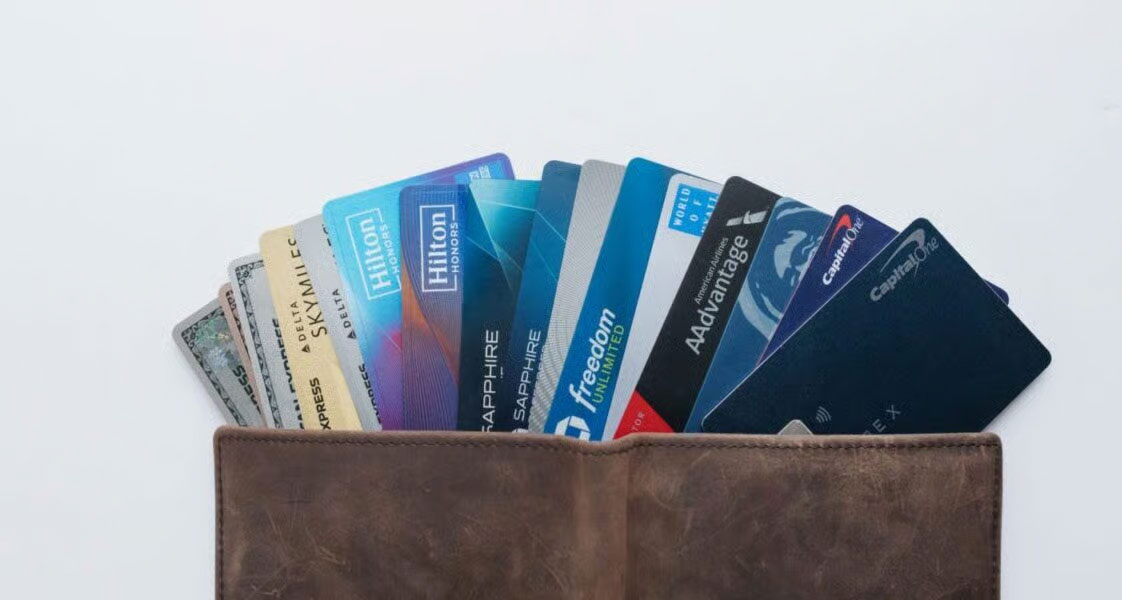
Charging for products and services has become a way of life. Today, many people no longer carry cash when purchasing clothing, appliances, or everyday items; instead, they rely on credit cards. For some, this offers convenience and security, while others use credit to make purchases they may not yet be able to afford outright. The modern credit card is largely a 20th-century innovation that developed gradually through a series of financial and technological advancements.
Early Store Credit
Before general-purpose credit cards existed, many department stores and gas stations offered their own charge accounts in the early 20th century. These accounts allowed customers to make purchases on credit, but only within a single business. Because they could not be used elsewhere, these systems are known as closed-loop credit. While limited in scope, they laid the foundation for broader credit systems by familiarizing consumers with the concept of buying now and paying later.
The First Bank Charge System
One of the earliest bank-operated credit systems was introduced in 1946 by John Biggins of the Flatbush National Bank in New York. He developed the “Charge-It” program, which enabled customers to make purchases at participating local merchants without using cash.
Under this system, merchants deposited sales slips at the bank, which reimbursed them and then billed the customer. Although innovative, the program was geographically limited to a small area of Brooklyn and did not yet function as a modern credit card system. Instead, it is best understood as an early bank-mediated charge system.
The First Multi-Merchant Card
The first widely accepted card that could be used at multiple businesses was introduced in 1950 by Frank McNamara and his partners through the Diners Club. According to a well-known account, McNamara conceived the idea after forgetting his wallet at a restaurant, though this story is often considered partly anecdotal.
The Diners Club card allowed customers to pay for meals and travel-related expenses at a variety of participating establishments. Unlike modern credit cards, however, it required the balance to be paid in full each month, making it a charge card rather than a revolving credit card. Nevertheless, it marked a major step forward by introducing a multi-merchant payment system.
The Rise of Modern Credit Cards
A major turning point came in 1958 when Bank of America launched the BankAmericard in California. This program is widely regarded as the first large-scale revolving credit card system, allowing customers to carry a balance and pay interest over time. BankAmericard later evolved into Visa, one of the world’s largest payment networks.
That same year, American Express introduced its own charge card, initially focused on travel and entertainment expenses. In 1966, a consortium of banks formed what would become Mastercard, further expanding the credit card industry and increasing competition.
During this period, cards also transitioned from paper to plastic. American Express introduced the first plastic card in 1959, and the more durable format quickly became the industry standard.
Technological Advancements
By the 1970s, credit cards incorporated magnetic stripe technology, developed and standardized with major contributions from IBM. The magnetic stripe allowed card information to be stored and read electronically, enabling faster processing and reducing errors.
In the following decades, cards were enhanced with embedded microchips using EMV technology, which significantly improved security by encrypting transaction data and reducing fraud. These innovations made credit cards more reliable and secure, supporting their widespread global adoption.
Contactless and Modern Payments
In recent years, credit card technology has continued to evolve with the introduction of contactless payment systems. These systems use radio-frequency identification (RFID) or near-field communication (NFC) to allow users to complete transactions by simply tapping their card on a compatible terminal.
In addition to physical cards, digital payment methods have become increasingly common. Mobile wallets such as Apple Pay and Google Pay enable users to store card information securely on their smartphones and make payments without presenting a physical card. These systems often use tokenization, replacing sensitive card details with secure digital substitutes to enhance security.
Beyond Plastic: The Future of Credit Cards
The credit card has evolved from simple store-based credit systems into a complex and essential global financial tool through a series of major developments over the 20th and early 21st centuries. Early store-specific charge accounts were followed by bank-mediated systems such as the program introduced by John Biggins, and later by multi-merchant charge cards like those developed by Diners Club. The introduction of revolving credit by institutions such as Bank of America, which led to the creation of Visa, marked a defining shift in how consumers access and use credit. Subsequent technological innovations, including magnetic stripe cards developed with major contributions from IBM, followed by microchip-enabled cards and contactless payment systems, have continued to improve the speed, convenience, and security of transactions.
Today, credit cards remain a central part of the global economy, but their role has expanded beyond the physical plastic card. Increasingly, credit cards function as the underlying infrastructure behind digital payment systems, including mobile wallets such as Apple Pay and Google Pay. As a result, consumers may not always see or handle a physical card, yet the credit system it represents continues to power a significant share of transactions worldwide.