Home Blog Page 27

Community Highlights – New Torah High School Opens at the Jersey Shore

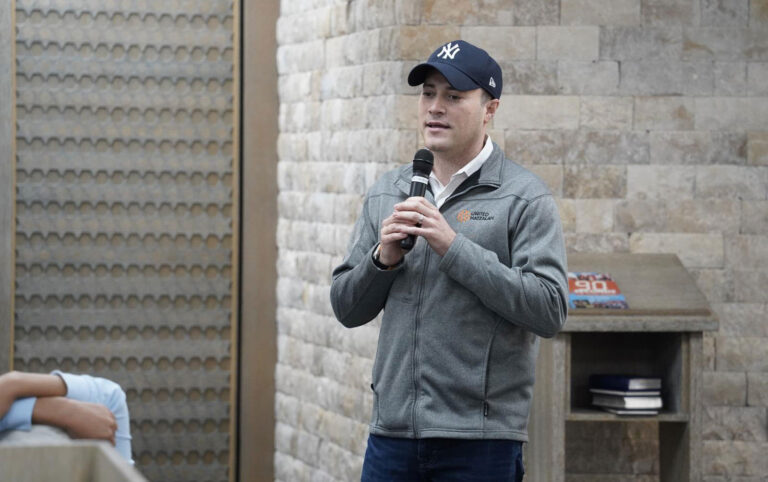
A transformative new institution is opening its doors at the Jersey Shore: Jersey Shore Yeshiva (JSY) – a premier yeshiva high school for boys dedicated to raising the next generation of Torah-driven leaders.

JSY’s mission is to inspire and cultivate Bnei Torah who are proud of their identity, grounded in Torah and mitzvot, and deeply connected to Am Yisrael and Eretz Yisrael. The school offers a warm, structured, and forward-thinking environment where each talmid is encouraged to grow – spiritually, intellectually, and emotionally.

Blending rigorous Torah learning with a dynamic general studies curriculum, JSY fosters critical thinking, effective communication, and inner confidence – skills that will serve students in the beit midrash, in their careers, and throughout their lives.

Under the guidance of leading rabbis and educators of the Jersey Shore community – Rabbi Shlomo Diamond, Rabbi Saul Kassin, Rabbi Joey Dayan, and Rabbi Joseph Dana – the Yeshiva is poised to fill a crucial gap in the community.

“An institution like JSY has long been missing,” said Rabbi Diamond. “This Yeshiva isn’t just a school – it’s an investment in the future of Klal Yisrael.”

NY Supreme Court Halts Yeshiva Closures

A New York State Supreme Court judge has ruled that six Brooklyn yeshivas are allowed to remain open while working to meet state education standards.

Last month, Judge Richard McNally issued an injunction after the New York State Education Department revoked the schools’ accreditation. The department claimed the yeshivas – located in

Borough Park and Williamsburg – failed to provide instruction in math, science, and English that was “substantially equivalent” to public schools.

A new law passed over the summer allows private schools to create alternative “pathways” to meet state requirements. However, the Education Department argued the yeshivas were ineligible because they were already deemed noncompliant when the law passed. Parents were told students would need to find new schools for the 2025–26 year.

McNally ruled the state acted “contrary to law” by asserting the yeshivas were no longer schools once found noncompliant. He said they remained schools – albeit ones needing improvement – and are therefore eligible to pursue the new compliance pathways.

The decision means the yeshivas can stay open during the review process and continue receiving public services like transportation and special education.

Agudath Israel, which supported the schools, said the ruling sets an important precedent: “If, in the future, any school is declared non-equivalent, it can still choose to avail itself of a pathway. The ‘non-school’ argument was soundly defeated.”

The Last Step Before the Siyum

The Olam HaTorah is abuzz with anticipation as multitudes of Oraysa lomdim take their final strides toward a siyum on Seder Moed. With the beginning of Masechet Chagigah, tens of thousands across the globe are embarking on the last leg of a journey that began nearly six years ago. And now, for the first time in Oraysa’s history, a global community of lomdei Torah stands on the threshold of completing an entire seder of Shas together.

Kehillot across the U.S., Eretz Yisrael, and Europe are preparing to converge for a historic ma’amad kavod haTorah to celebrate this milestone. This will be a once-in-a-generation aseifa – not only marking an ending, but celebrating a shared journey and the start of something even greater.

The journey of Seder Moed has been extraordinary, but the accomplishment that awaits is greater still. With gedolim, roshei yeshiva, and thousands united in celebration, the Siyum promises to be monumental. Each daf of Chagigah is more than learning – it is a contribution to a global accomplishment, a chance to write yourself into the history of Oraysa.

To learn more about the Siyum, please go to oraysasiyum.org.

Living Emunah – Did You Anticipate?

The pasuk in Parashat Balak (Bamidbar 24:17) says, “A star will emerge from Yaakov [and will rule the entire world].” The Targum explains that this is a prophecy regarding Mashiach. He is called a star, says the Maharal, because of his lofty level.

The belief in the coming of Mashiach is one of our Thirteen Principles of Faith. We are supposed to reaffirm every day, “I believe with a complete faith that Mashiach will come.” Not only do we have to believe, but we also must actively anticipate his arrival. Chazal (Shabbat 31a) tell us that this is one of the questions we will be asked after we leave this world: “Did you anticipate the salvation? Were you anxiously awaiting his coming?”

Our Rabbis did us a great favor by incorporating into every Amidah a berachah about anticipating Mashiach: “We have anticipated Your salvation throughout the day.” If we say these words with understanding and belief, then we will be able to answer that question affirmatively.

The days of Mashiach will be the greatest era in history. He will be a regular mortal, like everyone else. As is written (Yeshayahu 11:1), “A staff will emerge from the stump of Yishai.” He will descend from the branch of Yishai [father of David HaMelech, which is the tribe of Yehudah]. In every single generation, someone is born who could be Mashiach. He will be a master of Torah wisdom and possess sterling character traits. If the generation is worthy, Hashem will send Eliyahu HaNavi to anoint him as king.

Rav Chaim Vital (Likutei Torah) writes that he will receive an extra neshamah from Heaven that will imbue him with extraordinary siyata d’Shmaya. He will have more wisdom than Shlomo HaMelech. The Midrash Tanchuma (12) says that he will be greater than even Moshe Rabbeinu.

When people hear him speak, they will all be drawn to his wisdom. Every nation will appoint him their new leader, until he becomes the leader of the entire world. There will be unprecedented unity and peace. Not only will there be an end to war, but no one will even train to be a soldier. No country will need a military, because everyone will be united and at peace with one another.

The world will be filled with the wisdom of Hashem. We’ll be able to understand the hidden secrets of Creation and why Hashem runs the world the way He does.

The Maharal (Chapter 7) writes that the spiritual level of the world will be as it was before the sin of Adam HaRishon. The Bet HaMikdash will be rebuilt. It will be a glorious time of pure happiness. The streets will be filled with young children playing. Even the animals will cease to harm. There will be no more fear. We will be free to delve into the wisdom of Hashem.

The pasuk (Daniel 12:2) states, “Many of those who sleep in the dusty earth will awaken. Many of those who have passed on will once again come back to life. Families will be reunited. The great luminaries of all times will once again walk this earth. In the merit of our anticipation of these glorious days, may we see them, speedily in our days. Amen.

The Enduring Legacy of Sephardic Bikur Holim: A Journey Through History

In the heart of Seattle, Washington, a vibrant legacy endures with the Sephardic Bikur Holim Congregation. Established in 1914 by Levantine Jews from western Turkey, it continues to this day.

The incredible story of Sephardic Bikur Holim began in Medieval Spain. Then, during the Golden Age of Spanish Jewry, it all came to a tragic close with the Edict of Expulsion in 1492, issued by Ferdinand and Isabella. The Jews were forced to flee their homeland, and the refugees found a welcoming sanctuary in the Ottoman Empire. The Sultan, sensing an opportunity, was eager to take advantage of the Spaniard’s misjudgment. He opened his ports and cities to the refugees. They settled into their new homes and flourished there while keeping to their customs. As they settled across the Ottoman Empire, they not only survived, but thrived, while preserving a legacy that spans centuries, and through it all, they remained steadfast to their heritage.

After World War I, these Jews came to Seattle looking for a better life as well as to escape the crumbling Ottoman Empire. Our ancestors brought with them a treasure trove of culture, including their own unique language (Ladino), cherished customs, distinct minhagim, Turkish foods, and beautiful music (Romanzas), along with a deep well of religious knowledge.

Today, the Sephardic Bikur Holim community continues to honor its distinct practices rooted in ancient traditions. This connection to a shared past is not a relic but a living, vibrant force, expressed through unique liturgical practices (hazzanut), a love of family, and a profound respect for the Torah.

Our congregation is seeking a new spiritual leader to guide its next chapter. Over the past 100 years there have only been four Rabbinic leaders.

If you, or someone you know, are interested in making a big impact on a close-knit Sephardic community, this is an opportunity to make a real difference in a beautiful city.

To find out more about the community and our congregation, we invite you to visit our website at www.SBHSEATTLE.ORG. Here you can find out more details about the position, as well as the warm and friendly Seattle Sephardic community!

Medical Halacha – IV Hydration on Yom Kippur

Charlie suffers from serious heart problems. His doctor warned him that fasting on Yom Kippur could endanger his life and instructed him to drink fluids. Troubled by the idea of drinking on this sacred day, Charlie asked me if he could use intravenous (IV) hydration instead.

His son Jack, who is generally healthy, had a bout of food poisoning and became severely dehydrated. He asked if he needs to remove his IV before the fast begins in order to observe Yom Kippur properly.

Is IV Hydration Considered Eating or Drinking?

Halachically, IV hydration is not considered eating or drinking. The Torah prohibition on Yom Kippur refers specifically to consuming food or drink through the mouth. Hydration administered intravenously bypasses this and is therefore not technically a violation of the fast.

Hacham Ovadia Yosef

Despite the technical leniency, Hacham Ovadia, zt”l,  (Chazon Ovadia Yom Kippur, p. 298) opposed the use of IV hydration on Yom Kippur when not medically necessary. He explains that while IV fluids are not halachically defined as food or drink, they should not be used unless clearly required for health reasons.

He gives three key reasons: Firstly, drinking shiurim (small amounts) provides physical and psychological comfort (ituvei da’at) to a sick person. IV hydration does not offer the same level of satisfaction. The Chachamim were deeply concerned with ensuring the comfort of the ill.

Secondly,halacha already allows eating or drinking when health is in danger. There is no halachic requirement to find artificial alternatives. Insisting on IVs could mislead people into thinking they must use IV hydration rather than eat or drink – potentially putting lives in danger if IVs aren’t available.

Lastly,inserting an IV causes minor bleeding, which constitutes an unnecessary wound – another prohibition on Yom Kippur. Since eating or drinking is already permitted in such cases, this injury is avoidable and therefore unjustified.

Hacham Ben Zion Abba Shaul

In contrast, Hacham Ben Zion Abba Shaul, zt”l,(Or LeTzion 4:15:5) held that IV hydration is halachically preferable. He argued that even drinking in shiurim is still be a biblical prohibition, especially according to the Rambam (Shevitat Assor 2:3). IV hydration, by contrast, is not a normal form of drinking and is therefore permitted. As for the bleeding involved in inserting the IV, he viewed it as an unintended and destructive act (pesik reisha d’lo nicha lei), which does not carry a Torah prohibition and is therefore preferable to drinking in shiurim.

Drinking in Shiurim

When someone must drink on Yom Kippur due to pikuach nefesh, when medically possible they should drink in shiurim (melo lugmav, about 1.3 oz or 40 ml). The required pause between sips varies by opinion, from five seconds to nine minutes. Hacham Ovadia (Yabia Omer, OC 2:31) ruled that a pause of five seconds suffices, especially if longer breaks compromise the person’s health.

When Fasting Becomes Forbidden

If fasting could endanger Charlie’s life, not only is he permitted to drink – it is a halachic obligation. In Yechaveh Daat (1:61), Hacham Ovadia writes unequivocally: “If there is concern of possible danger to his life by fasting, one must listen to the doctor and eat on Yom Kippur, because pikuach nefesh overrides the mitzvah of fasting. If the sick person is stringent and fasts nonetheless, he is not acting righteously – on the contrary, he will be punished for this.”

What Should Charlie and Jack Do?

Charlie must not fast if doing so endangers his life. Ideally, he should drink in measured amounts (shiurim). If that is not possible or safe, IV hydration is permitted. Similarly, if Charlie refuses to drink IV hydration is permitted due to pikuach nefesh. Jack, who is already connected to an IV due to dehydration, does not need to remove it before Yom Kippur. In his case, continuing hydration through the IV is fully permitted.

Some people feel guilt or shame about eating or drinking on Yom Kippur, even when halachically necessary. But we must remember: the same Hashem who commands the healthy to fast commands the very sick to eat. When halacha requires eating or drinking on Yom Kippur, doing so is not only allowed – it is amitzvah. No atonement is needed. In fact, following halacha in these cases is the highest mitzvah.

Rabbi Yehuda Finchas is a worldwide expert, lecturer and author on Medical Halacha. He heads the Torat Habayit Medical Halacha Institute. His latest book is “Brain Death in Halacha and the Tower of Babel Syndrome.” To contact Rabbi Finchas, email rabbi@torathabayit.com.

The Lighter Side – September 2025

Spiritual Check Up

Marvin is at his doctor for a physical. Dr. Epstein runs some tests and says to Marvin, “Well, Marvin, for an 82-year-old man you are in top condition physically. But how about mentally and spiritually?”

“What do you mean, doc?” asks Marvin.

“Well how is your connection with Gd, for example?”

Marvin says, ”Oh me and Gd? We’re tight. We have a real bond, He’s good to me. Every night when I have to get up to go to the bathroom, he turns on the light for me, and then, when I leave, he turns it back off.”

Well, upon hearing this, Dr. Epstein was concerned.

He called Marvin’s wife and said, “’I’d like to speak to you about your husband. He claims that every night when he needs to use the restroom, Gd turns on the light for him and turns it off for him again when he leaves.”

She replies, “Oy vey. He’s been using the refrigerator again!”

Jake  D.

Hashem Knows

One day Lisa was explaining to her young son Mikey that you should never tell a lie. She told him that Hashem saw everything and heard everything.

She explained, “Even though your father and I may not know if you are telling a lie, Hashem will know.”

Little Mikey replied, “But will He tell?”

Miriam T.

Old Mrs. Scheiner

Old Mrs. Scheiner was a tough lady who liked to walk wherever she could. But one day descending the stairs of her third-floor apartment, she broke her leg. As the doctor put on her cast, he warned her not to climb any stairs. Several months later, the doctor took off the cast.

“Can I climb stairs now?” asked old Mrs. Scheiner. “Yes,” he replied.

“Thank goodness!” she said. “I’m tired of shimmying up and down that drainpipe every day!”

Nancy S.

Shoe Sale

Friday was Shira’s day for carpool, so she picked up her daughter and some other classmates to take them home. As it happened, Shira’s daughter needed new shoes and she saw that her friend Rivky had some nice ones.

“Rivky,” Shira commented, “I see you got new shoes! Where did you get them?”

“At the store,” Rivky answered.

“Which one?” Shira asked.

Rivky began looking at her new shoes and after a pause said, “Both of them!”

Alan K.

Two Left Feet

Zadie was coming over to take his grandson David to the park.

“Okay David, we’re going to the park!” said Zadie. “Go get your shoes on!”

Being only four years old, David said, “Okay, but will you tie them for me?”

“Sure,” Zadie replied with a big smile.

David bolted into the next room to put on his shoes, returning with a big smile and the shoes on the wrong feet.

Looking at his shoes, Zadie smiled and said, “David, your shoes are on the wrong feet.”

David looked down, then looked back at Zadie with a very sad face and replied, “These are the only feet I have.”

Sarah C.

In the Bag

Last year, Chaim Yankel had a large company fly him out for a meeting. It was his first time in business class.

During the return flight the stewardess gave Chaim Yankel some gourmet brownies and cookies. Not hungry, he decided to save them for later, so he placed them in an air sickness bag.

After the plane landed Chaim Yankel got up to leave and a stewardess approached him. She asked, “Sir, would you like for me to dispose of that for you?”

Chaim Yankel replied, “No thanks, I’m saving it for my kids.”

Danny S.

Riding It Out

Morty decided enough was enough – he was going to join a gym and start getting in shape. He joined an aerobics class and the instructor had everyone lie on their backs with their legs up as if pedaling a bike. After several minutes, Morty suddenly stopped.

“Why did you stop pedaling?” the instructor shouted to Morty.

“I didn’t stop,” Morty said, wheezing. “I’m going downhill!”

Joey T.

Bless You

The Applebaums were teaching their five-year-old son Moishe how to make berachot before he ate. He was having some trouble so his mother told him that if he can’t remember what to say, he can just say, “Thank you, Hashem, for this delicious food.”

One evening, however, Moishie’s mother noticed that he thanked Hashem for the birds, the trees, each of his friends, and asked Gd to watch over his family and help them all. Moishie’s mother thought it was so cute and heartfelt.

But after Moishie took a spoonful of soup, he gasped, then dropped his spoon into the bowl. “I should have said a longer prayer,” he said. “My food is still too hot.”

Elizabeth D.

Fish Cake

Josh walks into Yossi’s Kosher Fish Mart with a fish under his arm.

“Do you have any fishcakes?” Josh asks.

“Yes, of course,” says Yossi, the store owner.

“Great,” replies Josh, nodding at the fish under his arm. “Today’s his birthday!”

Morris M.

Helping Hand

Morris was having trouble in school so his father decided to start tutoring him. Unfortunately, his grades were not improving.

“Look at this paper!” Mr. Applebaum said to Morris, frustrated. “How could one person make so many mistakes!?”

“It wasn’t one person!” Morris replied defensively. “My father helped!”

Elana  G.

Map Quest

Professor Hadari was teaching advanced map reading in his earth sciences class at the Hebrew University of Jerusalem. After explaining about latitude, longitude, degrees, and minutes Professor Hadari asked, “Suppose I asked you to meet me for lunch at 23 degrees, 4 minutes north latitude, and 45 degrees, 15 minutes east longitude…?”

After a moment of silence, a student named Itzik volunteered, “I guess you’d be eating alone.”

David M.

Dreaming in Hebrew

Joey was having some trouble in Hebrew class.

To encourage him, his teacher, Mrs. Shalva, said, “You’ll know you’re really beginning to get it when you start dreaming in Hebrew.”

One day, Joey ran into class all excited, saying, “Mrs. Shalva! I had a dream last night and everyone was talking in Hebrew!”

“Great!” said Mrs. Shalva. “What were they saying?”

“I don’t know,” Joey replied. “I couldn’t understand them.”

Michael  B.

A Big Pain

“Oy!” groaned old Samuel. “I must have appendicitis,” he said as he clutched his left side.

“It can’t be appendicitis,” said his wife, Myra, confidently.

“How do you know?” asked Samuel. “You are a doctor all of a sudden?”

“I’m not a doctor but I do know that your appendix is on the right side of your body.”

“Aha!” said Samuel. “THAT’s why it hurts so much. My appendix is on the wrong side!”

Eli  A.

Riddles – September 2025

RIDDLE:  On the Right Track

Submitted by:  Kelly B.

A train 1-mile long is traveling at a speed of one mile per minute through a tunnel 1-mile long. How long will it take for the train to completely pass through the tunnel?

Last Month’s Riddle: The Underwater Challenge

A magician was bragging to a crowd, “I can hold my breath underwater for a full 6 minutes!” Impressed murmurs followed – until a kid piped up, “That’s nothing! I can stay underwater for 10 minutes – no tricks, no gear, and no air pockets!” The magician laughed. “Prove it,” he said, “and I’ll give you $10,000.” The kid did… and walked away $10,000 richer.  How did the kid pull it off?

Solution: He simply filled a glass with water and held it over his head for 10 minutes!

Solved by:  Haim Solei, Family Blum, Abie Arking, Big Mike, Shelly Mizrahi, Lisa T., The Shmulster, Carl Dweck, and The Sultan Family.

JUNIOR RIDDLE:  Twin Teaser

Submitted by: Carl  M.

Two people born on the same day, from the same mother and father, but they are not twins. How is this possible?


Last Month’s Junior Riddle: An Odd Equation

Here’s a puzzler for you: 81 × 9 = 801.
Obviously, that’s not right. But with one clever move, you can make this equation true – no math needed. What do you have to do?

Solution: Turn the equation upside down. It becomes: 108 = 6 × 18.

Solved by: Frieda Tessone, Morris Kabani, Haim Soleimani, The Blum Family, Lisa T., The Big Cheese, Family Sultan, Alice Rishty, and The Shmulster.

Simanim FAQ

By Rabbi Hayim Asher Arking and Rabbi Ezra Ghodsi

Why Do We Eat Symbolic Foods?

On Rosh Hashanah, it is customary to eat simanim – symbolic foods – representing blessings and hopes for the coming year. For example, we eat apples dipped in honey for a sweet year, pomegranates for abundant merits, and dates for the elimination of our enemies. Each food is often accompanied by a “yehi ratzon” prayer, linking its symbolism to a specific blessing for the year ahead.

Why Do We Eat Sweet, but Not Sour Foods on Rosh Hashanah?

It is customary to eat sweet foods and not have foods with a sour or bitter taste. This should be a siman – an omen – for the coming year that it shall be a sweet year. The sweetness of a food does not necessarily change its nutritional value or composition; however, the desire to eat something sweet and palatable prevails. So too, although judgement is being passed, and we know that we cannot avoid His judgement, Hashem grants the ability for the judgement to be sweetened in a way that allows us to gain the “nutritional value” and benefit of what He would like us to perform and accomplish in this world, yet in a way that is sweet and palatable.

Even more than the symbolism of foods eaten, one should be careful to exhibit a calm demeanor, not get angry, and just be happy, as this also portends the future year.

Why Are There Different Orders of the Simanim?

One can find in the Mahzorim two different orders for the simanim, one based upon the preference of order of blessings in general, and the other based on the successive order of vanquishing our enemies. Either way is good, and it is preferable for one to follow their custom.

Should Each Person Recite Their Own Blessing?

It is preferable for everyone to fulfill their obligation with the beracha of the leader of the household. When many people do a mitsvah together, it is a greater honor for Hashem, as the pasuk says, “be’rov aam hadrat melech – with more people performing a mitsvah together, it is the splendor of the King.” If one wishes to recite his own beracha and not be “yotzai” with the baalhabayit he may do so.

Why Should We Have a New Fruit on the Second Night?

All holidays outside of Erets Yisrael are each two days due to the sanctity imposed by custom of when the new month was determined by witnesses. Within Israel, all knew the determination of which day was Rosh Hodesh through messengers. However, outside of Israel, as it was distant, it may not have been known for a while, so two days of the holiday were kept. This custom infused this second day with holiness, and even after the custom of setting Rosh Chodesh by witness testimony was replaced with the fixed calendar system we follow today, the holiness of the second day continues with us. Rosh Hashanah, because it falls out on Rosh Hodesh, even in Erets Yisrael Rosh Chodesh was not known around the country until after the holiday. Therefore, this same custom of observing the holiday for two days had been rooted even then. Furthermore, the two days of Rosh Hashanah are of great symbolic nature, inherently considered like one long day. When it comes to reciting shehechianu, we recite it on both the first and second nights of each holiday. However, since Rosh Hashanah is considered as one long day, technically, one should not recite it on the second day. Therefore, the preferred way is to have a new fruit or a new suit or an item with which to recite shehechianu on in conjunction with the second night of the holiday. If you do not have a new fruit or new suit for the second night, you may still recite the blessing of shehechianu.

Once Upon A Thyme – Roasted Eggplant with Ground Beef & Herbed Tahini

Adina Yaakov

Looking for ways to include more vegetables to your holiday menu? This roasted eggplant with ground beef is a delicious option with protein and packed with flavor! By scoring and roasting the eggplant with plenty of olive oil, you create a butter-soft, caramelized bed for the warmly-spiced ground beef. Optional garnishes like pomegranate seeds add color and make a great dish for your Rosh Hashanah table.

Ingredients:

4 mini eggplants

2-3 tbsp olive oil

1 lb ground beef

1 tbsp allspice

1 onion, diced

2 tbsp canola oil

3 cloves crushed garlic

8 oz tomato sauce

1 tsp salt

½ cup pine nuts

Garnishes: (optional)

Flaky salt

Parsley

Pomegranate seeds

Herbed Tahini:

2 tbsp tahini paste

½ tsp salt

1 tbsp honey

1 cup parsley or basil leaves

3 tbsp lemon juice

3 cloves garlic, minced

Black pepper to taste

  1. Wash eggplants and pat dry. Slice in half lengthwise. Using the tip of a sharp knife, make diagonal cuts about ½ inch deep into the flesh but not through the skin. Rotate the eggplant and then make cuts in the other direction to create a diamond pattern.
  2. Drizzle eggplant halves with olive oil and then season generously with salt and pepper. Roast face up at 400 degrees Fahrenheit for  35-40 minutes, or until the back of the eggplant looks collapsed and puckered.
  3. While the eggplants are roasting, make the beef. In a large sauté pan, heat canola oil and add onions. Sauté for 5-10 minutes until golden.
  4. Add ground beef, allspice, garlic, and salt and cook until browned, using a masher tool to get beef chunks as fine as possible. Add tomato sauce and cook for another five minutes. Shut off the flame and add pine nuts, mix.
  5. To make herbed tahini, place all ingredients into a blender and pulse until smooth.

Assemble right before serving: Place beef on top of eggplant halves, and drizzle with herbed tahini. Sprinkle with garnishes and serve immediately.

Tomchei Shabbat of the Jersey Shore: Giving Dignity To Families Who Need It Most

Victor Cohen

Over the past several decades, our community has been blessed with tremendous growth and success. Our institutions have flourished, our businesses have expanded, and our schools and synagogues have been beautifully renovated. Families celebrate joyous occasions with Pesach vacations, weddings, engagements, and large sebets. In many ways, community life has never been stronger.

Yet, this picture is not complete. Behind the scenes, there are families among us who quietly struggle to meet even their most basic needs. Some cannot put enough food on the table. Others find it difficult to afford a proper Shabbat meal or the extra expenses that come with our many Jewish holidays. For these parents, the most painful challenge of all is explaining to their children why they cannot provide what others seem to enjoy so easily.

In a community as blessed as ours, it may seem unthinkable that families could be struggling to put food on the table. And yet, this is a reality.

Thankfully, however, struggling families are not without support. For more than 25 years, theTomchei Shabbosorganization has stood quietly at the forefront of this effort – ensuring that families maintain their dignity by enabling them to enjoy large, scrumptious meals on Shabbat and holidays. Working discreetly and with great sensitivity, and without much advertising, publicity or fanfare, Tomchei Shabbos has become a lifeline for countless families.

Today, this vital organization turns to the community it has long served, asking for the help it needs to continue its essential work.

More Food to More Families

Based in Lakewood, NJ, the broader Tomchei Shabbos network is a 14 million-dollar organization, supporting over 2,000 families,each according to its particular financial needs. Those in the greatest need of assistance comeonce a week to receive food for Shabbat. Families who require less help making ends meet receive assistance monthly. There is also a “holiday-only section” providing food for those who need help only with their holiday expenses. Lines extend out into the highway as people receiving weekly or monthly assistance come to the Tomchei Shabbos warehouse where they are generously provided with food.

What sets Tomchei Shabbos apart from other organizations is its direct and efficient approach: it provides food itself, rather than simply offering financial assistance. By leveraging its infrastructure and strategic location in Lakewood, where food can be sourced at lower costs, Tomchei Shabbos maximizes every dollar to deliver more food to more families. With remarkable efficiency and complete discretion, the organization ensures that those it helps receive what they need while preserving their dignity.

For the past 25 years, our community has turned to Tomchei Shabbos under the dedicated guidance of Rabbi Ben Sion Kaye. Rabbi Kaye personally oversaw and carried out countless deliveries, often doing the work himself, to quietly and discreetly support families through Shabbat, holidays, and other occasions. His tireless efforts behind the scenes ensured that no family felt shame and that every table could be filled with the joy and honor befitting Shabbat and Yom Tov.

Tomchei Shabbat of the Jersey Shore

When Rabbi Kaye started this sacred work, he was delivering Pesach meals to 35 families. Unfortunately, the number of families in need of assistance has tripled.

For 25 years, Tomchei Shabbos’ Lakewood headquarters handled all this work themselves, but several months ago, around Pesach time, the organization soberly informed Rabbi Kaye that they would need our community’s assistance in order to continue providing food to our members.

Rabbi Kaye quickly convened a meeting with all the rabbis of the Jersey Shore to discuss the situation. They decided right away to move forward and open a new Sephardic Division of Tomchei Shabbat under the leadership of the director of development,Abie Tawil, who lives in Deal with his wife, Susan.And thus Tomchei Shabbat of the Jersey Shore was born.

The founders of the new division hit the ground running. Fundraising drives were held in the community’s synagogues each week. Numerous conversations were held with prospective donors, and significant sums of moneywere raised for struggling families.

“When we help others welcome the Shabbat, we’re welcoming blessing and peace into our homes,” says committee member Hymie Dana, who is heavily involved with Tomchei Shabbat. “Supporting Tomchei Shabbat is definitely a source of berachah for our homes.”

“Helping to feed those in need is one of the biggest mitzvot,” added Ricky Esses, who is also involved. “But giving a sense of joy and hope to these families on Shabbat and holidays is the greatest mitzvah. We must continue taking care of our community, and we must first start with those most in need. Tomchei Shabbat of the Jersey Shore does that.”

The Call of Our Community’s Rabbis

The initiative has been graced with the involvement of many community rabbis, who have lauded the organization’s work. Rabbi Shaul Kassin of Congregation Magen David said, “Tomchei Shabbat gives a tremendous amount of relief to these families who cannot imagine what they are going to do for Shabbat.”

“It is unimaginable in our eyes, but it really exists,” Rabbi David Ozeri noted. “We know for a fact that there are people in our community who cannot put food on the table for Shabbat.”

“There are families in our community that live down the block from you and me who can’t look forward to Friday night,” Rabbi Joey Haber said. “Tomchei Shabbat will ensure that every family in Deal is able to have the gift that all of us have.”

Rabbi Shlomo Diamond added, “We have an organization in our community called Tomchei Shabbat of the Jersey Shore that actually gives food to families throughout the year.”

Rabbi Moshe Douek of Eatontown Synagogue said that he personally knows many people who receive the boxes from Tomchei Shabbat, and when these packages, arrive, “a huge stress is taken off their head.”

“It is crucial for us to support Tomchei Shabbat because they support our community,” Rabbi Eli Mansour said.

Rabbi Joey Mizrahi called Tomchei Shabbat an “amazing organization” that “gives people basic necessities…that they need for weekdays, Shabbat, and just to live life with dignity.”

Rabbi Avi Harari of Ohel Yishak of Allenhurst described Tomchei Shabbat as “embodying the highest form of tzedakah,” noting how it extends help “with such discretion and dignity that families can rebuild their lives without shame, knowing their community stands behind them in their time of need.”

“Tomchei Shabbat is an organization that provides vital assistance to the families in need in our Jersey Shore community,” Rabbi Reuven Semah of Magen Abraham said. “Especially helpful are their food distributions during holiday times when expenses are high.” The rabbi then appealed to the community, imploring, “Please donate generously.”

“It is an honor to recommend Tomchei Shabbat, an organization which beautifully exemplifies the Torah values of caring for those in need,” Rabbi Aviad Bar Hen of Cedar Avenue Synagogue  said. “With dignity and compassion, they ensure that every family has access to Shabbat meals, fulfilling the sacred mitzvah of ma’achil re’evim – feeding the hungry.”

Many other rabbis also vouched for the organization, including Rabbi Shmuel Choueka, Rabbi David Tawil, Rabbi David Sutton, Rabbi David Nakash, Rabbi Raymond Beyda, Rabbi Meyer Yedid, and Rabbi David Ashear.

Becoming Eliyahu Ha’navi

Last month, to build on its growing momentum, Tomchei Shabbat held its inaugural community event at the home of Franny and Morris Beyda. The evening was both elegant and uplifting, bringing together inspirational speakers and community members united for a common cause.

The program opened with words from Rabbi Moshe Malka, who emphasized the importance of cultivating gratitude and avoiding attitudes that withhold blessing – such as excessive worry, anxiety, and ingratitude. When Hashem grants us blessings, he noted, we must share them. In this way, the work of Tomchei Shabbat – easing the worries of families in need and extending the blessings of our community to those less fortunate – embodies the path to continued success and divine favor.

Abie Tawil then spoke passionately about the responsibility we share as a community. “Through these few weeks,” he reflected, “I realized that we had to create this as a community. There are over 100 families who need our help. We have the sources, the distribution, and the mechanics to continue it. So we have to, and we have to save the ones who call the rabbis, saying, ‘We can’t afford to live without it.’ It’s so special that we have our community to step up and help our people.”

Shmuel Kairey told a story about a man who very much wished to meet Eliyahu Hanavi, and so he approached the Baal Shem Tov to ask where he could find him. The Baal Shem Tov told him to bring food to a certain town on Friday, and ask around for somebody to host him for Shabbat. He would then find Eliyahu Hanavi.

The man did precisely as he was told. He purchased food, brought it to the town, and asked around for hospitality. He ended up in the home of a poor orphan and widow. It was a beautiful Shabbat, but the man did not find Eliyahu Hanavi.

After Shabbat, he returned to the Baal Shem Tov, who told himto do the same thing the next Shabbat. Once again, the man bought food and went to the town. This time, already knowing the orphan and widow, he proceeded to their home, and spent another uplifting Shabbat with them – but once again, without encountering Eliyahu.

The Baal Shem Tov told him to go back once more, and so he made his way back to the town for Shabbat with more food.

This time, the window to the orphan’s house was open, and the man could hear the orphan, lying weakly in bed, saying to his mother, “I’m very sick, I don’t know what to do.”

The widow replied: “Hashem will send Eliyahu Hanavi again this Shabbat. He sent him the past two weeks, Hashem will send him again!”

The man stopped looking for Eliyahu Hanavi, as he understood what the Baal Shem Tov was trying to teach him. If you want to meet Eliyahu Hanavi, you should be like him. Take care of the orphan, take care of the widow, help those who cannot help themselves.

Through the work of Tomchei Shabbat, Shmuel Kairey said, “We are emulating Eliyahu Hanavi,” expressing his fervent hope that, with Gd’s help, the organization will continue assisting everyone in need.

Harry Adjmi, who led the fundraising rounds, spoke of his relationship with Rabbi Ben Sion Kaye of The Sephardic Torah Center, saying, “I don’t believe there is a single Jew in the world whom Rabbi Kaye does not have empathy for.”

He then added, “You couldn’t have heard more. Every rabbi in the community, whether they were on Joe Mansour’s video, or came this morning, showed up to support Tomchei Shabbat.”

Rabbi Meyer Yedid also spoke, emphasizing the important role that Jews have in the world. He explained that we were not chosen as Gd’s special nation because of our ability to do great things. Rather, “Hashem chose us because even when we are so big, when we get bigger, we ask more of ourselves.” We Jews are always saying, “I’m not doing enough!” – and this, Rabbi Yedid said, is one of the most special qualities of a Jew, his desire to continue doing more.

One committee member commented, “Since I started fundraising, we’ve gotten dozens of calls from people you’d never think of. The father’s trying to work and trying to make it work, even the mother is working. A lot of them are widows or divorcees.” People come to Tomchei Shabbat at their lowest, and it’s up to Tomchei Shabbat to help give these families the support that they need to get back on their feet.

No matter the circumstance – whether a family faces the loss of a loved one, a sudden job loss, or any unforeseen hardship – Tomchei Shabbat is there to lift them up, restoring hope, stability, and dignity with quiet compassion. It is a truly beautiful organization, built on the values of kindness and discretion, ensuring that no member of our community is left behind. With the continued support of the Jersey Shore community, Tomchei Shabbat will remain a steadfast source of strength, ready to help every family who turns to them in their time of need.

The Reality of Vaccine-Preventable Diseases

By Stuart H. Ditchek, MD
Board Certified PediatricianFaculty, NYU School of Medicine

The issue of childhood vaccinations is critical for parents to understand fully and not be influenced by parties that frankly will take no responsibility should a child be harmed by a serious and preventable infection.  During my early career and training, I witnessed the horror parents faced in the pre-vaccine era. I trained in the 1980s at Kings County Hospital which was an epicenter of care for many poor families and many new immigrant families.

Many came from countries that had very poor conditions, poor nutrition, and limited vaccination availability. We treated many cases of bacterial meningitis (typically Haemophilus Influenza B or Hib), whooping cough (Pertussis) and Measles.  Babies with whooping cough have sporadic but severe episodes of coughing spells to the point of turning blue (cyanosis).

Firsthand Experience in the Pre-Vaccine Era

The drooling and secretions would not allow the child to even take a complete breath. All we could do was provide oxygen by mask and hold the child until the coughing fit and choking resolved. Many suffered seizures as a result causing significant damage to their young brains.

In the case of bacterial meningitis which we saw frequently, there was not yet any vaccine (Hib  vaccine). Babies were brought to the hospital with fever and often poorly responsive as these infections act quickly and invade the spinal fluid surrounding the brain.

Spinal taps were a daily event in order to determine the extent and specific type of the infection. Virtually none of these babies left the hospital intact. Many died over days. Those that survived were often left with deafness, blindness, or severely cognitively impaired.  Since the vaccine introduction in the  early 1990s, the number of cases of invasive Hib infection in the United States has gone from 20,000 cases a year to less than 50 currently. This accounts for more than 99 percent reduction. I have not seen a case of Hib meningitis or invasive disease since 1991.

Measles victims were often admitted with classical rashes followed by high fevers, coughs and in many cases invasion of the lungs  and involvement of the developing brain(encephalitis). Many affected babies who were admitted died or were left with lifelong neurological impairment as Measles can destroy young brain tissue often  liquefying the damaged brain cells.  

Let’s take one more example that hit our community in the most catastrophic manner. The names have been changed for anonymity purposes. Years ago, Sara, a”h, was a young mother of a four-year-old child. Sarah was a patient in my practice in her later teen years. At the age of 26 years old, she developed rapid onset meningococcal disease (bacterial blood and brain infection). Despite dramatic efforts to save her, she succumbed to the infection within 36 hours. This was not uncommon in the pre-meningococcal vaccine era.

The meningococcal vaccine was approved several years later, too late to save Sara. Several years later when her mother Rebecca, a”h, was suffering from end stage cancer. I had the privilege of spending many hours with her. I asked if I could encourage apprehensive parents to vaccinate by using her name and discussing the tragedy. She looked at me and said, “Of course! Why should any parent ever suffer the loss of a beautiful child as we did when it is preventable? Please tell them what I said.”  I have not seen a single meningococcal infection since the vaccine has been implemented in my practice. 

Debunking Vaccine Myths and Ensuring Safety

The  anti-vaccine movement has exploded in recent years for a variety of reasons, all false and misinformation. They would have you believe that doctors are being paid and influenced by “big pharma” or  false claims  that vaccines cause autism. This issue has been studied repetitively over the last forty years with absolutely no evidence of that claim. They will also tell you that vaccines are not monitored for safety, also false.

Vaccines go through well over ten years of study before approval. I have participated in both successful and unsuccessful FDA-monitored vaccine trials and I can attest that the oversight is absolutely intense and multi-layered.

Parents should not confuse theemergency implementation of the COVID vaccine with childhood vaccinations. That vaccine was critically needed during the peak of the pandemic when we were seeing many thousands of deaths a week during the Spring and Fall of 2020. At this time, the vaccine saved millions of lives worldwide. The mandates that followed were certainly politically influenced on both sides of the aisle. The mandates had nothing to do with childhood vaccinations for the diseases being discussed. At this point, there is very little need for COVID vaccination except in the highest risk groups.

Just to give one final example of how serious an issue vaccine safety is to physicians. In 1998, the initial Rotavirus vaccine was being implemented nationally. Many agencies and organizations were responsible to monitor for variations in safety signals. In 1999, monitoring agencies noticed a possible safety signal raising the question of whether a very small number of babies who received the vaccine had developed a complication of the intestine called intussusception.

The CDC, FDA, and American Academy of Pediatrics acted very quickly. Within 24 hours, ALL pediatricians in the United States received a series of  faxes instructing  doctors to immediately cease vaccination with Rotavirus vaccine and to return all existing doses to the manufacturer. The vaccine was put on hold, reformulated, tested, studied, and reintroduced in 2006 with none of the complications seen initially. That is how vaccine surveillance worked in the 1990s and it has improved dramatically since then with even better computer modeling. Pediatricians take vaccine safety very seriously as we should do with all therapies and interventions. 

Currently, parents are being inundated with false information from anti-vaccine activists on social media. These are individuals who frankly feel that if they can create fear in young parents who will then refuse or delay vaccination, it will somehow validate their own dangerous actions.

The Measles crisis in Texas(January 2025)  was very serious with three deaths and many hospitalizations including ICU admissions. Almost all cases were proven to be unimmunized.

Israel is currently experiencing a serious outbreak with over 500 cases in the past three months reported and growing. There have been many hospitalizations and currently several toddlers on ECMO(extracorporeal membrane oxygenation) who are critically ill, both with lung involvement. Unfortunately, a two-year-old passed away in Jerusalem in mid-August.

ECMO is used when the heart or lungs are no longer capable of providing oxygen when severely damaged. The child is sedated and invasive access lines are placed in the child as a life saving last effort. The ECMO machine then functions essentially as an artificial heart and lung by removing blood from the body and oxygenating the blood externally. The blood is then returned the bodyThis is a very high risk situation which can result in strokes, blood clots, bleeding, and infection complications, all avoidable if the children would have been immunized. These are preventable tragedies.

If the crisis hits our community, it could lead to many cases of Measles in children and pregnant women who have impaired immunity during pregnancy. Unfortunately, there are now many in the community who are avoiding vaccination, some by very nefarious means.

For those who have falsified vaccination records, they will be at very high risk when we are faced with new infections as the unimmunized account for more than 98 percent of new infections. What is especially dangerous to the public is that many with falsified records who come down with Measles will claim that they became infected despite immunization. This false claim will further erode trust in vaccinations which serves the anti-vaccine movement well.

Proper vaccination at 12 months and four years of age provides 98 percent immunity to children. Measles is a highly contagious infection which can remain in air particles in closed spaces such as rooms or elevators for several hours. The 2019 outbreak in the New York area had several terrible outcomes including children with encephalitis.

Why Vaccine Timing Matters for Babies

I am often asked why babies need to be immunized under a year of age. Some parents are attempting to tailor their own vaccine schedule starting late. This is a dangerous approach for a variety of reasons, most importantly the susceptibility of the young brain to infection.

Babies need to be protected from very young ages because they have limited ability to fight infections naturally. In addition, their immature blood brain barrier allows infection to invade from the blood to the young brain and damage the developing neurological system. Delaying vaccination until children are older makes absolutely no sense as it leaves the most susceptible, babies under a year of age, open to terrible outcomes should they get infected with one of these vaccine preventable infections.

In my practice, I have never, and will never allow modifications in the recommended vaccine schedules. The timing of vaccination was not created in a vacuum. It required many years of testing and research to know which vaccines need to be given and at what timing. Vaccines in 2025 are the safest vaccines and continue to be monitored as always. Seeing reemergence of these vaccine preventable diseases is devastating knowing historically how life was before many vaccines were available My prayer is that our communities will take these warnings seriously. Having a child is a gift and a privilege. It is not an experiment when being educated by those who quite frankly will take no responsibility when a child is stricken.