Home Blog Page 42

The Importance of Making ‘Daily Deposits’

Jack Gindi

Fifty years ago, Meredith and I stood before family and friends, promising to love each other “for better or worse.” We were two kids from Brooklyn who thought we understood what those words meant. Today, fifty years later, we totally do.

Balance in Relationships

What lies between our “I do” and today is a story of discovering what balance truly means in relationships. Together we went through decades of raising four children, weathering financial storms, legal battles, bankruptcy, and the loss of a child.  We learned that balance isn’t about perfect equality. It’s about daily deposits of love, honor, and appreciation that compound over time into something unbreakable.

When life tested us with devastating challenges, we discovered that sometimes the strongest love requires different expressions at different times. There were seasons when we needed space to heal individually while maintaining our deep connection. What mattered was the foundation we’d built through years of consistent acts of love.

These experiences taught me something profound about balance in relationships. Balance isn’t about everything being equal – it’s about being intentional with our emotional investments and understanding that strong relationships require daily maintenance.

Harvard’s longest-running study, the Harvard Study of Adult Development(running for 85 years), confirms what many know intuitively: relationships determine our well-being more than money or career success. Yet, how often do we treat our most important relationships as an afterthought, giving them only leftover energy?

Daily Deposits

Through working with families, I’ve learned about “daily deposits” – choosing two people each day and sending them a note of love, honor, or appreciation. This isn’t about grand gestures. It’s about noticing the small things that matter. When your son works late to help a coworker, when your spouse makes coffee without being asked, when your child shows patience with a sibling – these moments deserve recognition.

The power lies not in receiving but in giving. When we deliberately look for qualities to appreciate in others, we begin to see them differently. Our perspective shifts from focusing on what’s missing to celebrating what’s present. This change literally rewires our brains, making gratitude our default mode.

I’ve watched families transform through this practice. Parents who felt disconnected from teenagers suddenly found common ground. Siblings who constantly bickered began supporting each other. Couples who felt distant rediscovered why they fell in love. The deposits don’t just strengthen the recipient – they change the giver, creating a positive cycle.

Our children were watching all of this. They learned about relationships not from what we told them but from what they witnessed daily. How we spoke during stress, how we prioritized time, how we handled conflict and recovery – these became their template for what love looks like. This forced us to ask: what kind of marriage are we modeling? What lessons are we passing down?

Throughout our most challenging times, we kept making those daily deposits. A gesture of love, showing up for each other when it was needed. Simply sharing ourselves and being there for each other. These small acts became the bridge that carried us through every storm and kept our connection strong.

Life Rhythms and Consistent Expressions of Appreciation

We learned that balance means accepting that relationships ebb and flow like tides. There are seasons when work demands more attention, times when children need extra support, periods when our emotional reserves run low. The key is communicating about these rhythms and consistently making deposits even during difficult times.

Today, after fifty years together, we understand that balance in relationships isn’t a destination but a daily practice. It’s choosing to see the good in someone even when they’re struggling. It’s expressing gratitude for ordinary kindness rather than taking them for granted.

Looking back, I see that our greatest relationship challenges weren’t caused by major betrayals or dramatic conflicts. They were the result of neglect – failing to make regular deposits of appreciation, taking each other’s contributions for granted, assuming that love alone would sustain us.

After five decades together, we’ve learned that strong relationships don’t happen by accident. They’re built through thousands of small choices, daily acts of love and appreciation that accumulate over time into something that can weather any storm.

Creating a Strong Foundation

The principle is simple but powerful: what we pay attention to grows, and what we appreciate appreciates. Whether raising children, building friendships, or nurturing marriages, consistent daily deposits create the foundation that everything else is built upon. I invite you to observe: are you making daily deposits in your relationships? If not, start today. Choose two people and send them a note of appreciation. Do this without expecting anything in return. Simply observe what happens – to them, to your relationships, and most importantly, to you.

Community Pulse – Community Members Weigh In on Weight Loss Shots

Michele Shrem

The world of weight management is rapidly changing, with new treatments likeweight loss shots gaining attention. These medications contain GLP-1, glucagon-like peptide-1, a hormone thatplays a crucial role in regulating blood sugar levels, appetite, and digestion. The shots help control one’s appetite and metabolism, and offer what seems like an easier way to lose weight than just diet and exercise.

However, behind the headlines are many personal experiences, hopes, fears, and money worries. For every success story, there’s a tale of side effects, problems getting the medication, or a bigger discussion about what “healthy” weight loss really means. To understand what individuals really think about these modern weight loss methods I interviewed eight community members, each with their own unique story. Their insights reveal the promises, challenges, and personal feelings tied to this new approach.

Sarah, 42

“Before the shots, I felt stuck, constantly battling my body. Diets and exercise never worked long-term, and the hunger and cravings always brought the weight back. This cycle left me feeling hopeless. My weight affected my energy, joint pain, and confidence. I knew I needed a change, not just for looks, but for my health. My doctor suggested the shots, and though I was skeptical, I decided to learn more.

“She explained it wasn’t magic, but science, mimicking a hormone to make me feel full. This clicked, and nine months in, it’s been a game-changer. The nagging hunger is gone. I’m satisfied with less food, and my mind is free from constant food thoughts.

“I’ve lost 55 pounds steadily. My energy is high, my knees don’t ache, and I’m sleeping better. My confidence has soared, and I actually enjoy shopping again. There were initial side effects like nausea and constipation, but they subsided. The cost is a factor, but my insurance helps, and it’s an investment in my health. I’m learning mindful eating and enjoying exercise. These shots were a reset button, helping me build sustainable habits. It’s been transformative.”

David, 55

“I keep hearing about these weight loss shots – [like] Ozempic and Wegovy. And my wife’s friend had great success, so it’s hard not to be curious. I’m about 40 pounds overweight, my blood pressure is high, and my doctor wants me to make changes. I try to eat well, but consistency is tough, and fast food is just too easy to pick up after work. Plus, on top of that, exercise feels like a huge effort.

“A shot that reduces appetite and helps me lose weight quickly sounds appealing. But I’m worried about side effects like nausea and vomiting, especially since I already have stomach issues. Will the weight just come back if I stop? That’s a big fear, since I have seen family and friends regain weight after diets. Is it a lifelong commitment? The idea of indefinite injections is scary.

“Then there’s the cost. My insurance is good, but these can be incredibly expensive. Is it worth the financial strain? I also worry about judgment from others, thinking I took the ‘easy way out.’ A part of me still believes in willpower, even though it hasn’t worked for me. It’s a big decision, and I need all the facts before I can even consider it.”

Mary, 38

“I was so excited to start the weight loss shots. I’d seen amazing transformations and thought, ‘This is it!’ I’ve struggled with my weight for years, wanting more energy for my kids and to improve my health. My doctor was supportive, and insurance covered it. The first few weeks showed promise. My appetite lessened, and I started losing weight, and feeling hopeful.

But then, severe side effects hit. Constant, stomach-churning nausea made it hard to function, affecting my mood and focus. I also had severe constipation. Eating became a chore, and sometimes the thought of food made me feel worse. I tried to push through, believing it would be worth it.

After three months, I realized my quality of life was declining. I was losing weight, but constantly felt sick, tired, and irritable. I couldn’t enjoy family meals and withdrew socially. It felt like I was trading one problem for another. My doctor and I tried adjusting the dose, but the side effects persisted, so I stopped. While the nausea went away, the weight started to creep back on, despite my efforts to maintain healthy habits. It was disheartening. For me, it wasn’t the magic solution. These shots can be great for some, but the side effects can be debilitating.”

Alex, 30

“My first thought about weight loss shots was ‘another quick fix.’ I believe in consistent healthy eating, regular exercise, and mindfulness for long-term weight management. It’s tough, yes, but I feel it’s the most sustainable path. My initial concern was that these shots might prevent people from making deeper lifestyle changes, leading to dependence.

“However, I’ve seen remarkable results in friends and family, especially those with underlying metabolic issues. For these individuals, the shots can be a crucial tool, leveling the playing field when biological hunger signals are dysregulated. They can reduce the constant mental struggle with food, enabling people to adopt the very lifestyle changes I advocate.

“My worry remains about over-prescription or viewing them [the shots] as a substitute for effort. These medications should be combined with comprehensive programs – nutrition, exercise, and psychological support. Without a holistic approach, I fear rebound weight gain. So, while lifestyle change is my primary focus, I now recognize that for some, under medical supervision, these shots are a valid and life-changing intervention. It’s not one-size-fits-all.”

Jessica, 27

“These weight loss shots really intrigue me. I want to lose about 30 pounds for more energy and to feel healthier. I’ve tried diets and gyms, but progress is slow, and I get discouraged. Seeing social media posts about big weight loss with injections gives me hope for real results.

“But the cost is shocking. My insurance doesn’t cover it for weight loss, only for diabetes. So, it would be hundreds, maybe even a thousand dollars a month, out of pocket. That’s a huge amount, more than my car payment. It feels unfair that something so helpful is only for those who are already comfortable financially. Health shouldn’t be a luxury.

“I’ve looked into cheaper, compounded versions online, but then I worry about safety. The thought of choosing between rent and a medication that could genuinely improve my health is frustrating. It leaves me feeling stuck, trying diet fads while others have a path I can’t afford. I wish these medications were more affordable and accessible.”

Michael, 60

“My doctor is fantastic. For years, she helped me manage type 2 diabetes and hypertension, but my blood sugar and weight stayed high. It was frustrating and scary. She suggested weight loss shots, not cosmetically, but as a critical part of my health plan – to control blood sugar, reduce appetite, and aid weight loss, directly impacting my conditions.

“This focus on medical necessity was key. It was about preventing complications and improving my quality of life. We started slowly, monitoring reactions. My doctor thoroughly explained side effects and how to manage them, stressing it wasn’t a magic bullet. I still had to commit to healthy eating and activity; the shot just made it easier. Reduced appetite meant no constant cravings, and fullness meant smaller, healthier meals without [feeling] deprivation.

“The results are remarkable. My A1C [results] (a blood test that diagnoses and monitors diabetes) and blood pressure are much better, and I’ve lost 70 pounds. I feel healthier, more energetic, and in control. Regular check-ups ensure safe, effective use. For people like me with real medical needs, these shots are truly life-changing under professional care.”

Chloe, 24

“Honestly, the hype around weight loss shots makes me wonder. It feels like another wave of pressure to fit an unrealistic body ideal. We’re flooded with ‘perfect’ body images, then offered an ‘effortless’ solution, implying our bodies aren’t good enough. I’ve worked for years on body positivity, believing health isn’t just a scale number, and all bodies deserve respect.

“My concern is these shots might continue unhealthy dieting and body image issues. Are we fixing the root causes of weight gain – like stress, emotional eating, or genetics – or just masking them? What happens when people stop the shots? Will the weight return, leading to more shame? It feels like we’re promoting quick fixes over sustainable, holistic health that addresses mental well-being. I believe true health comes from nourishing your body, some form of movement, and self-acceptance. I respect medical necessity for some, but I wish the focus shifted more to body acceptance, intuitive eating, and exercise, rather than just weight loss as the ultimate health goal.”

Ben, 48

“I’ve been on a weight loss shot for two years to manage my weight and metabolic health. The initial phase was incredibly successful; I lost 80 pounds, and my blood work greatly improved. It was a breakthrough after years of struggle. The medication quieted food noise and made healthy choices easier.

“However, long-term maintenance is different. It’s not a ‘take a shot and forget it’ situation. I hit a plateau, which meant I had to double down on diet and exercise even with the medication. It’s a tool, not a magic bullet. I stay vigilant about injections and managing mild nausea from overeating. “Maintenance is the biggest ongoing concern. My doctor and I discuss staying on it indefinitely or tapering off. The fear of regaining weight is always present. It’s a long-term commitment, not just for the medication, but for the lifestyle changes it helped initiate. I’ve built a healthier relationship with food and exercise, but the medication helps maintain that. The financial aspect is also ongoing, requiring regular check-ups and continuous supply. It’s not cheap. While grateful, I’m realistic about the sustained effort and considerations of long-term use. It’s a continuous journey with my healthcare provider.”

The diverse perspectives reveal that the conversation around weight loss shots is far from simple. What emerges is a clear consensus on one point: these shots are powerful pharmaceutical tools, not standalone miracles. Their efficacy is often maximized when coupled with dedicated lifestyle changes, including nutritional guidance, increased physical activity, and psychological support. The importance of medical supervision cannot be overstated, as healthcare professionals are crucial in assessing suitability, managing side effects, and guiding long-term strategies.

As this field advances, the dialogue will evolve. However, these personal stories emphasize the need for a nuanced understanding beyond simple claims. For many, weight loss shots offer a new path to health, but taking the shots demands informed decisions, personal commitment, and continuous care.

Michele

A Legislative Look 

The rapid rise of weight loss shots like Ozempic, Wegovy, Mounjaro, etc. has vastly helped many, buthas also ignited legislative and regulatory activity across the U.S. As demand grows, policymakers, healthcare providers, and insurance companies face new challenges related to cost, access, and safety.

Insurance coverage is a hot topic for legislators. Historically, Medicare has been prohibited from covering medications prescribed solely for weight loss. The Biden administration proposed a rule that could potentially allow Medicare Part D to cover anti-obesity medications starting in 2026. This proposal recognizes obesity as a chronic disease, making its treatment, including medication, eligible for coverage. This rule signals a growing bipartisan recognition in Congress that covering these drugs could reduce long-term healthcare costs associated with obesity-related chronic diseases like diabetes and heart disease.

Employer-sponsored health plans and Affordable Care Act (ACA) Marketplace plans are also navigating the complex landscape of GLP-1 coverage. Most employer plans cover these drugs for diabetes treatment, however, coverage for obesity alone is less common.High prices – ranging from $1,000 to $1,400 per month without discounts – remain a significant barrier. Legislation is being considered at state levels to mandate Medicaid coverage for FDA-approved chronic weight management drugs, to improve healthcare accessibility and address the obesity epidemic.

A new issue is regulating compounded and counterfeit versions. Due to high demand and, at times, supply shortages of FDA-approved drugs, a market for compounded Semaglutide and Tirzepatide has emerged. However, the FDA, has issued strong warnings and implemented stricter bans on these compounded versions. The FDA prohibited the large-scale sale of many compounded versions of Ozempic, Mounjaro, Wegovy, and Zepbound. Safety is the concern, since compounded drugs are not FDA-approved. Reports of problems linked to dosing errors and the use of different active ingredients in compounded products highlight the risks. Legislation aims to protect public health by channeling patients towards regulated, FDA-approved medications.

The Inflations Reduction Act (IRA) also plays a role, as drugs like Ozempic, Wegovy, and Rybelsus have been selected for Medicare’s direct price negotiation program. The program aims to reduce the high out-of-pocket costs for Medicare enrollees, potentially saving billions of dollars for taxpayers in the coming years.

The legislative and regulatory environment surrounding weight loss shots is rapidly evolving. As the understanding of obesitycontinues to grow, further legislative changes are expected to shape how these transformative medications are prescribed, covered, and accessed.

NY City Council Approves Coney Island Casino Rezoning – What’s Next?

Gambling is not only inconsistent with our Torah values, but also highly addictive, often destructively so.

Ellen Gellar Kamaras 

In early May, the NYC Planning Commission voted to approve the controversial proposal for the 1.3 million square foot casino and entertainment complex in Coney Island, “The Coney.”  It would extend over three blocks along Surf Avenue, with a casino, hotel, convention center, retail stores, and more.

The application headed to the NYC Council for a public hearing and final vote.

The Fight Is Not Over

On June 30, the NYC Council approved a rezoning that would allow Thor Equities to build the massive Coney. The results were 36-11 in favor of the project, with four abstentions.  The plan involves demapping part of Bowery Street [demapping means to remove a section of a street, taking it off street maps and replacing it with something else such as a park or housing] and purchasing air rights above existing streets and buildings, allowing for three high-rise towers and two pedestrian bridges.

The demapping would jeopardize the safety of the millions of Coney Island summer visitors and destroy the existing businesses surrounding the casino complex.  It would also impede emergency access to the Boardwalk, beach and amusement park and would have negative consequences to the nearby public school, disability parking, and wheelchair accessibility to the Boardwalk and the beach.

Despite NYC Council’s approval, The Coney, must still overcome a greater obstacle: Acquiring one of only three downstate casino licenses from the NYS Gaming Facility Location Board (GFLB).

There is tough competition and a lengthy approval process:  Eight applicants including Thor Equities (“The Coney”) are vying for these three licenses.  Final proposals were due to the Board June 27th with votes expected in September and a final decision set for December 1st.

Strong Opposition

“Thousands of opponents have formed coalitions to fight the plan in the borough’s iconic amusement district.” 

Ronald Stewart, a lifelong Coney Islander, was recently interviewed: “If you’re inside a casino, you’re not coming out to help the businesses on Mermaid Avenue, which are mom-and-pop businesses.”

The Coney Islanders Against the Casino was formed by Kouichi Shirayanagi, a Coney Island dad.  “A casino will bring extra crime, extra traffic, it will block our views of the amusement district.”

The community responses to “The Coney” have varied.  In January 2025, Brooklyn’s Community Board 13 voted against the land use change, 24 to 11.

Opponents argue that the casino will only benefit the developers and investors, change the characteristics of the iconic Coney Island, cause many harmful consequences to residents, children and families, local businesses and visitors, increase traffic, crime, and drugs, and intensify the gambling addiction crisis. 

Advocates

The Coney’s advocates contend that it will improve the quality of life for residents by offering needed economic prospects of new jobs and revitalization, to a neighborhood that has grappled with seasonal ebbs and flows.

Community Advisory Committee

For each application, a local Community Advisory Committee (CAC) was formed to hold public hearings and to issue a formal finding of how much community support the proposed casino has.

At least two-thirds of the committee members must approve the project before state regulators begin evaluating the application.

If a CAC’s determination shows support is lacking, the application will not be forwarded to the GFLB for its review and issuance of a license. 

Proposed Community Trust Fund

Before the January 9th CB 13 hearing, The Coney Consortium announced that they would create a $200 million community trust fund to support the area provided “The Coney” is approved.  A board of local stakeholders would oversee the trust and funds allocation, e.g., using the funds for boardwalk enhancements and neighborhood safety. 

Adam Rinn, Artistic Director of Coney Island USA, which organizes the Mermaid Parade and sideshows, is skeptical about this fund. He claims that he has not been approached by the Consortium to discuss the fund and the expected expenditures.

Public Involvement/Community Disapproval

Included in CB 13 is our own precious community.

Although the CB 13’s vote was only advisory and was specifically regarding the project’s land use, its majority vote hints that a vote on the casino application could produce a similar outcome. Public approval can significantly influence who receives the three NYS gaming licenses.

In the June Community issue, Victor Cohen aptly articulated our community’s opposition to “The Coney” – “Easy access to a casino would … lure many – particularly youngsters – to try gambling. Gambling is not only inconsistent with our Torah values, but [is] also highly addictive, often destructively so.”

Healing Hearts, Changing Lives – Ezer LeNefesh

Victor Cohen

There are moments in life when the weight of pain or confusion becomes too much to carry alone, when the silent suffering becomes too much to bear. In those moments, therapy can be a lifeline – a source of clarity, hope, and healing. For countless individuals – especially teenagers – it can mean the difference between barely surviving and truly thriving, sometimes, even life and death.

Approximately 20 percent of teenagers suffer from a mental health disorder each year. Anxiety, depression, trauma, substance use, and behavioral/conduct problems are common challenges throughout adolescence. Emotional turmoil in teenagers often lasts beyond the moment, influencing their self-perception and relationships well into adulthood. Without appropriate support, many struggle to reach their potential, and often, untreated issues perpetuate a cycle of dysfunction that may affect future generations. Addressing mental health challenges early can prevent them from becoming deeply embedded in a young person’s identity and psychological makeup.

The emotional toll is rarely limited to the individual alone. Families often suffer alongside their child, grappling with uncertainty, stress, and heartbreak. While the need for intervention is urgent, the cost of quality mental health care is often staggering, far beyond what the average family can bear. Parents are left facing impossible choices: seek care they cannot afford, or watch their child continue to struggle without support. It is a tragic reality that, all too often, financial hardship stands in the way of healing.

That’s where Ezer LeNefesh steps in. This remarkable organization specializes in providing access to high-quality mental health care for teenage boys and girls whose families cannot afford it. Working hand-in-hand with schools and families, Ezer LeNefesh subsidizes interventions for teenagers to overcome their mental health challenges and reclaim their emotional well-being. With a network spanning over 700 schools and an astounding 80 percent success rate, the organization’s impact is as widespread as it is profound.

An Origin Rooted in Compassion and Vision

Founded in 2011 by Rabbi Chaim Epstein, zt”l, Ezer LeNefesh emerged from a deep recognition of a growing need. Rabbi Epstein, a respected figure in the Ashkenazic community and a close student of Rav Aaron Kotler, was renowned for his profound insights into emotional health. He observed that while therapy had the power to change lives, many families simply couldn’t afford it, and even when they could, there was little accountability for outcomes.

Determined to change this reality, Rabbi Epstein launched what can be likened to a “megafund” to subsidize high-quality mental health care for families in need, while implementing a system of accountability to ensure meaningful outcomes.

The initiative began with a fundraiser hosted in the office of philanthropist Ralph Herzka and quickly gained support from prominent rabbinic and communal leaders, including Rav Elya Brudny, Rav Shmuel Kamenetsky, the Novominsker Rebbe, zt”l,Rav Avrohom Ausbaund, zt”l, and many others. The mission was clear: save teenagers, save families, and ultimately, generations to come. Since then, the organization has gone on to help nearly 5,000 students access the support they need. Today, Ezer LeNefesh subsidizes an average of 100 therapy sessions every day.

How the Model Works – Efficiency and Oversight

What truly sets Ezer LeNefesh apart is its operational model. With a lean team of just four staff members operating on an annual budget of $4.3 million, the organization functions with remarkable efficiency. This is made possible through strategic partnerships with schools, where existing faculty members act as case managers for the teenagers in therapy. These mentors – principals, rabbis, or teachers – stay in regular contact with the student, ensuring progress and providing vital oversight.

This model eliminates the need for a large in-house staff while maximizing the reach and quality of care. Each student’s identity remains confidential, and all data is carefully anonymized. The case is carefully reviewed, maintaining both discretion and accountability.

Every case at Ezer LeNefesh undergoes a thorough review process, which includes evaluating the family’s financial situation and verifying the therapist’s qualifications. While the organization does not provide direct referrals, it maintains close relationships with respected referral networks, such as Relief Resources and SIMHA Health, to help ensure that therapists treating subsidized students are competent and appropriate for the presenting issues. In addition, Ezer LeNefesh draws on the guidance of a wide network of trusted clinicians who regularly consult on complex cases. This due diligence ensures that the care being subsidized meets the highest standards and that every dollar invested delivers a meaningful, lasting impact.

Regular follow-ups with parents, school faculty members, and case managers ensure that therapy is not just happening but that it’s working. If a student shows little improvement, Ezer LeNefesh doesn’t hesitate to reevaluate the treatment plan and pivot if necessary. This system of built-in oversight has driven the organization’s 80 percent success rate, with therapy durations generally ranging from two months to fourteen months, depending on individual needs.

Expanding into the Sephardic Community

I had the privilege of speaking with Jack Mizrahi, Director of the Sephardic Division and a key member of the leadership team, to gain an understanding of how this life-saving initiative is being brought to our community.

Jack Mizrahi spent his formative years attending Magen David Yeshivah, followed by a final year of high school at Yeshivat Shaare Torah. He continued his learning in several different yeshivot, including Mikdash Melech in Jerusalem, Sephardic Torah Center of Long Branch, and Yeshivat Ateret Torah. After marrying at age 22, he began tutoring boys in local community schools, where his natural rapport with children led to broader involvement with at-risk youth. It was during this time that his commitment to mental health advocacy began to take shape, as he recognized the urgent and often unmet emotional needs of the teenagers he worked with.

One pivotal encounter solidified this calling. While learning at night in Yeshiva, Jack befriended a younger boy who came nightly to study. Over time, he noticed the boy’s pronounced social discomfort and persistent anxiety about how others perceived him. Ultimately, the teenager revealed struggles with mental health and a significant history of trauma. Jack took immediate action to ensure the boy received the necessary care.

To his surprise, he discovered that Ezer LeNefesh had been quietly subsidizing thousands of dollars in therapy costs. Over the course of treatment, the boy made substantial progress – his anxiety became more manageable, his social interactions improved, and he began to function more effectively both at home and in school. While some challenges remained, the therapy clearly altered his trajectory and demonstrated the critical impact of accessible care. Witnessing firsthand how financial hardship could be the primary barrier to care, Jack became increasingly involved with the organization. He saw the silent suffering of many teenage boys and girls in the community and recognized that emotional healing could not wait for financial stability.

Driven by this conviction and with the encouragement of his Rabbis, he pursued advanced clinical training, completing rotations in some of New York’s top hospitals and psychiatric facilities, including Northwell Zucker Hillside Hospital, Pilgrim Psychiatric Center, and currently, NYC Health + Hospitals/Kings County. As he completes his doctorate, he looks forward to bringing his expertise back to the community that inspired his journey.

Sephardic Division

As Jack became more deeply involved with Ezer LeNefesh, he identified a pressing need: the Sephardic community required a tailored approach that honored its distinct cultural norms, values, and sensitivities. Recognizing that effective mental health care must be culturally attuned, he established the Sephardic Division in November 2021 to bridge that gap.

The Sephardic Division’s inaugural event was hosted at the home of Eddie and Ceryse Mizrahi in May 2022 and has since become an annual gathering. These events have brought together leading psychologists, rabbinic voices, and mental health advocates – including Dr. David Rosmarin, Rabbi Joey Haber, Rabbi David Sutton, Dr. Shloimie Zimmerman, and Rabbi Avremi Zippel – united in their commitment to teen emotional health. Under Jack’s leadership, the division has grown rapidly. They have partnered with over 36 Sephardic schools across the country, with the vast majority of cases concentrated in New York and New Jersey. To date, it has facilitated over 11,500 therapy sessions and provided critical care to more than 200 teenage boys and girls from our community.

A Brighter Future Through Healing

Ezer LeNefesh’s success is not just measured by numbers – it’s in the lives reclaimed, in teenagers restored to joy and stability, and in families brought back from the brink. Their model is as effective as it is compassionate, combining emotional sensitivity with professional excellence.

In a world that often overlooks or misunderstands mental health, especially among teenagers, Ezer LeNefesh is not just filling a gap – it’s building a bridge. A bridge from pain to healing, from silence to support, from fear to hope for the future. Ezer LeNefesh’s impact continues to grow – but so does the need. Your support can make a significant difference in a teenager’s life, providing them with access to care that fosters healing, resilience, and hope. To learn more about donation opportunities, please contact Jack Mizrahi at [email protected].

“Mental illness is like cancer of the soul, the only difference being that when someone is sick with cancer, people organize Tehillim chats and reach out to support them, but with mental illness, that is rarely the case.” –  Eddie Mizrahi

“I know firsthand… the community really has to understand that if they help this organization, they are helping our own people.”  –  Danny Srour

“I’ve known personally children that went for intense help through Ezer LeNefesh who today are married and running successful homes. Ezer LeNefesh success is what they are creating for years to come.”  – Rabbi David Ozeri

“I know an almana that came to us recently [before Pesach]… children have trauma, three of the children need therapy… [the community] paid for her clothing and food, but who’s paying for their therapist…that’s where Ezer LeNefesh comes in.” – Rabbi David Sutton

“If we support Ezer LeNefesh, there’ll be hundreds of homes in our community that will be strong in years to come because they got the little support they needed at its most critical moment.” – Rabbi Joey Haber

Q&A with Rabbi Moses Haber, LCSW

Rabbi Moses Haber, LCSW, a licensed psychotherapist in NY and NJ, is the founder of Makor, an addiction recovery center that integrates Torah-based spirituality with evidence-based therapy. He also offers private therapy to men struggling with anxiety, OCD, financial and relationship stress, and unhealthy coping behaviors.
Contact:[email protected] | 718-564-9345

Q: What are the common issues you see people in the community struggling with?

Teenagers and young men often turn to unhealthy coping mechanisms – like vaping, marijuana, or doom-scrolling – in response to stress, anxiety, financial insecurity, career pressure, shifting life goals, and the prospect of getting married. These struggles are often rooted in low self-esteem and lack of identity, leading to “future-tripping,” or paralyzing worry about life’s direction.

Common coping behaviors include substance use, gambling, inappropriate online content, and illicit relationships. While not always addictive, these often mask deeper, untreated mental health issues. Misdiagnosis or inadequate treatment often has adverse results.

Q: What are some practical tips you would give people who are grappling with those issues?

Having a Rabbi who is educated in mental health concepts can have a meaningful impact, especially since Rabbis are often the first person someone turns to in a crisis. I have found that when a Rabbi and a therapist work in partnership to support the client, the results are very promising.

There’s no shame in seeking help. Thankfully, more people in our community are beginning to recognize the value of therapy, but it may take some time to find a therapist whose style suits them. You may need to “date” a few therapists before finding the right fit. Therapy isn’t one-size-fits-all – some therapists focus on healing past trauma, others help clients stay grounded in the present, and some guide future planning.

Q:  How has Ezer LeNefesh impacted your work?

Therapy can be costly and hard to access. Many of my clients wouldn’t be able to afford care without the help of Ezer LeNefesh. Their support has enabled people to access life-changing—and in some cases, life-saving – treatment for themselves and their relationships.

Q: What is it like working with Ezer LeNefesh? My experience has been excellent. The process is simple, communication is clear, and payment is prompt. Most importantly, client confidentiality is always respected.

Q&A with Sonny Cohen, LCSW

Sonny Cohen, LCSW, is an OCD and anxiety specialist in private practice in Brooklyn. Most recently, he led an OCD clinical consultation group for therapists at Sephardic Bikur Holim. He can be reached at [email protected]

Q: What are the common issues you see people in the community struggling with?

As an OCD specialist, some of the most common challenges I see are difficulties with scrupulosity, or Religious OCD, which typically involves compulsive behaviors in performing mitzvot. I also work with forms of OCD that are less visible, where the compulsion is more mental, like a relentless game of inner ping-pong.

The work in helping clients get better involves psychoeducation: learning to identify how the obsessive-compulsive cycle develops and is reinforced, and how to disrupt it.

It’s gratifying to work with this population because, when left untreated, life can be extremely challenging. Yet, with Hashem’s help, proper treatment can allow the client to regain control of their life.

Q: What are some practical tips you would give people who are grappling with those issues?

The gold standard treatment for OCD is known as ERP, exposure and response prevention. First and foremost, make sure that your therapist is well-trained in ERP. OCD is unique in the respect that “normal” therapy can actually set the client back.

Secondly, educate yourself on ERP. The brain learns what to fear through experience. Exposures are about challenging ourselves by seeking out the very situations that trigger us. They teach the brain, through new experiences, that feeling not OK is actually OK.

Lastly, open up selectively to others who can empathize with you. Allowing others into our lives helps us feel understood, accepted, and supported, relieving the shame that often accompanies OCD.

Q: How has Ezer LeNefesh impacted your work?

Ezer LeNefesh has been an irreplaceable partner for both my clients and me. It’s no secret that psychotherapy is costly and often ongoing, putting it out of reach for many struggling families. That’s where the Ezer LeNefesh steps in – seamlessly assisting clients’ families by funding a large share of each session.

Q: What is it like working with Ezer LeNefesh? A pleasure. Their onboarding process for clients is quick and easy. Likewise, for me, the billing is painless; they pay their portion promptly, often the same day I invoice.


Nine Synagogues in One Week: Hacham David Yosef’s Inspiring Tour of Deal

Victor Cohen

The close bond between our community and Hacham David Yosef, shelit”a, Israel’s current Sephardic Chief Rabbi – or “Rishon Letzion” – goes back many years. Long before his election as Chief Rabbi this past autumn, Hacham David frequently visited our community, and often welcomed our community’s youngsters while they were learning in Israel.

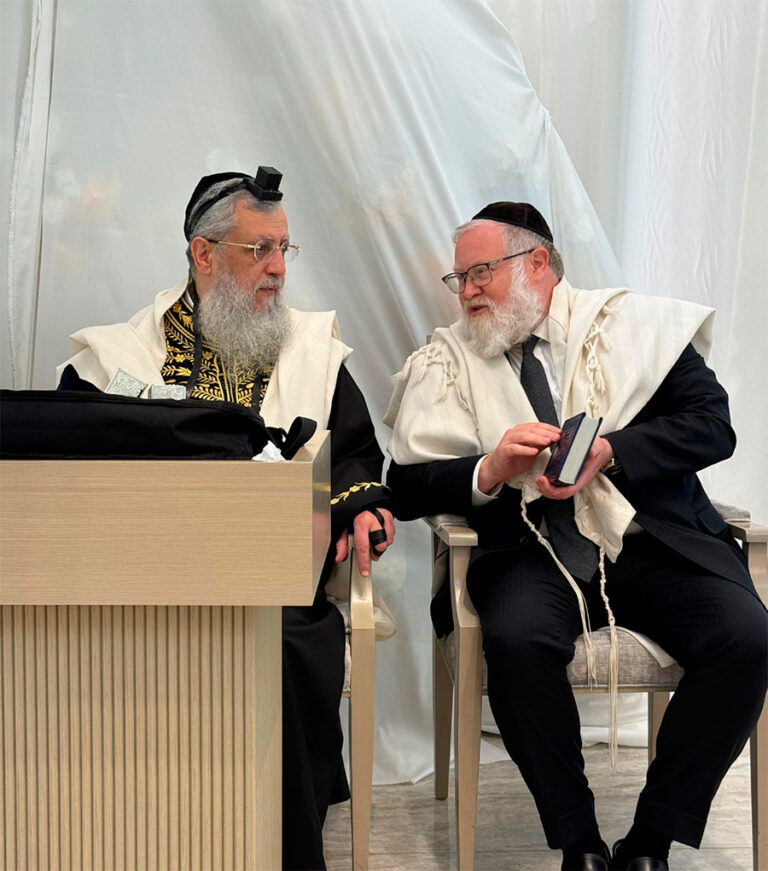
His recent visit, however – his first since assuming his prestigious post – was particularly meaningful. Despite his crowded itinerary, and his numerous responsibilities – including a meeting with Jared Kushner, President Trump’s son-in-law and former advisor, who is still an important figure in the shaping of the U.S.’s Middle East policy – Hacham David devoted a considerable amount of time in the Jersey Shore area. In fact, it seemed like he was almost everywhere throughout the town. He visited nine of our ten community synagogues (ten, if you include both his visits to the Park Avenue Synagogue…) where he prayed, taught, delivered words of encouragement and inspiration, and spread the warmth and light of Torah. It was truly a special week for our entire community, one which left us all uplifted and inspired.

Titan of Contemporary Halachah

Hacham David Yosefwas born on August 10, 1957, as the ninth child of Maran Hacham Ovadia Yosef, zt”l. He attended the Or Yisrael yeshiva, after which he spent one year in the Ponevezh Yeshiva in Bnei Brak followed by a period of study in the Hebron Yeshiva in Jerusalem.

In 1990, he was appointed rabbi of the Har-Nof neighborhood of Jerusalem, a post he served for 30 years.  He also ran the esteemed Yehaveh Da’at kollel, and authored numerous scholarly works – most notably, Halachah Berurah, a 26-volume set that ranks among the most thorough contemporary works of halachah.  It follows the sequence of the Shulhan Aruch – the principal halachic code for Sephardic Jewry – and elaborates at length on the source of every halachah, citing an extraordinary range of works relevant to each passage in the Shulchan Aruch in order to apply the rulings to contemporary life. Halachah Berurah has become a crucial resource for all those seeking to understand halachah and its modern-day applications – studied and cherished by laymen and scholars alike.

Hacham David was named Israel’s Sephardic Chief Rabbi – a ten-year position – on September 29, 2024, succeeding his brother, Hacham Yitzhak Yosef, shelit”a. As it so happens, Hacham Yitzhak Yosef also visited our community recently,during the 12-day war between Israel and Iran in June whichprevented him from flying home to Israel. Hacham David’s formal inauguration took place on December 11, 2024. Numerous rabbis from our community attended the event, including Rabbi Shmuel Choueka, Rabbi David Ozeri, Rabbi Edmond Nahum, and Rabbi Shaul Kassin.

The Chief Rabbi’s Week in Deal

Hacham David’s historic trip demonstrates his great devotion to worldwide Sephardic Jewry, and to our community in particular. Here’s a brief rundown of the Chief Rabbi’s visits during his recent stay in the Jersey Shore region:

  • On Monday, July 7th, Hacham David visited Congregation Magen David of West Deal, praying with their 7:30am minyan, after which he delivered a lecture.
  • On Tuesday, July 8th, Hacham David visited Beit Rachel– Larchwood Synagogue for their 7am minyan, and taught a class.
  • On Wednesday, July 9th, Hacham David prayed with the Ohel Yaacob Congregation– Lawrence Avenue Synagogue, joining their 7:15am Shaharit, and gave a lecture on halachah at 8am with Rabbi Eli Mansour.
  • On Thursday, July 10th, Hacham David prayed in Ohel Simha– Park Avenue Synagogueat their 6:50am minyan, and delivered a talk at 7:50am.
  • On Shabbat, July 12th, Hacham David began the morning prayer with Congregation Beit Yosef, and then went to the Synagogue of Deal to join with their main minyan. Afterwards, he went to Safra Synagogue to speak at seudah shelisheet.
  • On Sunday July 13th, he visited Congregation Magen Abraham– West Long Branch Synagogue. He then returned to Park Avenue Synagogue to deliver divreh hizuk (words of inspiration) before Minha.
  • Finally, on Monday July 14th, he prayed Shaharit with Shaare Tefilah Bene Moshe– Eatontown Synagogue.

Bearing Witness, Building Bonds: A Personal Israel Bonds Mission

All the families appreciate that you came, and you are now ambassadors of light for the hostages and victims.

ELLEN GELLER KAMARAS

“We are fighting a war within a war, a war between our story and theirs. Tourists who come to Israel now are our heroes.” – Israel Defense Force (IDF) Colonel 

Why at 69 years of age, did I join a delegation to Israel with the Women’s Division of Israel Bonds?  I will tell you.

First, let’s look at what an Israel Bonds mission is all about. It is not a way for tourists to see the Holy Land. An Israel Bonds mission provides an opportunity for committed individuals to travel to Israel to show their support for the country. Participants do not just sit on tour buses taking in the sights. They travel to different regions of Israel, including areas affected by conflict. They meet Israeli leaders and common folk. They experience Israeli culture and see the country’s amazing innovations. They participate in events that showcase Israel’s achievements and resilience.

According to the Israel Bonds website: The primary goal of Israel Bonds missions is to bolster the Israeli economy and demonstrate support for the country. Israel Bonds missions have a positive impact… fostering a sense of unity and providing vital financial support. In essence, an Israel Bonds mission is a tangible way for individuals to stand in solidarity with Israel and to contribute to its ongoing development and security.

The mission’s goal aligned perfectly with my goal – to support Israel in a tangible way. Also, I wanted to see things for myself, so that I could share with others what I learned and saw firsthand.

Israel Bonds Mission – My Personal Mission

My last visit to Israel before October 7thbegan a day after the May 14, 2023 ceasefire between Israel and Islamic Jihad, ending Operation Shield and Arrow in Gaza.  I wholeheartedly joined in the exuberant celebration of Yom Yerushalayim, right in Yerushalayim!

Nearly two years later I asked myself: wasn’t it my responsibility as a Jew to witness what happened on October 7th?  Only after doing so could I return to the U.S. to tell Israel’s story that I had seen firsthand, the real, resilient, courageous and strong story of our sisters and brothers.

As a child of Holocaust survivors educated in a Brooklyn girls yeshiva, my love for Israel was born from the ashes of the Holocaust. 

Every Shabbat, my parents shared their narratives of Nazi labor camps, hiding in the forest with no shoes or coats, eating potato skins, and seeing their loved ones shot. After being liberated by the Russians in the Spring of 1944 and being hospitalized they made their way to a Displaced Persons (DP) camp in Munich, Germany,  My parents expressed tremendous hakarot hatov, gratitude, to the brave Christians who hid them and to the American soldiers who housed them, taught them English, and gave them jobs.

Everyone in my yeshiva danced and sang in the streets when we heard that Israel had taken back the Old City of Jerusalem in the Six-Day War.

Considering my background it is no surprise that I am a strong supporter of Israel and I wanted to reconnect with Israel in a personal way. My family buys Israel Bonds as one way of supporting Israel. I joined the Women’s Division delegation of Israel Bonds also as a way to connect and bond with like-minded women from all over the U.S. who had the same focus, to stand with Israel.

Our Mission Begins: Sunday Night, May 11

We kicked off with an opening dinner at the Tel Aviv Hilton.  The first speakers were lone soldiers connected with the organization Ach Gadol, Big Brother (the organization is for both men and women).  Ach Gadol is the only organization with a system of personal accompaniment and 1:1 guidance for lone soldiers.  These young adults courageously came to Israel as teenagers, without family, to join the IDF.  Their commitment and love for Israel were palpable. 

The next speaker was Shiri Bibas’ older sister, Dana Silberman-Sitton. Shiri, a”h, was killed by Hamas along with her two beautiful red-headed children, Ariel and Kfir. Dana spoke about the tragic day that her parents, sister, and nephews were captured and later murdered.  At first she didnot know whether her parents were alive. Later their bodies were recovered, burned in the kitchen.  

At Shiri, Ariel, and Kfir’s funeral, Dana promised her five angels that the monsters beyond the fence wouldnot succeed.  “They will not defeat us. They will not break us…their mission failed because we united. . . we became stronger. . .invincible.”

We came to understand was that everyone in Israel knows someone who either was killed on October 7th or in the ensuing war, was/is held hostage, or is in the IDF or the reserves.

Day One: May 12 – IDF Memorial

Our first official delegation day was spent in my favorite city, Yerushalayim. We paid tribute to the fallen IDF soldiers in the Memorial Hall opened in 2018 in the Har  Herzl Military Cemetery.  The “emotionally and architecturally impactful memorial” was designed to commemorate Israel’s military service members killed in the line of duty, and reflects that Israelis mourn both personally and collectively. The spiraling memorial winds around a 250-meter-long continuous Wall of Names. This Wall was originally composed of 23,000 commemorative bricks, each individually engraved withthe name of a fallen soldier and the date of death.  There are no titles, as all fallen soldier are considered equal. There is one brick for the 25,000 fallen on May 14, 1948, in the War of Independence.

Many bricks have been added since October 7th. Each brick is illuminated by incandescent lights on each yahrtzeit date.

At the memorial’s inauguration, President Rivlin said, “Jewish and Israeli memory connects the past and present with the future and plants within us strength, as individuals and as a nation.”

We laid a wreath, to honor the soldiers and reservists who lost their lives protecting the State of Israel since October 7th.  We were able to search for fallen soldiers we knew. I located the brick of my daughter’s high school classmate, reservist Shmuel Harari, a”h, 35, who was killed on 10/23/24, in Southern Lebanon.

Hadassah Hospital

Our next stop was Hadassah Hospital Ein Kerem.  How fitting that a women’s delegation would visit Hadassah, founded by one of our most inspiring female leaders, Henrietta Szold.

The hospital, named after Queen Esther, who was also known as Hadassah, resembles a city. Szold was an American-born Jewish Zionist who devoted her life to tikkun olam, repairing the world, and to empowering women to heal.

In 1912,Szold established Hadassah, formally called Hadassah -The Women’s Zionist Organization of America. It was established asa volunteer organization for Jewish women.Szold had visited pre-state Israel in 1908 and saw the overcrowded conditions, families living without electricity and running water, and the dreadful poverty. 

Szold created an infrastructure for medical health clinics throughout the country. One of her proudest accomplishments was leading the Youth Aliyah, which saved thousands of orphaned children from the Nazis before and during World War II.

Our group were greeted by Barbara Sofer, the Hadassah Israel PR Director.  She introduced us to a foot soldier, Binyomin, who was there for his rehab session.  He described his multiple injuries on October 7th and the amazing progress he has made with the help of the Hadassah rehabilitation staff. 

The Director of Hadassah Ein Kerem and the head nurse of General Intensive Care provided an overview of the mega facility, a teaching hospital that serves 1,345,000 patients.  Over one third of Jerusalem’s population  are Arabs. At Hadassah, everyone is treated equally regardless of their ethnicity.

Dr. Kedar, Head of Acute Care Surgery and Trauma Unit, showed us the Trauma Center where helicopters brought both civilian and military casualties from the October 7thattacks. Dr. Kedar shared the details of several cases.

The Kotel

After Hadassah, we prayed at the Kotel and had a shehecheyanu blessing ceremony on a terrace above the Kotel tunnels.  We visited the renovated Cardo Roman market where merchants thanked us for coming to Israel. In fact, we were touched by the heartfelt thanks for our presence from so many of the Israelis we met – the vendors, hotel employees, tour guides, restaurant staff, and the speakers and soldiers we met. We toured the newly excavated tunnels beneath the Kotel.

Day Two: May 13 – Volunteering  


We headed to Gan Haim to volunteer at Leket Israel, Israel’s leading food rescue organization. Its focus is rescuing healthy, surplus food and delivering it to those in need through partner nonprofit organizations.  Recipients include single mothers, refugees, youth at risk, immigrants, and housebound elderly throughout the country. Leket has collected 31,402 tons of fruits and vegetables and 2,084,000 hot meals for 415,000 recipients with the help of 95,000 volunteers. 


Our job was to sort through huge crates of surplus fruits and vegetables and pack them into boxes to be delivered to schools. 

Next, we toured the Vitkin Winery on Moshav Kfar Vitkin, near Netanya. The family who established the vineyard in 2001 reintroduced ancient winemaking to Israel. 

Day Three: May 14 – The Gaza Envelope

Wednesday was the most emotional and impactful day. I am still processing what I saw and heard that day.

Our first stop was Kibbutz Kfar Aza,the second hardest hit kibbutz after Kibbutz Be’eri. Kibbutz Kfar Aza, founded in 1951, is just 1.9 miles from the Gaza border.  It is now a closed war zone.   Nearly every home in the community was either burned or riddled with bullet holes. We saw the evidence of both.  Twenty percent of the residents were murdered or taken hostage.

An IDF colonel and a young soldier, Ouriya, led us around the kibbutz, following in the footsteps of the residents and sharing the horrific events of October 7th. 

Three hundred terrorists breached the kibbutz gate and went from house to house.  The kibbutzniks realized something was going on when they heard Arabic.  Fifteen volunteers trained as first responders ran to the armory. Fourteen were murdered.  Hamas knew where the armory was.  Palestinian workers who were befriended by the kibbutz members betrayed them and gave vital information about the kibbutz to Hamas to facilitate their attack.

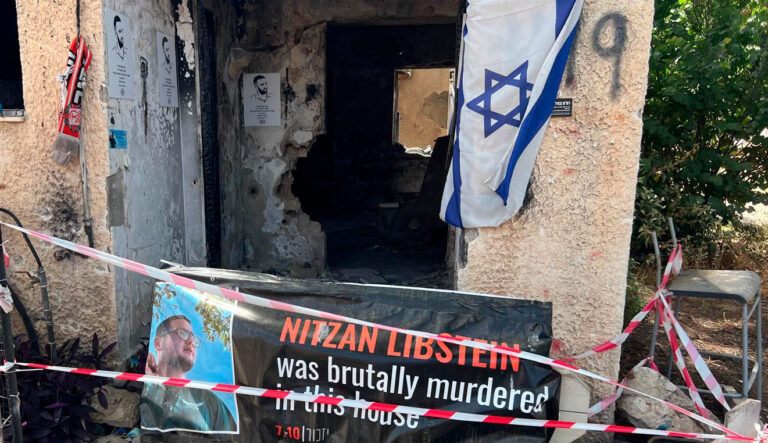
The one survivor at the armory, Ofir Libstein, 50, a prominent politician, was murdered as he returned home.  His 80-year-old mother-in-law came outside to look and was shot dead.  Nitzan, Libstein’s 19-year-old son was murdered in the younger generation housing, after having saved his fiancé by throwing grenades at the terrorists.

Calculated Attack Against the Youth

The youth village was attacked the most viciously.  Hamas wanted to kill the youth and destroy the heart of the kibbutz.  Nineteen people were killed there and 17 young hostages were taken captive, including Emily Damari and the twins Ziv and Gali Berman. We saw the burned and shattered homes of these precious young souls.  The bodies were so badly burned that it took fifty days to recover a ring to be buried.

The IDF believes the October 7th massacre was in the planning for ten years.  Hamas knew to first kill the female IDF observers at the border.  Terrorists ambushed Highway 232 first responders and the IDF.

Seeing the breach of the border, the Palestinians followed Hamas and entered the kibbutz to loot, murder, and rape.  Most of the kidnappings were done by civilians.

The parents in the home next to the border fence were murdered.  Two young children survived in the house and were on the phone with the first responders for 17 hours.  Their three-year-old was kidnapped with neighbors and thankfully was returned in the earlier hostage deals.

I will never forget the account of a young child on the phone with a first responder, who was asked to lock the front door of her house.  To do that, she was instructed to close her eyes while passing the body of her dead mother on the kitchen floor.

Today the kibbutz is practically empty. We saw the volunteers renovating the kibbutz buildings and gardens. The youth village is being rebuilt and is awaiting completion until the Berman twins return. 

Before we left Kfar Aza, Ouriya said, “All the families appreciate that you came, and you are now ambassadors of light for the hostages and victims.”

Nova Festival Site

The next stop was the Nova Festival site. The Nova Music Festival was an outdoor trance music festival set for the night of October 6th, 2023, in Re’im Forest, a little over three miles east of the Gaza Strip. It was billed as a celebration of “friends, love, and infinite freedom.” The festival attracted about 3,500 participants, mostly young Israelis.

Our guide said,“When you walk through the Nova site, you look into the eyes of the victims through their photos, and you can hear their silent cries asking for their stories to be told.”

Seeing the pictures of the souls who were killed was heartbreaking.  Most attendees loved music and community, and as the posters in Israel stated, “They just wanted to dance.”

378 people were killed and many wounded.  Hamas took 44 Israelis hostage, and many were subjected to sexual violence. 

A white prayer tent was erected at the site.  A Torah was being written in memory of those killed and visitors were invited to purchase a letter in the Torah.

Sderot

Sderot is the largest Israeli city that Hamas attacked on October 7th.  Most of its 39,000 residents were evacuated to hotels across the country when the war began.

A Sderot resident said, “On October 7th our lives changed forever. Our mission is to spread the stories about those who have survived to tell [these stories].”

In Sderot, we visited a recently opened virtual reality exhibit, “Survived to Tell.”  It was created by ISRAEL-IS, which leads the way in people-to-people advocacy, tackling the challenge of improving Israel’s global image. 

We learned about the remarkable stories of five survivors of the October 7th massacre.

Day 4:  May 15 – Jaffa/Tel Aviv

A woman named Liat came to our hotel to share her story of life with her husband, a super-warrior and Shin Bet (General Security Service) commander.  He was killed on October 7th battling Hamas terrorists.His picture cannot be shown, as undercover operations are still dependent on his work.

We then toured the old city of Jaffa and the Asif Culinary Institute of Israel, which tells the history and culture of Israel through food.   We sampled Yemenite, Ethiopian, and other multi-cultural delicacies in the Carmel Market.

At the closing dinner for the mission, we shared our impressions and our gratitude to Israel Bonds before heading to the airport. A siren indicating a Hamas rocket attack went off during check in. It reinforced what we had concluded during our trip, that Hamas must be eradicated.We all ran to the nearest “safe area.”

Conclusion

I leave you with these messages: Hamas isnot just Israel’s problem -Hamas is a world problem. Never again is now.  The horrors of October 7th can never be permitted to happen again. “We will dance again.” This is the title of a 2024 Israeli documentary, a retelling of the Nova Music Festival massacre. It has become a popular slogan in Israel, indicating that Israel will not succumb to her enemies or to despair. We will rebuild and we will, indeed, dance again. We are a people of hope and resilience.

Ellen Geller Kamaras, CPA/MBA, is an International Coach Federation (ICF) Associate Certified Coach.  Her coaching specialties include life, career, and dating coaching.  Ellen can be contacted at [email protected] (www.lifecoachellen.com).

No Favorites, No Filters: M&S Softball Opens With a Bang

Sam Sutton

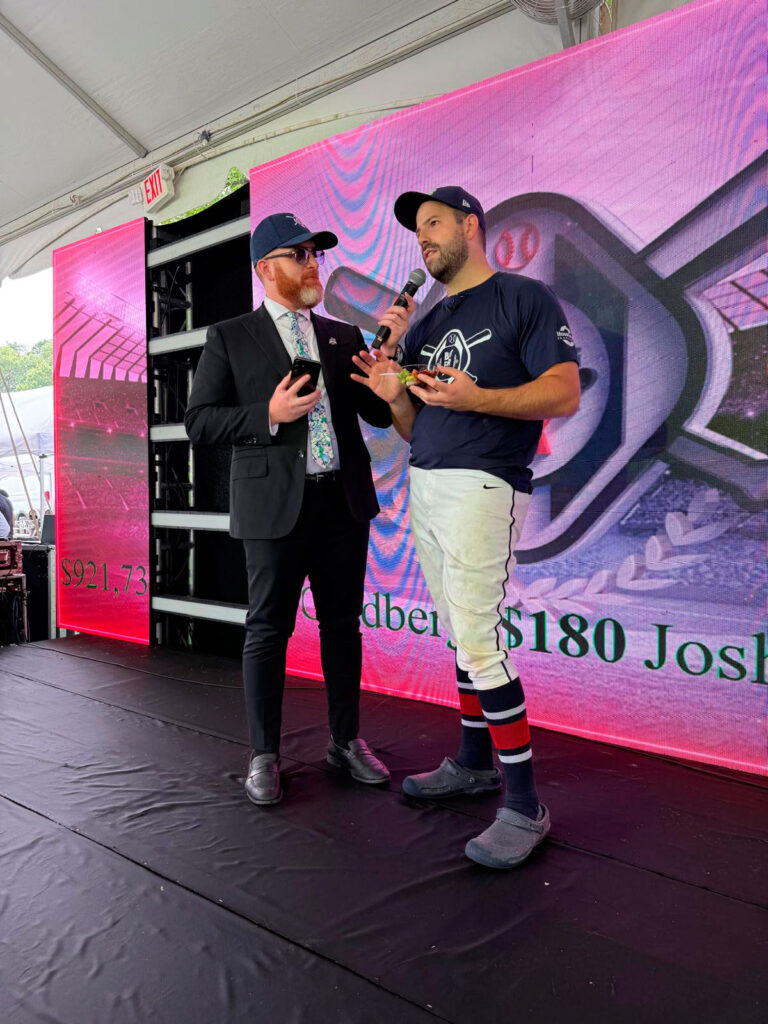
The 2025 M&S Softball season is underway, and if there’s one thing we’ve learned early – there are no clear favorites. Just clear intentions.

Kaboom!, captained by Uri Adler, leads the league at 3–1 behind a defense that’s been lights out. A. Saka has already notched three wins with a 2.52 ERA and the league’s lowest WHIP. Uri retooled his draft strategy this season and it’s showing.

Right behind them: Vandelay Industries, led by rising superstar Sammy Seruya, sits at 3–3. With a league-high 44 runs scored (and 50 allowed), the vibes are electric, if a little chaotic. After losing rookie pitcher Abraham Benhamu to an ankle injury, Sammy made a big move, scooping up veteran Selim Levy to stabilize the staff. The offense is loud. The defense is rounding into form. If they click? Look out.

Sitting at 1–1: five teams – all dangerous, and all different.

Stayin Alive (Captain: Melech Solomon) is scrappy, composed, and has one of the league’s toughest outs in Steven Gindi.

Thundering Hooves (Captain: Gabriel Abady) is keeping it loose, deep, and balanced.

Texas Longhorns (Captain: Max Yedid) is playing like a group of vets who’ve been here before – because they have.

King Salomon Part Deux (Captain: Michael Sabon Salomon) is anchored by the elite arm of Yitz Sutton, and headlined by former league MVP Zack Ashkenazi.

Sephardic Bananas (Captain: Edmund “The Phenom” Beyda) are winless but dangerous – and no one’s buying that 0–2 record means anything.

The Broadcast Booth Is Must-Watch

Let’s be honest – the games are only half the show. M&S Media is on another level: Nightly livestreams from M&S Park with a must-hear commentary crew and Sam I Am Productions delivering cinematic highlight packages worthy of prime time. Plus, there are new weekly shows, stat drops, and enough memes to keep the group chats humming. This is much more than just a softball league. It’s programming. It’s content. It’s competition. It’s culture. This is M&S.

Mabrouk – August 2025

Births – Baby Boy

Ikey & Hannah Levy

Hal & Eve Sitt

Sam & Shanny Antebi

Daniel & Ninette Abadi

Ralph & Maryelle Hanan

Mr. & Mrs. Moshe Safdieh

Solomon & Ruthie Dweck

Yehuda & Jodi Salama

Shemuel & Molly Menahem

Jack & Melanie Sutton

Births – Baby Girl

Henry & Alice Mosseri

Andy & Abby Mizrahi

Rabbi Ovadia & Shelly Rishty

Allen & Tiffany Chehova

Isaac & Jamie Ades

Sammy & Esther Saka

Toby & Dalia Yedid

Joey & Barbara Cohen

Teddy & Renee Beyda

Dani & Rachel Harari

Bar Mitzvahs

Yaakov, son of Michael and Mary Abadi

Abie, son of Nathan and Shirley Cohen

Shlomo, son of Isaac and Celia Jemal

Engagements

Sam Beyda to Paulina Cohen

Douglas Mizrahi to Cerise Rishty

Albert Sakkal to Betty Alboukai

Michael Sadacka to Linda Gammal

Weddings

Maurice Esses to Isabella Chehova

Shlomo Churba to Sara Franco

Yosef Hazan to Rina Semah

Saul Faham to Mylo Bibi

Joseph Greenstein to Molly Zaafarani

Medical Halacha – A Halachic Stand Against the Medical Aid in Dying Act

What does it say about our society when we turn to death as a solution to suffering? Those are the thoughts of many after the Medical Aid in Dying Act (S.138) was recently passed by the New York Senate and Assembly. The legislation proposes legalizing physician-assisted suicide for terminally ill individuals with a prognosis of six months or less to live. While supporters claim this measure offers a compassionate way to reduce suffering and preserve dignity, the legislation stands in direct contradiction to halacha and Torah principles.

The Sacredness of Life

From the perspective of halacha, life remains sacred even when clouded by pain, disability, or dependency. Halacha explicitly prohibits any action that hastens death. A person in the throes of dying (gosses) is still considered fully alive, deserving of care, not termination. In Masechet Semachot (1:3–4), Hazal teach: “One may not move a dying person… until he dies… One who touches or moves the gosses is considered as one who spills blood.” Rabbi Meir likens the dying person to a flickering flame: “Just as touching a fading flame can extinguish it, so too, touching the dying person can shorten their life.” The Gemara in Shabbat 151b reiterates: “One who closes the eyes of the dying person while the soul departs is a spiller of blood.” These sources reflect a profound reverence for life. Even subtle actions that hasten death – no matter how merciful in intention – are seen as serious Torah violations.

Undermining the Sanctity of Life

At the heart of the opposition to S.138 lies the concern that it sends a dangerous societal message: that some lives are no longer worth living and should be taken. This notion contradicts the foundational belief that every human life holds intrinsic value, regardless of condition, ability, or prognosis.“The souls are Mine” (Yechezkel 18:4). Halacha prioritizes the preservation of life over personal autonomy. A person’s control over their body does not extend to their life, because life is not personal property – it is a sacred trust from Hashem. The Rambam (Hilchot Rotze’ach 1:4) writes: “The soul of a person is the property of the Holy One, Blessed be He.” Similarly, Rambam (Hilchot Sanhedrin 18:6) rules that a confession to a crime deserving of capital punishment is not valid evidence in Beit Din, out of concern that a person may falsely confess to hasten their death. The Radbaz explains: “Because a person’s soul is not his own possession, but the possession of the Holy One, as it is said: ‘The souls are Mine.’”

Even fasting on Yom Kippur, if medically dangerous, is forbidden. Hacham Ovadia Yosef, zt”l, (Yechave Daat 1:61) rules: “If there is concern of possible danger to life, one must listen to the doctor and eat on Yom Kippur. If the patient is strict and fasts anyway, he is not considered pious – on the contrary, he will be punished.” This is based on the Torah’s words: “But for your own lifeblood I will require a reckoning… For man was created in the image of Gd” (Beresheet 9:5–6).

The Physician’s Role: Healing, Not Ending Life

Physicians are charged with healing. As the Torah states: “And you shall surely heal” (Shemot 21:19). Doctors are granted permission to treat and cure. Nowhere are they sanctioned to end life. Moreover, the mitzvah of “Do not stand idly by the blood of your fellow” (Vayikra 19:16) commands us to protect life, not to enable its end. Turning doctors into agents of death undermines the moral foundation of the medical profession and endangers vulnerable patients – especially the elderly, disabled, and those without strong support systems.

Conclusion: Choose Life

Though cloaked in language of dignity and compassion, the Medical Aid in Dying Act (S.138) represents a perilous shift in societal values. It threatens the sanctity of life, exposes the vulnerable to coercion or despair, undermines medical ethics, and contradicts deeply held halachic principles. A compassionate society does not solve suffering by ending life – it meets suffering with unwavering care. Pain medication should be administered to suffering patients, even on Shabbat (Hazon Ovadia, Shabbat, Vol. 3, p. 256). Halacha encourages alleviating pain, but strictly forbids taking actions that hasten death.

As with all complex end-of-life questions, one must seek guidance from a competent halachic authority. Organizations such as the Sephardic Division of Chayim Aruchim, launched specifically to address our community’s needs, are dedicated to offering sensitive, informed halachic support during these delicate moments.Rabbi Yehuda Finchas is a worldwide expert, lecturer and author on Medical Halacha. He heads the Torat Habayit Medical Halacha Institute. His latest book is “Brain Death in Halacha and the Tower of Babel Syndrome.” To contact Rabbi Finchas, email [email protected].

Positive Parenting – Creating Bonds That Last a Lifetime

Tammy Sassoon

One of the most meaningful gifts we can give our children is a healthy relationship with their siblings. While it’s natural for siblings to bicker or compete, it’s also possible and extremely valuable for them to grow up with mutual respect, warmth, and loyalty to each other. Since sibling relationships are often the longest relationships a person will have in their life, it’s very worthwhile to invest time and energy into helping our children value these bonds.

Modeling Appreciation and Respect

The first and most powerful tool we have is modeling. When we speak kindly about each of our children in front of their siblings, we teach them to see the good in one another. Avoid phrases that compare, even subtly, such as, “Why can’t you be more like your sister?” or “Your brother never gives me this kind of trouble.” These statements not only spark rivalry but also make it harder for children to appreciate their siblings’ unique qualities.

Instead, try to regularly express gratitude for each child in ways that highlight their individual strengths: “I really admire how organized your sister is,” or “Your brother is so creative with his drawings.” When children hear others being appreciated, they begin to notice and value those qualities themselves. Be confident that Hashem gave EVERYONE gifts and talents.

Create Opportunities for Connection

Have young children work on a fun project together with parental guidance. Shared experiences build positive memories and help children to see each other as allies rather than adversaries.

For older children, assign joint responsibilities, such as cleaning a shared room or planning a family activity. When children must rely on each other to complete a task, they learn to communicate, problem-solve, and appreciate each other’s contributions.

Validate Feelings

It’s natural for children to feel jealous or annoyed with one another at times. When those feelings surface, listen without judgment. Avoid jumping to conclusions or playing referee. Instead, understand their feelings while keeping your focus on empathy and repair: “It sounds like you felt left out when your sister didn’t include you. What would help you feel more connected next time?” “You look so upset that your brother doesn’t want to let you use his baseball mitt. What would you like to do about your baseball game later?”

Other Point of View

At a moment when the child is not feeling hurt, encourage each child to see situations from the other’s point of view.

“Look how intuitive you are, you realized that Joey felt…” “It takes a lot to get out of our own heads and try to understand someone else’s viewpoint like you are doing. That’s pretty impressive.” This fosters empathy and can turn misunderstandings into teachable moments. Over time, children learn that it’s okay to be upset with a sibling – but that relationships can heal, and appreciation can grow even through challenges.

Celebrate the Relationship

Make a habit of celebrating sibling love in your home. Point out acts of kindness: “That was so thoughtful of you to save the last cookie for your brother.” Acknowledge cooperation: “I noticed how well you two worked together on that Lego project.” Consider traditions that reinforce the bond, such as writing notes to each other on birthdays, making gifts, or sharing “sibling appreciation” moments during family meetings.

Children who grow up hearing and seeing that sibling relationships matter are more likely to invest in them. When parents speak about siblings as friends, teammates, and lifelong companions, they shape their children’s mindset in powerful ways.

A Lasting Legacy

Helping children appreciate their siblings isn’t about eliminating conflict or insisting they always get along. It’s about cultivating an atmosphere of mutual respect, empathy, and support. By guiding our children through both the hard and joyful moments of sibling life, we equip them with the skills to maintain lasting, meaningful relationships.