


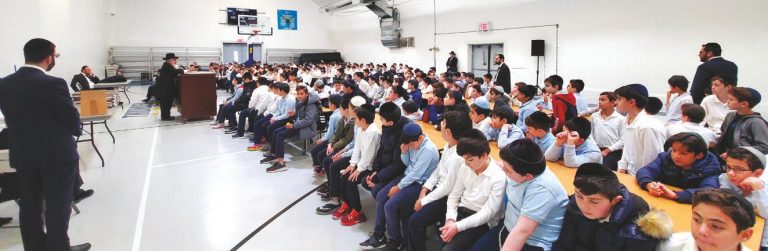
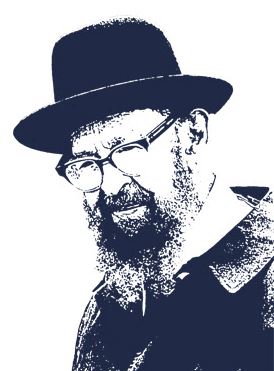
Winter vacation is a time for rest and relaxation. But what happens to the limud Torah? Do we set aside our sefarim when we go on exciting trips and sunny getaways? HaRav Eliezer Ginsburg has made it his mission to make sure that is not the case. In the weeks leading up to intersession, he made contact with yeshivas of all different backgrounds, to make sure the hanhalot would encourage the boys to take their learning with them wherever they went for vacation.
Last month, Rabbi Ginsberg visited Yeshivat Darche Eres in Brooklyn, to give hizuk to the boys who had learned over vacation and to encourage everyone to make Torah part of their daily lives, whether in school or out of school.
He also gave out his sefarim to any talmid who learned the amount allotted by their rebbe’im. In total, over eighty students accomplished this task! Each boy received a sefer and a beracha from the Rabbi.
As Pesach vacation approaches, the Rabbi will be reaching out to more yeshivot and schools to encourage a serious outlook towards ben hazmanim learning programs.
Moshe Zeitouni Helps Community Members Become Emotionally Healthy
Moshe Zeitouni is a Licensed Mental Health Counselor, currently working with private clients as well as at the Sephardic Bikur Holim Counseling Center. Through years of experience working with children and adults in our community, Moshe has helped his clients in many areas including:
- Anxiety
- Depression
- Behavioral issues
- Anger management
- ADHD
- Self-esteem and confidence
- Lack of motivation
- Dating and social skills
- Parent-child communication
Moshe helps his adult clients to improve their emotional health through learning and applying coping strategies, enabling them to handle life’s difficulties by using their own strengths. His guidance focuses on financial and work-related stress, social anxiety and pressures, balancing home and work life, family relationships, communication, and parenting stress.
While working with children of all ages, Moshe helps his clients to deal with sibling rivalry, social anxiety, focus, difficult behavior, and academic stress. Moshe helps them to improve their overall school and home experiences. Moshe collaborates with teachers and parents, ensuring that every child has the best opportunity to thrive.
Using Cognitive Behavioral Therapy, Moshe guides his clients to identify, challenge, and change negative patterns. Both children and adults are empowered to target and alter unwanted behaviors by utilizing personalized coping strategies. With the right guidance and support, every individual is able to positively impact their emotional health.
If you have any questions or are interested in a free consultation, Moshe Zeitouni, LMHC can be contacted through email at moshe.zeitouni@gmail.com or by phone at (917) 682-9811.
Gesher Yehuda Yeshivah’s New Positive Behavioral Program Is a Success
 Our sages teach that joy in education improves one’s learning skills. At Gesher Yehuda, joy in education is at the foundation of how they teach all their students. Last month their students, from first through eighth grade, earned a special trip through their 3C program.
3C is Gesher Yehuda’s schoolwide positive behavioral system designed to reinforce three specific behaviors of their students: compliance, completion of work, and courteous speech. The program was implemented two years ago. Part of this program involves periodic trips for students who demonstrated excellence in performing these behaviors. The program has been running throughout the school year and their second grand trip for their 3C program took place in January.
Using a points system, students have reached either Level 1 or Level 2 by exhibiting positive behavior. The Level 1 trip was to Launch Trampoline Park, and the Level 2 trip was to Shell Lanes Bowling. The students had a blast and were truly proud of their accomplishments.
Gesher Yehuda’s 3C program is just one example that demonstrates the quality education they provide. Every child receives a highly individualized education in an encouraging setting. Students develop self- esteem and self-advocacy, which helps to ease their adjustment to conventional school and social settings.
Community Rabbis Visit Their Congregation’s Adopt-a-Kollel Partners
 Last month, prominent rabbis from our community visited their congregation’s Adopt-a-Kollel partners in Israel.
Rabbi David Sutton visited his congregation’s kollel partner, Kollel Ohel Yosef of Yerushalayim. He was enthusiastically welcomed by the Rosh Kollel and his students. Rabbi Sutton delivered powerful words of hizuk to a packed crowd at the kollel.
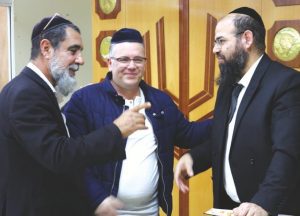 Rabbi Shmuel Choueka of Park Avenue Synagogue also met his community’s Adopt-a-Kollel partner in Israel. Rabbi Choueka visited Kollel Tzur Yosef of Jersusalem. He was warmly greeted by Rosh Kollel Harav Moshe Zarbov and was honored with delivering a shiur to the students. Rabbi Choueka spent time learning with the kollel students and left them with inspiring divrei Torah.
Congregation Ahi Ezer of Flatbush, led by Rabbi Shaul Maslaton, held its second annual Adopt-a-Kollel renewal. The shul has partnered with Kollel Tiferes Yosef of Ashkelon led by Rabbi Sion Zafrani. The previous week, Adopt-a-Kollel gabbai, Mr. Joseph Kameo, visited the kollel and was deeply moved by his visit. Joseph opened up the kollel’s aron kodesh and found a paper there with the names of every member of Ahi Ezer who supports the kollel.
Restored Alexandria Synagogue Hosts Largest Jewish Prayer Services in Decades
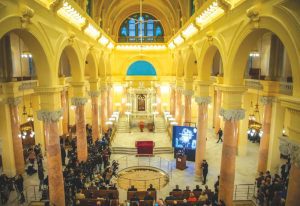 Approximately 180 Jews of Egyptian origin traveled to Egypt last month from across the diaspora for a Shabbat celebrating the newly-renovated 14th-century Eliyahu Hanavi Synagogue in Alexandria.
The weekend was organized by the Nebi Daniel Association, an organization dedicated to the preservation of Jewish sites in Egypt. According to the World Monuments Fund, The Eliyahu Hanavi Synagogue, one of the largest in the Middle East, is one of the two remaining houses of worship (formerly there were twelve) in the city of Alexandria. Alexandria was once home to an estimated 40,000 Jews, with roots dating back to antiquity. Today, the community stands at less than 20 Jews, most of them elderly,
Since Israel’s establishment in 1948, the Jewish community in Egypt has dwindled over time, and the synagogue fell into disrepair. After a portion of the roof collapsed, the holy site was exposed to the elements, and rainwater caused severe damage. In 2012, the synagogue was closed due to security concerns.
With Egypt’s new program to preserve its Jewish heritage, the synagogue was renovated in a multi-year, multi-million-euro effort beginning in 2017, after the Egyptian Minister of Antiquities visited the site of the Mediterranean port city.
Magda Haroun, head of Cairo’s Jewish community, explained that the Egyptian government is interested in preserving all of the country’s religious monuments and heritage sites, regardless of which religion they are connected to. Today, the Eliyahu Hanavi Synagogue stands as an emblem of the Egyptian Jewish community’s legacy as well as providing an opportunity for Egyptian Jews to gather together and celebrate Shabbat as a family.
Special Coin Minted in Honor of 13th Cycle of Daf Yomi
 A coin has been minted in honor of the worldwide Siyum HaShas, celebrating the completion of the 13th cycle of the Daf Yomi.
The coin is the size of an Israeli 10-shekel piece, bearing the famous phrase of R’ Akiva, “Daf shel sefinah nizdamen li” with the image of an ancient boat on one side. The other side of the coin bears the date of the Siyum – 5780, along with the words “sheishet hasedarim” (the six orders of the mishnah).
The coin can be ordered by calling 072 216 4408.


 In December, a customer suggested to Luly that she attempt frying one of her babkas for the Hanukah season. Intrigued by the idea of having a special Hanukah offering for her menu, Luly decided to take on the challenge and do just as suggested. The first attempt used the challah and babka dough, which was left to rise for 15 hours like it normally would. Then the dough was formed into balls and filled like a babka before frying. The first trial was a flop. Luly realized if she filled the dough pre-fry, the center wouldn’t cook through. For the next attempt Luly simply fried balls of dough and coated them and stuffed them afterwards, and, voila! the BONUT was born.
 Hanukah came and went, and Luly’s business was forever changed. Her account went community viral, and she had nearly 1,000 more followers then she did pre-bonuts. Although the holiday season was over, the craze for bonuts did not die down as Luly had expected. She planned on going back to business as usual, making challah and babka creations, but her clientele could not easily forget the fried treat they now craved. Due to popular demand, Luly began to take bonut orders every few weeks to try to keep them special, hoping the interest would keep for months to come if she kept it exclusive.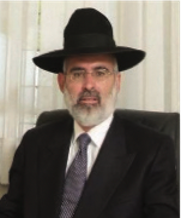

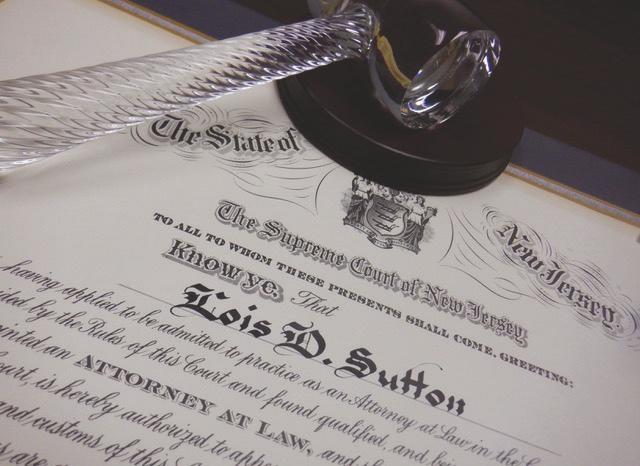
 Lois always had the support of her husband, children, parents and in-laws, Joe, a”h, and Vicky Sutton, a”h. Law school was very demanding but Lois credits being shomer Shabbat as an important ingredient to her success. It gave her an opportunity to put the books away, spend time with friends and family, and recharge. She managed to complete her work during the other six days and graduate with honors.

 Yet before the discernment is made about what one’s praise is for – a different question must be asked. Does he have the capacity for praise and admiration in the first place? In each of us lurks a powerful urge to devalue and bring down anything that others hold dear. We will seek out and find the “chink in the armor,” and expand that to totally destroy any admiration we may feel for someone or something worthy of such.