44.6 F
New York
Friday, January 9, 2026
spot_img
Home Blog Page 177

The Empathy Effect

Our ancestors left Egypt nearly two centuries before they were supposed to – and we, too, can end our exile early, if we learn from their example.

Who doesn’t like a good bargain?

Whether it’s a wholesaler looking for a good deal from manufacturers, a retailer looking for a good deal from wholesalers, or just a regular customer looking to save a few dollars – everyone appreciates a cut on costs.

As our Torah reading cycle begins the Book of Shemot, we read of what might be the greatest “discount” ever given in the history of man.

The story actually begins back in the Book of Beresheet, in the section that tells of our patriarch Avraham, where we read that Gd, in one of His prophecies to Avraham, informed him that his descendants would be forced to endure a 400-year period of oppression in a foreign land.  We do not know why this decree was issued, why Gd determined that our nation’s history needed to begin with a period of unspeakable suffering and torment.  This information eludes our limited human comprehension.  What we do know, however, is that this decree, surprisingly, was not carried out in its entirety.

Yes, Avraham’s descendants moved to Egypt, where they were enslaved and oppressed by Pharaoh and his team of ruthless taskmasters.  But the term of slavery did not last for 400 years, as Gd had decreed.  According to tradition, our ancestors spent a total of 210 years in Egypt – slightly more than half the number of years they were to have spent there.

That’s some discount – 190 years of slave labor slashed from the “list price”!  Nearly a 50 percent savings!

Why?  What happened?  How did they get this “discount”?  How did 400 years become 210 years?

This question is far more than a matter of mere historical intrigue.  It is vitally important for us because the Egyptian exile is the precedent, the model, of all exiles endured by the Jewish People ever since, including our current exile.  Our nation has been through so much over the past 1,900 years in exile, and we’re still going through a great deal of hardships and challenges (albeit of a much different nature than the hardships and challenges faced by earlier generations).  What wouldn’t we do to get a “discount” on our exile, and slash years off the period of hardship that has been decreed?

So, it behooves us to understand why our ancestors got 190 years off their “price,” so we can learn the secret for how to take some years off ours, as well.

One famous answer to this question is cited in the name of Gaon of Vilna (1720-1797), who suggested that the intensity of the suffering was such that the people endured 400 years’ worth of hardship in just 210 years.  Another theory is that Beneh Yisrael’s supernatural population growth (a famous Midrashic tradition teaches that the women at that time gave birth to sextuplets) meant that the number of people who suffered during those 210 years were the same as the number of people who would suffer in 400 years with normal rates of reproduction.

A much different explanation, however, is presented by the work Arugot Habosem.

Apathy, Sympathy, and Empathy

The Mishnah in Pirkeh Avot (6:6) lists 48 qualities that we must develop within our characters in order to “acquire” the Torah.  One of these qualities is “noseh be’ol im havero,” which literally means, “sharing one’s fellow’s burden.”

The precise definition of this phrase can be understood by clarifying the difference between two related – but by no means synonymous – English terms: sympathy and empathy. 

There are three ways we can react to another person’s problem – with apathy, sympathy, and empathy.  Apathy, of course, means that we simply do not care, that we are not affected at all by the suffering of another human being.  It goes without saying that this is a terrible way to react.  Sympathy means that we are disturbed by another person’s distress, that we truly feel upset that somebody is going through hardship.  This is, certainly, noble, but there is a higher level: empathy, which means that we actually share the other person’s pain, as though his crisis is our crisis.  Sympathy means feeling sorry for another person, whereas empathy means feeling the pain of the other person. 

What makes empathy so important is that it is a powerful motivator to help.  If we feel the pain experienced by our fellow, then we will do what we can to alleviate it – just as we do whatever we can to alleviate our own pain.

I recall once sitting on a plane before takeoff when a young toddler in the back of the plane began screaming frantically.  After several minutes, it was clear that the child was inconsolable.  The reactions of different passengers exemplify for us the terms “apathy,” “sympathy,” and “empathy.”  Some passengers, panicking over the prospect of hearing a child crying the entire flight, started saying things like, “Get that kid off the plane,” or, “Can’t they get that kid quiet!”  This is apathy.  Others shook their heads and frowned, expressing their sympathy for the child and her mother, both of whom were having a hard time. 

But then there was a young boy who got up out of his seat, walked to the back of the plane, drawing the attention of the startled eyes of dozens of passengers, and found the crying toddler.  He reached into his pocket, pulled out his cherished lollypop, and gave it to the girl.  She put the lollypop in her mouth, and the crying stopped.

Why did this boy get up to do something about the situation, while everybody else just stayed seated?  Because he did not just sympathize.  He empathized.  He felt the girl’s anguish, and so he was driven to do something about it.

Noseh be’ol im havero” means empathy, sharing the burden of pain with our fellow Jew in distress.

And empathy, the Arugot Habosem teaches, is the “coupon” which allowed our ancestors to receive their “discount” on exile. 

He explains that as Beneh Yisrael performed their backbreaking labor, they suffered not only because of their own pain, but also because of the pain experienced by their fellow.  Each slave felt the pain of the next slave, and so they suffered double the pain they would have normally suffered.  This is how 400 years became 210 years.

Neighbors and Friends

This quality can be seen also in the nation’s conduct on the eve of the Exodus.

When Gd first appeared to Moshe at the burning bush, and appointed him as His messenger to lead Beneh Yisrael out of Egypt, He informed Moshe that the nation would not only leave Egypt, but leave Egypt with great wealth.  He said: “Each woman will request from her neighbor…silver utensils, gold utensils, and garments” (3:22).  The Egyptians would be so frantic that they would beg Beneh Yisrael to leave, and happily comply with Beneh Yisrael’s request that they give them their riches.  This fulfilled Gd’s promise to Avraham that after the period of oppression, his descendants would leave their state of bondage with great wealth.

Just before the Exodus, when Gd spoke to Moshe to present instructions in preparation for this miraculous event, He repeated this command, but with one slight modification.  He said: “Each person shall ask his friend, and each woman her friend, silver utensils and gold utensils” (11:2).  Suddenly, the “neighbors” turned into “friends.”  Whereas back at the burning bush Gd spoke of Beneh Yisrael receiving the riches of their Egyptian neighbors, now, on the eve of the Exodus, He instructed Beneh Yisrael to receive riches from their “friends.”  What is the meaning behind this shift?

We might also wonder whether Beneh Yisrael truly had “friends” among the Egyptians.  Beneh Yisrael lived in Egypt as members of the downtrodden, lowly, despised slave class.  Could they have had Egyptian friends?

Perhaps we could suggest a new explanation of Gd’s command right before the Exodus.  When He instructed the people to ask their “friends” for expensive utensils and garments, He referred not to Egyptian friends – but to their friends among their own nation!

Meaning, Beneh Yisrael were instructed to ask their Egyptian neighbors for their possessions to bring with them out of Egypt, but some had wealthy neighbors, and some had less privileged neighbors.  Those among Beneh Yisrael with well-to-do, aristocratic Egyptian neighbors became very wealthy that night, receiving exquisite gold and silver jewelry, expensive silk garments, and much more.  But those with less fortunate Egyptian neighbors received very little.  Gd therefore commanded Beneh Yisrael to ask one another for their belongings.  The “haves” were expected to share with the “have nots” so that everyone among Beneh Yisrael left Egypt having accumulated some level of wealth. 

Beneh Yisrael’s early departure from Egypt occurred in the merit of their empathy.  And so just before they left, they were called upon to put that empathy on full display, looking out for one another and ensuring that everybody received the respectable share of the Egyptians’ wealth which each person rightfully deserved after so many years of slave labor.

“Calculating” the Exodus in Bnei-Brak

One of the more enigmatic passages in the Haggadah is the story of the five great sages who assembled for the seder Bnei-Brak, “vehayu mesaperin biytziat Mitzrayim kol oto halayela” – and spent the entire night talking about the Exodus.  They were so engrossed in their discussion that their students needed to come to tell them that morning had arrived, and the time had thus come to read the morning Shema.

What were these rabbis discussing?  Which aspect of Yetziat Mitzrayim (the Exodus from Egypt) occupied them throughout the entire night?

Rav Yisrael Yaakov Algazi (1680-1757) suggested a unique answer to this question, noting that the word “mesaperin” in this passage, which is normally translated as “tell,” or “relate,” can also mean “count,” or “calculate.”  And so, when the Haggadah says that these rabbis were “mesaperin” throughout the night, this might refer to a nightlong discussion of the “discount” – of how 400 years became 210 years, why Beneh Yisrael left 190 years earlier than they were supposed to.

The Hida (Rav Haim Yosef David Azoulay, 1724-1806) offered a similar interpretation of the Haggadah’s famous teaching, “vechol hamarbeh lesaper biytziat Mitzrayim hareh zeh meshubah” – the more time one spends discussing the Exodus on Pesach night, the more praiseworthy he is.  This might refer not simply to talking generally about the Exodus, but specifically to “lesaper” – “calculating” the Exodus, discussing why the period of slavery lasted just 210 years instead of 400 years.

Why is it “praiseworthy” to speak about this particular aspect of the Exodus?  And why were the five sages in Bnei-Brak so intrigued by this question, that it occupied them throughout the entire night?

Based on what we have seen, the answer becomes clear.  The more we speak about our ancestors’ “discount,” and understand why 190 years were deducted from the decree of bondage, the more likely we are to learn this secret so we can receive a “discount” on our period of bitter exile.  The more we think about how our ancestors were worthy of leaving Egypt early, the greater our chances of learning from their example, becoming better people and better Jews, so that we can be worthy of leaving our exile early.  And so, we need to spend time reflecting on the message of empathy, on truly feeling the pain of our fellow Jew in distress, the message that holds the key to hastening our nation’s long-awaited redemption.

Sympathy Doesn’t Pay the Bills

Over the years of serving as a rabbi in the community, I have attended many fundraisers for wonderful organizations – far more than I can remember or count.  Rarely, if ever, do I attend a fundraiser without leaving inspired by the dedication and generosity of the people who volunteer for, and donate towards, the many important causes that are supported by our community and by the Jewish world generally.

But there was one event that sticks out in my mind as a unique example of empathy, of “noseh be’ol havero” – truly feeling, and shouldering the burden of, a fellow Jew’s pain.  At a fundraiser for a certain well-known, outstanding hesed organization, one of the heads of the project read a letter he received from one of the beneficiaries of the organization’s work, a member of a family facing dire financial straits, that was threatened with eviction from its home.  This special individual, who was reading the letter, broke down crying.  He could not finish his speech. 

This man’s family was doing fine.  But he felt the pain of the family in crisis, and so he was overcome by emotion. 

When one feels a fellow Jew’s pain, he cannot stand by the sidelines.  He cannot be complacent.  He has no choice but to expend all possible efforts to help.

Sympathy is noble, but it does not pay the bills.  It is empathy that moves people to add a zero, or several zeroes, to the right side of the number on the check.  It is empathy that motivates people to find hours in their busy schedule to volunteer and to help.

Our community is blessed with, and should take pride in, countless exemplars of empathy, sincere individuals who make other people’s needs their own, who volunteer to share other people’s burdens, because they share those people’s burden of pain.  We need to all follow their inspiring example, and ensure that we do not remain merely sympathetic to our fellow Jews in need, and instead feel their pain and do everything we can to relieve it.

Of course, we all have our own challenges and burdens to bear.  There is nobody who is not dealing with some difficult problem in life, who is not under some kind of pressure or has legitimate worries and concerns.  But let us learn from our ancestors in Egypt, who, as they were whipped in the mud pits, felt not only the pain of the whip on their backs, but also the pain of the whip on their fellow’s back.  Even as we struggle with our own challenges, let us not forget the challenges of our fellow Jews.

May the merit of our empathy and of the vast amounts of hesed performed by our community be a great source of merit for us and for the entire Jewish Nation, through which we will see the end of our long, bitter exile, speedily and in our days, amen.

PROPEL Helps Women Blaze The Trail For a Career in Technology

Ellen Ades

The technology sector offers record-level employment opportunities. “Tech” jobs in
New York City are opening up at a pace four times as fast as overall private job growth.
The obvious question begs to be asked, “Why don’t more women pursue a career in technology?”

There are three primary reasons, but they often can be addressed in a way that they
no longer appear as impediments.

Many people have misconceptions about technology or possess a narrow understanding of what kind of technology careers exist. ​Contrary to common knowledge ​“tech” ​is not limited to software development. Every industry now offers technology jobs, because technology is erupting into every single industry. Furthermore, the skills you need today are different than what was needed previously. The next five or ten years will only see increased tech skills as a prerequisite to entry into the job market as well as a requirement for advancement. You can be a software developer, a cybersecurity specialist, a web designer, digital marketer, social media marketer, data scientist, systems analyst, and the list goes on. Every type of designer today must design using software. Nothing is done by hand. You may work in a corporate setting with a high powered job or work for a smaller agency with more flexible hours. PROPEL discusses the reality of what these jobs are so that each woman knows what kind of a commitment is necessary and whether or not it is something she wants to choose to pursue.

You might not know how to begin. ​If you would like to test the waters and see if the subject matter is for you, we may suggest resources that offer free courses. It is possible that you did your own research and want to discuss your findings with us. Regardless of your area of curiosity, we will help you clarify choices and put together a step-by-step plan that makes sense for your life.

​PROPEL has recently placed three women in full-time tech careers: two as software developers and one as a project manager. Not one of them had any notion of pursuing technology as a career until they spoke with PROPEL. We supported them during their decision-making process because it is a big step. When finding a job became challenging, we provided direction as well. You have to work hard for an opportunity, and when you get that opportunity you have to deliver. One of PROPEL’s graduates became pregnant with her second child during her studies. Her husband and family rallied to take care of her two-year-old, so she could power through the full time three-month “coding” boot camp. Having children definitely affected her choice of employers because she needed flexibility. Today, she is expecting her third child and
continues to work for a small company that understands the realities of raising children.

The point is, a career in tech is attainable if you really want to pursue it. It’s true you can major in technology specialties while in college. These major subjects include, but are not limited to, computer science and artificial intelligence, and other emerging areas of expertise. While this strategy does advance you faster, it is not necessary or possible for someone who has no intention of attending college or for someone who has already graduated with a concentration in another field. The good news is that specialized programs can be completed in as little as three months (full-time) or as long as two years (part-time) by getting certified through continuing
education programs.

For example, opportunities to learn about software engineering are endless. There are free online courses that anyone can access. Khan Academy: Skillshare: edX: Alison: audacity and Code Academy are just a sample of the schools that offer free learning. These are especially helpful if you want to try out the material before you commit to a more rigorous learning commitment.

New York City is emerging as the East Coast technology hub. It is anticipated that
numerous jobs will be opening up in addition to the ones already available. New Jersey
has its own tech hub that pulses with life as well.

Call PROPEL today to explore how you might take advantage of the best opportunities
available.
————————
If you are interested in a career, please reach out to ​PROPEL ​and we can help you fulfill
your professional goal.
PROPEL ​ 646-494-0822 | info@thepropelnetwork.org
————————
Follow PROPEL on ​Instagram @PropelNetwork ​ to find out information about upcoming
PROPEL programs and events.

Paris Pop – Mary Z. is Back with a Fashion Adventure for Women from the European Runway to Flatbush

Pnina Souid

“Mary’s back!”

Mary Z. always had an eye for fashion, beginning her career journey at the age of sixteen while working at Lester’s. Lester’s was the go-to apparel store for all ages, and Mary became a pioneer of the fashion industry in Brooklyn.

Mary would dress her customers, putting together eye-catching wardrobes each season. Her fashion sense and knowledge of fit eventually landed her the position of head buyer, and she’s been going strong for 48 years!

When word got out that Lester’s would be closing their doors in Brooklyn, the community was in a frenzy, especially Mary’s customers. She would get phone calls and text messages from her loyal customers daily saying they couldn’t get dressed without her and wished for her return.

While Mary entertained offers from department stores and New York based companies, she ultimately decided that her heart, soul, and customers were in Brooklyn.

With her buying already done from the previous year, Mary thought to facilitate her customers’ apparel needs as the holidays were quickly approaching.

Introducing the “ultimate shopping experience…”

Paris Pop launched in September 2019 as the first ever Pop-up shop for women’s clothing in Brooklyn, offering imported fashion forward trends as well as modest looks from several European countries.

Paris Pop offers a fun and friendly environment where many customers come and hang out and also enjoy perks such as candies, gourmet “Paris Pop-corn,” coffee baristas, and giveaways. Customers often say, “When we’re bored, we just go to Mary!”

In between Mary’s frequent trips to Europe, I had a chance to meet with her at Paris Pop.

Q. For nearly half of a century you’ve been doing the same job. What keeps Mary going?

A. Job? (She chuckles).I’m with friends all day every day. We laugh, drink coffee, discuss preparations for special events, recipes, and vacations. It’s not a job, it’s my life. It’s fun and I get to shop for clothes and play dress up daily. I don’t see what I do as a job.

Picking up on trends, fittings, and looks comes naturally to me. When I see something, it’s an easy yay or nay. I can tell if something is going to be a good fit on a person when it’s on a hangar. I’m very thankful for the talent that I’ve been given, and for the trust to complete a customer’s outfit for their special occasion. Seems more like a hobby that I love than a job.

Q. What’s next for “Mary Z Buyer” and “Paris Pop”?

A. Where do I begin? For the past few months, I’ve put in 16 to18 hour days working with my family, which has been very supportive of me on ideas to enhance the customer shopping experience. My daughter and son-in-law start every meeting with, “Failing to plan, is planning to fail.”

What’s next for me is doing what I do but through “Paris Pop” where we listen to what customers want in order to help them simplify shopping. I don’t want to say too much just yet as we have launch dates for new platforms, products, and categories. 

I’ve been told that I’m likely to be the longest running fashion buyer in the world. In fact, I was told that roughly 30 years ago! I’ve been doing this longer than half of my life!

For the first time since I was a teenager, I took the summer off, and was thrilled. I had beach plans, lunch plans, travel plans, but after a couple of weeks, I felt a void that prevented me from fulfilling what I thought would be a memorable summer.

I missed my friends. I missed my vendors, which I had built relationships with over the years. I’ve dressed the same person as a child, mother, and grandmother. I wouldn’t know what else to do with my life. Paris Pop feels like day one of a new chapter in my life.

With the overwhelming love and support from Mary’s customers and her neighborhood, what started as a pop-up, turned into much more.

Mary invites you to follow her new journey on the Paris Pop Instagram page, @maryzbuyer, for new looks, fashions, and trends, which are posted daily.

Mary is looking forward to servicing the new generation and continuing to be there for her loyal friends and clients.

Once Upon A Thyme – Chicken Lettuce Cups

Adina Yaakov

Tired of the same chicken salad? Shake things up a bit with this savory dish that can be eaten sans cutlery. Chicken lettuce wraps are super easy and makes a surprisingly quick and healthy weeknight meal. If you can’t find mini romaine hearts, you could also use long leaves of romaine, cut in halves. Bibb or butter lettuce leaves work well too.

Ingredients:

2 lbs thin chicken cutlets

2 cups corn flake crumbs

2 tsp garlic salt

2 tbsp sesame seeds

1 cup canola oil

Mini romaine hearts, cleaned and dried

1 head garlic, skins removed off each clove

2 bell peppers, washed and sliced into strips

8 mushrooms, sliced

1 tsp salt

¼ tsp black pepper

2 tbsp olive oil

Dressing:

1 cup parsley, washed

2 tbsp olive oil

1 cup light mayo

1 tbsp mustard

3 cloves minced garlic

1 tbsp salt

¼ cup lemon juice

1 tsp Worcestershire sauce

2 tbsp honey or 1 packet artificial sweetener

Directions:

  1. Prepare two baking trays lined with foil. Set aside.
  2. Use two medium-sized bowls to prep chicken. Place sesame seeds, cornflakes crumbs, and garlic salt in one bowl and stir until combined. Place canola oil in the other bowl.
  3. Dip chicken cutlets one by one first into oil and then into cornflake crumb mixture and then place onto lined baking tray.
  4. Bake uncovered at 325 degree for 45 minutes. When cooled, dice baked into cubes. Set aside.
  5. In the other lined baking tray, add garlic, mushrooms, and pepper strips. Toss lightly with olive oil, salt, and pepper. Bake at 350 degrees for 45 minutes.
  6. In the bowl of a food processor or blender, combine all dressing ingredients. Blend until smooth.
  7. Place cubed chicken in each lettuce cup. Top with grilled vegetables. Drizzle dressing and serve immediately.

Recipe, Photo, and Styling By Adina Yaakov Dietetic Intern and Recipe Developer.

For more recipes follow @OnceUponAThyme__ on Instagram


Mabrouk – January 2020

Births – Baby Boy

Mark & Paulette Yedid

David & Nancy Rothstein

Moshe & Miriam Jemal

Mr. & Mrs. Isaac Torkieh

Mr. & Mrs. Isaac Gindi

Mr. & Mrs. Eddie Anzarouth

Births – Baby Girl

Rabbi Leon & Paulette Cohen

Avraham & Esther Elbaz

Eli & Ashley Levy

Chaim & Molly Seror

Isaac & Batya Tawil

Engagements

Elliot Levy to Aleen Alhalabi

Avraham Semah to Sarah Malka

Hymie Craim to Shana Machon

Joseph Anzarouth to Batya Ozeiry

Joey Avidan to Rachel Aboud

Weddings

Daniel Abadi to  Ninette Salama

Chaim Sananes to Dina Kohen

Seymour Escava to Marlene Hazan

Lew Ash to Jacqueline Saff

Aharon Choueka to Irah Semah

David Kassin to Paulina Bildirici

Avraham Salman to Rachel Cohen

Isaac Sasson to Renna Shamah

“Who Is Like Your Nation?”

Miriam Sasson

Or at least I try to keep traveling to a minimum. I’m referring specifically to road trips lasting over an hour. You see, I don’t do well in cars. I’m one of those people you don’t want in your car if you’re going far. I grow cranky, I nag, I ask to turn the heat up and the music down, and, best of all, I ask, “How much longer ‘til we’re there?” (Sound like any of your kids?!)

On the way there, we laughed, we schmoozed, and we were at the hall in no time. Phew! That was not so terrible. One hour later, we were back in our seats (with me in the front, of course, to avoid carsickness) cruising our way back home. At some point before the Outerbridge Crossing –

 POP!

Hissssssssssss.

The four of us gave a collective groan. We knew precisely what those sounds were all about. I glanced at my phone. 10:50pm. I knew I was in for a late night.

We quickly called Chaveirim of Lakewood, who dispatched a volunteer from their Interstate Chaveirim group. Interstate Chaveirim sends out volunteers to help out fellow Jews stranded on highways. Keep in mind that we simultaneously called all of the roadside assistance companies out there to affix our donut and help us hit the road. One by one, the company representatives informed us that it would be quite a while or they would be unable to help us altogether as our highway was a “restricted highway,” whatever that meant. Somehow, Chaveirim knew what to do.

At twelve midnight, an old van pulled up behind us. Two yeshiva boys in black pants and jackets alighted, prepared to help us with our tire. They yanked, they turned, they banged while the four of us lingered on the shoulder, hugging our coats in the rainy outdoors. What a peculiar sight we must have been, four exhausted looking women giggling on the highway!

But in the end, (end, as in at two in the morning) we made it home in our donut-bedecked Sienna.

Tucked cozily in bed, I reflected in an exhausted stupor…

My husband and I were once driving down a busy street in Brooklyn. We heard shouting nearby and rolled down our windows to better listen. Though it was dark, we made out the silhouette of a middle-aged woman with lots of curly hair sitting on the curb near a black Jeep. She was angrily slapping her phone against herself and muttering choice words. She was ranting, “What am I supposed to be doin’ if my car died and I ain’t got nobody to help me at this hour?!” (It was late then, too.) It had occurred to me then that this lady had no one she could reach out to for help. What would shedo? I had wondered at the time.

And I am so fortunate to be part of the Jewish People. That night, on the shoulder of the highway, I solidified in my mind what I already knew deep down. All of the Nation of Yisrael is one body. Were one limb to mistakenly hurt another, would the injured limb retaliate? Never. Those limbs are both part of something bigger. All of us Jews are part of something bigger – we are like one body. We love one another. We do for each other because we care.

Thank you, Chaveirim, for rekindling my appreciation towards my fellow brother. Thank you for the renewed pride I have in being part of a nation that is one united community. Thank you for waking up and coming out just because you care.

The Miracle Twins

Last month’s cover story (The Incredible Story of The Miracle Twins) was quite amazing. I would like to address this letter to the mother of the miracle twins. Your story about your two precious little girls was so inspirational. I was literally in tears while reading what you and your devoted husband went through. You shared such a personal, painful experience in such a meaningful and thoughtful way. I can’t wait to read about the birth of your second twin pregnancy of your twin boys! May you have much nachat (joy) from those beautiful babies and may Hashem give you many more such blessings.

Carol  T.

Hanukah Features

Thanks for the nice variety of Hanukah features that appeared in last month’s magazine. From Rabbi Mansour’s message of the true meaning of Hanukah, to the history of Hanukah, and of course the delicious Hanukah recipes. It was a bit odd, however, that you included a Hanukah gift guide considering that you had an article that kind of discouraged giving gifts on Hanukah. Personally, I do give gifts to my children, but I have a very specific plan. The first night I give socks or undershirts to remind my children that the main focus on Hanukah is not about giving or receiving gifts.  On the second night, I give Judaica books, reminding them of the importance of a Jewish education. On the 3rd night, we donate to a local charity. On the 4th night, we pick a family gift, something we can do together. The remainder of the nights I do give small gifts (many of which are homemade), which I have no problem doing. I am sure many will disagree, but I want my children to understand what gifts should be about and what our holiday is about as well. And I have to say, while I realize it is not for everyone, I love the tradition my family has established!

Rachel K.

Jersey City Tragedy

The recent tragedy in Jersey City just makes me sick. I find myself crying once again over Jews being killed, merely because they are Jews. It surely seems as though anti-Semitism has returned with a vengeance.

I saw a graphic that stated that more people have been senselessly murdered by gun violence in America in the last few years than in all of the U.S. military in war zones. If that is true, I think everyone, especially Jews, should contact their congressmen immediately and tell them that unless they stand up to Trump and the NRA to institute mandatory national gun reform, you will no longer vote for them. We must somehow find a solution to prevent this type of anti-Semitic violence from repeating itself.

Condolences to the families. May Hashem comfort them and protect them.

Ira B.

Wedding Planning Blues

Dear Jido, Your answers are usually so appropriate, that I was surprised at your answer in the November issue to the groom, who has a wealthy father, and asked for financial advice in regards to his wedding. Don’t organizations that help for weddings investigate where the money goes? I am not familiar with Semahot.com, but if the groom’s father is wealthy, why should they help? There are really poor people out there who have no money to make weddings.

  1. Katz

Jido responds:

I am not on their Board and can’t say for sure. It is possible they will turn them down or give them a nominal amount. I was offering the young couple another outlet for them to explore to (1) keep their spirits up, (2) reduce the strain on their personal finances, and (3) have an additional tool to discuss with both sets of parents as to why they should consider helping.

First Time Reader

I just saw your magazine for the first time – it’s so well done!!

It has the right balance between heavy, light, informative, and fun…

Bailey H.


KTRADE: The First Kosher Food Expo in Europe, May 2020

Frieda Schweky

On May 6th, 2020 an exciting food and events expo is coming to London. It’s called KTrade, and it is the first-ever European based food show to spotlight kosher products. The creator of the event recognized the  lack of kosher products in the European kosher supermarkets, and decided to take a bold step to address this lack. For example, if one goes into a kosher supermarket in London intending to buy a specific type of cheese, it is not unusual for him to discover that it is out of stock that week. This happens with countless ingredients daily that seem to randomly become scarce. Additionally, in Europe shops carry mainly traditional item. For some reason, Europeans are not experiencing the kosher food renaissance that we have become accustomed to in New York and elsewhere in the United States. New kosher products that are hitting the markets in the U.S.  are not getting to the vast European and Israeli markets. This is what drives this show forward, the incredible untapped potential of the European market.

Business Owners and Consumers Welcome

Thus far, approximately 250 companies will be exhibiting in this European based kosher food show. It is currently about 65% full, and counting. About 3,000 people are expected to attend, however not all will be required to work in the food industry. Usually, food conventions are strictly business oriented. Attendees include buyers, manufacturers, distributors, and suppliers, who come to make new connections and ultimately, to expand their businesses. What is so unique about this show is that the exhibitors will have a chance to display and to give to out samples of their products to consumers as well. The day will be divided, with some hours dedicated exclusively for businesses, and some scheduled for both businesses and  consumers. This expands opportunities for businesses even further, since ultimately consumer purchase patterns drive buyers purchases. Many kosher food manufacturers in Europe ship their goods to the United States. These manufacturers must take long and expensive fights to attend trade shows such as this. However, this show is more centrally located in London, with flights only a few hours away from Israel and Europe. This will result in an even larger influx of specialty European brands turning out to display their products. Kosher food brands from Canada, the United States, Switzerland, Israel, Italy, and all over Europe will be attending the KTrade show to build their businesses and to branch out. The show’s organizer promises this show to be different, exciting, and an event everyone will want to come back to.

KTrade Sizzles Both Day and Night

In addition to the daytime food show, there will be a more exclusive evening event. This special event will give suppliers and buyers yet another opportunity to network, while spending quality time together, allowing them to build better relationships for the future.

KTrade plans to make this the largest, most successful kosher food show in the world, and thus far it’s shaping up to be just that. The main goal is to broaden the span of kosher products that kosher European supermarkets have to offer, while simultaneously opening up a new market place for the rest of the kosher world to branch into, offering endless profitable opportunities.

The KTrade show will take place at Excel London, Royal Victoria Dock, 1 Western Gateway, Royal Docks, London E16 1XL, United Kingdom. For more information on this show visit the website www.koshertrade.co.uk 24 hour live chat, or email info@jtrade.co.uk, or call 1-845-203-1462 or +442088061998.

Finding The Right One

Frieda Schweky

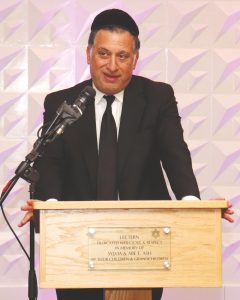
A special event for our community’s singles was held last month under title “Finding the Right One,” featuring a moving and informative address by one of the community’s most esteemed rabbis, Rabbi Eli J. Mansour. The event, which took place on November 19th at the Edmond J. Safra Synagogue in Brooklyn, was organized by Touvi Assis, along with his wife Jennifer, who sponsored the class in honor of their children.

“I was hoping at least 40-50 singles would show up so the rabbi would feel it was worth his time,” said Assis. “We were both overwhelmed by the turnout. We had to open the upstairs seating and add folding chairs to accommodate the 450 young men and women who came out to hear the rabbi!”

Assis said he organized the event because he felt a strong need to help the many young men and women in our community who feel confused, who are not certain what to look for when searching for a partner, where to look, and what route to take to find a soulmate.

Rabbi Mansour began the class by commending those who took the time and the initiative to attend. He said that simply showing up is a step in the right direction towards getting married, as it signifies the hishtadlut – personal effort – that one needs to make to learn about the mitzvah of marriage, and when Hashem sees one doing his part, He will then step in to do the rest.

Loving Through Giving

Next, the rabbi addressed the proverbial elephant in the room – the misconceptions that many people have about love and marriage due to their exposure to the surrounding culture. The message we receive from modern culture is that the most important thing is attraction and good looks. But while the superficial attraction of physical beauty is useful in initially catching attention, it eventually wears off. Infatuation, the rabbi explained, is society’s confused interpretation of love. From the Torah’s perspective, love develops over time; it is not a spontaneous emotional reaction. And the way it develops is through giving and investing in a person.

The rabbi noted that the Hebrew word for love is ahavah, which stems from the root “hav“ – “give.” He explained this concept by way a scientific study which discovered that when a baby is first born, the mother automatically loves the child more than the father does. This is because the mother has already invested so much time and energy into making the baby, whereas the father had done very little to this point. True love is experienced through the investment of time and effort. Society tells us of “love at first sight,” but we need to move away from this perspective, and understand that love is created, and doesn’t just happen on its own in an instant.

Turning his attention to the process of finding and selecting a spouse, the rabbi stated plainly, “We’re overthinking it.” From what he sees, many singles are “searching for something that doesn’t exist: perfection.” The rabbi insisted that “no one is perfect,” and so there is no sense for trying to find the “perfect” match.

“That is the exact point of marriage – to grow together, to learn to tolerate each other’s imperfections, and to try to reach perfection together.”

The Preferred Route

Rabbi Mansour also spoke about matchmaking, which he described as “Gd’s preferred route.” Acknowledging that this system has its flaws, as evidenced by the “horror stories” we’ve all experienced or heard about, the rabbi insisted that the alternatives are worse. One benefit of having a “middle man” is avoiding the awkward and uncomfortable experience of telling a prospective match that one is not interested after one or two dates. The shadchan (matchmaker) is also available for advice if a specific question arises, such as a potential “red flag” that is best to be detected early on.

The rabbi said that if matchmaking was good enough for our patriarch Avraham, who sent his trusted servant, Eliezer, to find a bride for Yitzhak, then it should be good enough for us, as well. Even if for some the process seems strange and conjures images of Fiddler on the Roof, this ancient tradition is the least complex and most effective route to find the right one. If you happen to find someone a different way, the rabbi says, then “that’s great, and all the power to you!” But if you are first considering where to look for a mate, keep an open mind when it comes to matchmaking.

The Broken Ankle

Rabbi Mansour told the story about a couple that met through a rabbi and a shadchan. The girl, whom most would describe as “regular,” went on a Community Center ski trip and broke her ankle getting off the bus on the first day. She spent the trip sitting-out, injured, and unable to enjoy the activities with her friends as she had planned. Someone gave her a recording of a class by our community’s esteemed Rabbi Shlomo Diamond. That one recording led her to hundreds more, and wound up changing her whole outlook on life as well as her entire future. Meanwhile, over in Lakewood, a 24-year-old yeshiva student was seeing all his friends get married, but was content just “doing his thing,” without rushing to find his soulmate – until a conversation with his rabbi, Rabbi Diamond.

“I don’t understand,” Rabbi Diamond said. “Why do you put on tefillin in the morning? Why do you observe Shabbat?”

The young man replied, “I do them because they are mitzvot, of course.”

“Getting married is also a mitzvah,” Rabbi Diamond said to the young man. “You have to put in the effort to fulfill it, no less than other mitzvot.”

And thus the girl who would not have been ready to marry a Lakewood Yeshiva boy were it not for a broken ankle, and the yeshiva boy who wasn’t trying to get married, were introduced at the exact right time, and those two are today Rabbi Eli and Sandra Mansour.

Rabbi Mansour emphasized that he searched for a spouse through a matchmaker, and saw Gd’s hand in the process at each step along the way. When all is said and done, the rabbi commented, whatever we try, it’s all up to Hashem to connect us to the right person, and each person must put in the effort and do the best he or she can, leaving the rest to Hashem. And for this reason, the rabbi explained, throughout the story of Eliezer’s journey to find a bride for Yitzhak, he is never mentioned by name, and is called instead “the servant” or “the man” – because he was facilitating Gd’s work. It wasn’t him; he was just a servant of Gd.

After his speech, Rabbi Mansour opened the floor to questions, and somebody asked the rabbi for guidance as to what qualities one should look for when searching for a spouse. The rabbi replied that a boy should try to find an optimistic girl, a girl who speaks positively about others, doesn’t gossip, gives people the benefit of the doubt, and has a certain degree of modesty. As far as what to look for in a young man, the rabbi said it is all about middot –refined character. Whether or not the boy has mastered large portions of the Talmud is far less important than his being sensitive and respectful. A man should have fear of Gd, be honest, control his anger, and be soft-spoken.

The rabbi stressed the importance of prayer in the search for one’s soulmate but warned that one should not to pray for a specific person. Only Hashem knows who one’s soulmate is, so one should not limit himself or herself.

Both the organizers and attendees agreed that the event was a resounding success, and plans are underway for future events.

Video and audio recordings of Rabbi Mansour’s class are available at iTorah.com, under the title, “Finding The Right One” (code SB527).


Kollel Shaara Ezra – Producing Rabbis for the Millennial Generation

Pnina Souid

Our community has, thank God, been blessed by both rapidly growing numbers and a steadily increasing thirst for knowledge and guidance.

This thirst can be seen wherever we turn – in the ever expanding yeshivot and girls’ schools, the plethora of opportunities for serious Torah learning at night for working men, and evening classes throughout the day and evening for women and girls. It can be seen in the growing popularity of Torah websites and apps produced by our community, and the wealth of quality Torah literature published by our community’s rabbis. Before our eyes, the dream of our grandparents who emigrated to these shores from Syria is being fulfilled – the dream of a vibrant community of Jews committed to studying and practicing our ancient traditions and following halachah in accordance with the rulings of the Shulhan Aruch.

Many said that this could not happen in the United States – but here we are, seeing it happen right in front of us.

But with this thirst for knowledge and guidance comes a need for competent scholars who have mastered the enormous corpus of halachic literature, have been trained to make halachic decisions, understand the realities of the 21st century, and have the skills to communicate the timeless wisdom and laws of the Torah to today’s Jews clearly, coherently, accurately, and effectively.

In other needs, our community needs rabbis for millennials – rabbis equipped with both comprehensive scholarship and a keen understanding of modern life.

Training a New Generation of Poskim

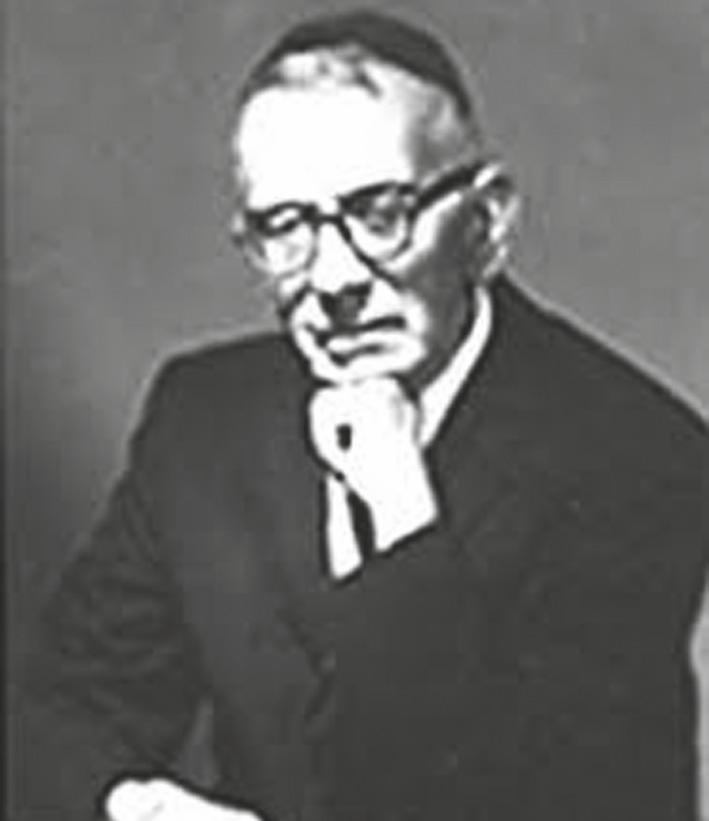
Meeting this need is the ambitious goal set by Rav Shay Tahan, shelit”a, a young but widely-respected Sephardic posek educated and trained by a diverse group of scholars and institutions. An alumnus of the Mirrer Yeshivah, Rav Tahan was ordained by numerous Torah luminaries – both Ashkenazic and Sephardic – including Rav Bentzion Mutsafi, former Sephardic Chief Rabbi Eliyahu Bakshi-Doron, former Rosh Yeshiva of Mir Rav Shmuel Birnbaum, and the renowned posek Rav Yisrael Belsky, among others. Rav Tahan underwent intensive halachic training under the guidance of Rav Belsky.

Rav Tahan’s passion for learning and dedication to the Jewish People drove him to establish a “Bet Hora’ah” – a center of halachic guidance, where complex questions can be brought to a staff of outstanding scholars. About three years ago, Bet Hora’ah was situated in the basement of the Ohel Moshe synagogue in Flatbush, and then evolved into simply names, phone numbers, and emails of competent scholars who were available for guidance. Rav Tahan then decided that the time had come to establish a special kollel that would train poskim – halachic decisors.

What makes this new institution unique is that the students are not merely committed to full-time, advanced study. They do not just learn; they receive training to acquire the knowledge, methodology, and skills needed to apply the enormous and intricate halachic system to real-life circumstances in the 21st century. This requires not only the extraordinary breadth of knowledge, but also an understanding of our society and of the new realities to which halachah must be applied.

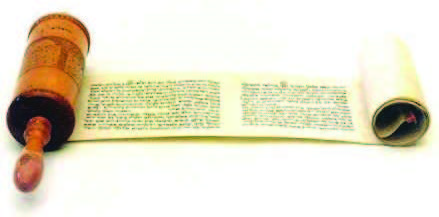
The students delve into the intricacies of the laws of kashrut – including determining the status of different foods, the kashering process, and insect infestation – and of Shabbat, family purity and Pesach, and much more. Their curriculum also includes the study the laws of safrut – the writing of Torah scrolls, tefillin, and mezuzot, and the guidelines for determining when one of these articles is unsuitable for use. Rav Tahan, a certified sofer, emphasized that there is a lack of qualified Sephardic sofrim, and so special attention is being paid to this particular area of halachah.

The Birth of a Community Kollel

Around three years ago, Rav Tahan first established a small kollel consisting of four students, with the help of Rabbi Zechariah Avezov, a student of Rav Haim Benoliel and a student at Yeshiva Torah Vodaath. Housed in Ohel Moshe synagogue, the kollel rapidly grew and soon outgrew its small premises.

The solution came in the form of Congregation Bnai Yosef on Ocean Parkway and Avenue P – affectionately known in the community as “The Sitt Shul.” Rav Haim Benoliel and Rav Maoz Raful warmly invited this special kollel – which has been named Kollel Shaare Ezra – to Bnai Yosef, a vibrant center of Torah learning in our community, which is abuzz day and night with classes, minyanim, and other programs.

“This community Kollel – Kollel Shaare Ezra –  has set for itself a number of important goals that will be its highest priorities,” Rabbi Tahan explained. “It seeks to advance the avrechim [students] so they become the next generation of rabbis and poskim capable of leading, teaching, and guiding. Secondly, the kollel aims to offer Torah study opportunities to the throngs of people who come daily to pray at Bnai Yosef. The kollel is a place where they can learn before or after the prayers, consult with a rabbi, find a havruta [study partner], or just sit and absorb the ‘kol Torah,’ the sweet sound of the Torah.”

The new institution has thus set a bold vision of working with both laymen and seasoned scholars – offering opportunities for working men looking to add some Torah to their day, but also building the next generation of scholars who will continue the unbroken chain of halachic tradition that began at Sinai and has been carried to our day and age.

These two goals come together in the special relationships that have been forged between the kollel’s students and the committed laymen who come to study at Bnai Yosef. The warm, meaningful bonds between the scholars and laymen beautifully exemplify the kollel’s commitment to uplift and serve our community, and our community’s commitment to support its Torah scholars and deepen its connection to our spiritual heritage.

A Blueprint of Success

Kollel Shaare Ezra currently consists of 20 students, some of whom have already received rabbinical ordination, and some who are still taking their exams. The students learn all day in other institutions, and then assemble in the evenings at Bnai Yosef for special learning and training in practical halachah. There are two different tracks – one for those reviewing material in preparation for their semichah (ordination) exams, and another for the study of safrut. The kollel’s programs run from 8:30-10pm, followed by arvit prayers.

Most of the learning is done havruta-style, in pairs. Additionally, Rabbi Tahan lectures twice each week. One lecture is devoted to medical-related topics, such as the status of DNA testing in halachah, the subject of vaccination, and many others. His second weekly shiur focuses on the laws of safrut. Many of Rabbi Tahan’s lectures are recorded and available online at RabbiShayTahan.com.

One of the kollel’s distinguished products is Rabbi Zechariah Avezov, who also spent many years learning in Yeshiva Mikdash Melech and Yeshiva Torah Vodaath, and now serves as the Menahel (administrator) of Kollel Shaare Ezra, working as Rabbi Tahan’s “right-hand man” in managing the kollel and ensuring its success.

Another product of Rabbi Tahan’s kollel whom we might call a “rising star” in the community’s rabbinate is Rabbi Jeremy Makabi. An alumnus of Yeshiva Mikdash Melech, Rabbi Makabi received practical halachic training under Rabbi Tahan, and is available to answer halachic questions and provide guidance by phone.

A Message to the Community

Rabbi Tahan and Rabbi Avezov emphasize their desire to be fully engaged with the community, and to be available to assist anyone.

“We are here for you,” they assure us. “If you are Jewish, you are a part of us, no matter what. The kollel members are here both for their own education and also to assist you – to set up havrutot, learning partners or anything in the realm of Torah learning and mitzvah observance.”

Rav Tahan invites anyone with a question or in need of halachic guidance to contact him by phone call, text or email. The rabbi has also harnessed the power of technology for his sacred cause by building a public media presence, delivering shiurim on Torah Anytime (RabbiShayTahan.com) and Ask Halacha.com. In addition, Rabbi Tahan delivers a halachah class on the radio, at 88.7 FM, after the morning news. On Fridays, listeners can call in with their questions for the rabbi.

Rav Tahan says that anyone interested in receiving more information about the kollel, its programs, and how to get involved, is welcome to come visit the kollel any evening, in the Torah Center area of Congregation Bnai Yosef, on Ocean Parkway and the corner of Avenue P. He also makes himself “on call” around the clock, available by phone or text at 347-666-3467, and by email at shaytahanny@gmail.com. The Menahel of the Kollel, Rabbi Avezov, is also available to answer halachic questions, and may be reached at 347-938-4969.

We live in a generation that has seen a remarkable resurgence of intensive Torah study and halachic commitment, a generation that understands and appreciates the beauty of our ancient tradition, the binding nature of halachah, and that halachah is to govern every aspect of our lives, thereby making our lives richer, more meaningful, and more connected to Hashem. Kollel Shaare Ezra has answered our generation’s call for guidance, and is placing itself at the forefront of the movement towards greater religious devotion in our community, and to help us reach greater heights and succeed in living the way the Torah wants us to live.